

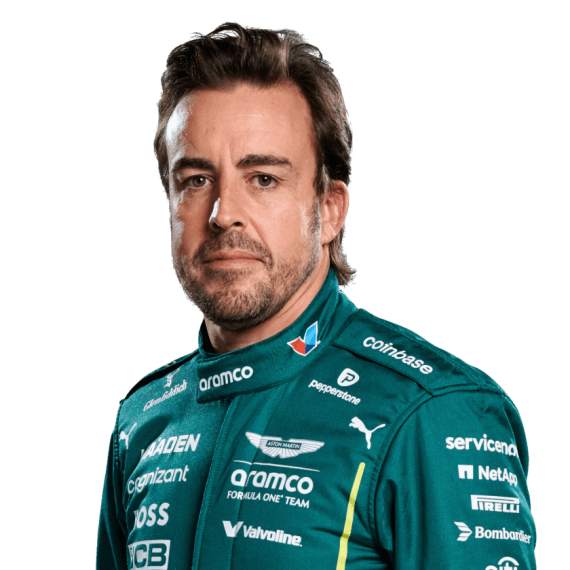


Fernando Alonso
Aston Martin F1 Team Spanish
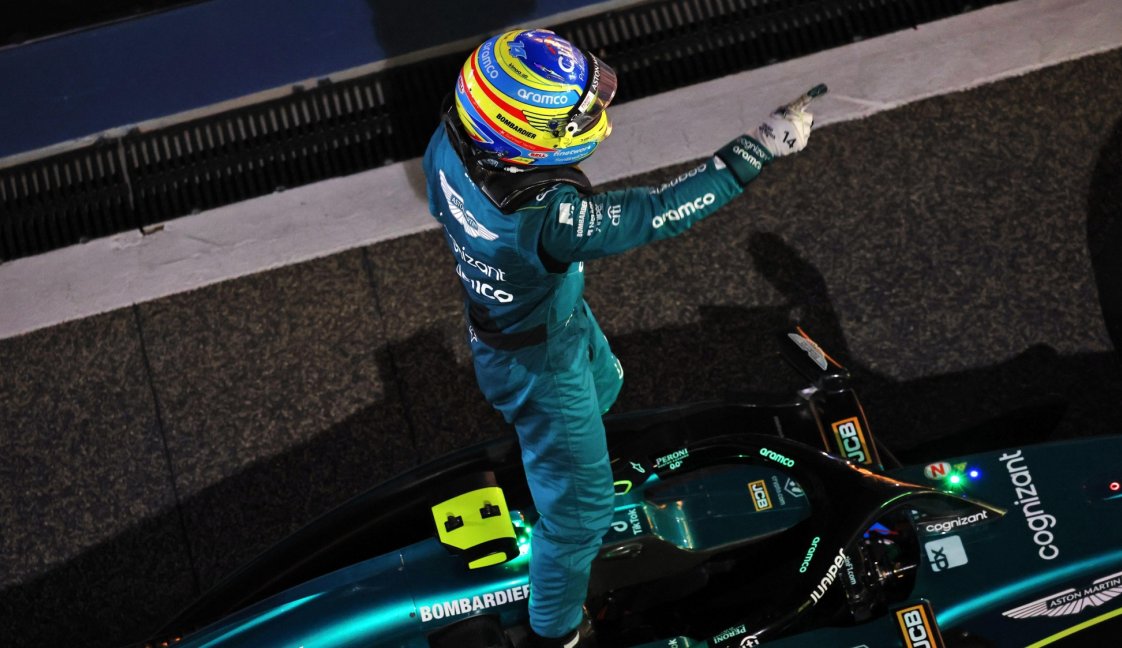
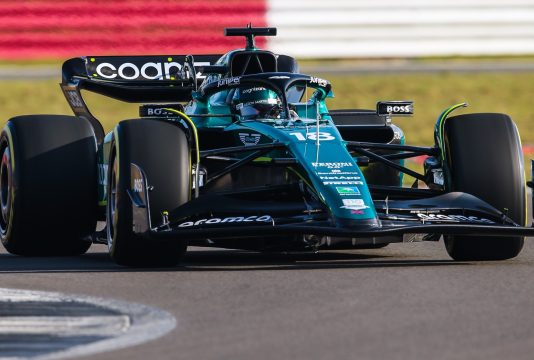
In his 23-season Formula 1 career so far, Fernando Alonso has clinched two world championships and finished runner-up three times, winning a remarkable 32 grands prix. In 2026, Alonso will again race for Aston Martin alongside Lance Stroll.


F1 season 2026
| WC Position | 10 |
| Races | 0 |
| WC points | 0.0 |
| Victories | 0 |
| Podiums | 0 |
| Pole positions | 0 |
F1 career
| World titles | 2 |
| WC points | 2393 |
| Races | 425 |
| Victories | 32 |
| Podium places | 106 |
| Pole positions | 22 |
Personal information
| Name | Fernando Alonso |
| Team | Aston Martin |
| Date of Birth | 29 July, 1981 |
| Place of Birth | Oviedo, Asturias, Spain |
| Height | 1.71m |
| Weight | 68kg |
| Nationality | Spanish |
| Race Number | 14 |
Biography of F1 driver Fernando Alonso
As a two-time Formula 1 World Champion, Fernando Alonso has been a central figure in the sport for almost two decades since entering the scene with Minardi in 2001.
Born into a working-class family in Oviedo, Alonso began his karting journey at the age of three, steadily attaining success at various levels, from local to national and on the global stage.
How did Alonso navigate the transition from karting triumphs to reaching the pinnacle of success in Formula 1? Here is a thorough overview of Fernando Alonso's career.
Teams and teammates | Fernando Alonso
| Team | Teammate | Season |
|---|---|---|
| Minardi | Tarso Marques | 2001 |
| Renault | Jarno Trulli | 2003 |
| Renault | Jarno Trulli | 2004 |
| Renault | Giancarlo Fisichella | 2005 |
| Renault | Giancarlo Fisichella | 2006 |
| McLaren | Lewis Hamilton | 2007 |
| Renault | Nelson Piquet Jr. | 2008 |
| Renault | Nelson Piquet Jr. | 2009 |
| Ferrari | Felipe Massa | 2010 |
| Ferrari | Felipe Massa | 2011 |
| Ferrari | Felipe Massa | 2012 |
| Ferrari | Felipe Massa | 2013 |
| Ferrari | Kimi Raikkonen | 2014 |
| McLaren | Jenson Button | 2015 |
| McLaren | Jenson Button | 2016 |
| McLaren | Stoffel Vandoorne | 2017 |
| McLaren | Stoffel Vandoorne | 2018 |
| Alpine | Esteban Ocon | 2021 |
| Alpine | Esteban Ocon | 2022 |
| Aston Martin | Lance Stroll | 2023 |
| Aston Martin | Lance Stroll | 2024 |
| Aston Martin | Lance Stroll | 2025 |
| Aston Martin | Lance Stroll | 2026 |
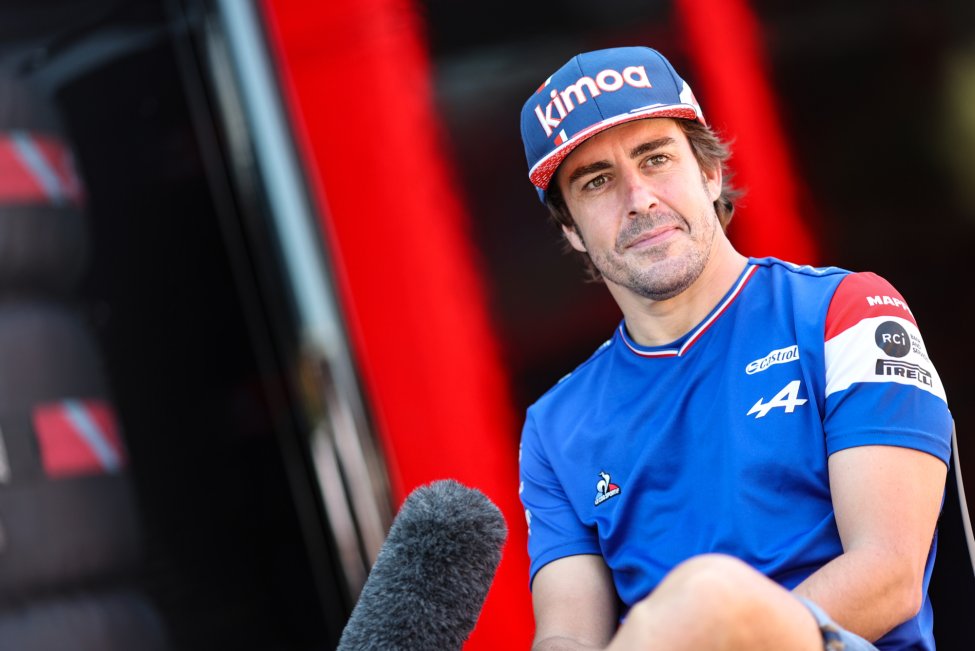
Alonso's karting career
Alonso's father, Jose Luis Alonso, engaged in amateur karting and sought a pastime to share with his children. While Fernando's elder sister, Lorena, didn't take to the activity, the kart became a part of her then three-year-old brother's pursuits.
The Alonso family dedicated themselves to nurturing the young talent's karting career. Given the financial challenges associated with the endeavor, Alonso received support from mentor Genis Marco, who adeptly secured both personal and sponsorship funding.
Triumphs in the junior championship for children paved the way for three consecutive Spanish Junior National Championships from 1993 to 1995. Subsequently, Alonso achieved victories in the Italian and Spanish International A championships, securing a second-place finish in the European Championship.
Junior career, F1 start and Renault move
Alonso made his car racing debut at the 1999 Euro Open by Nissan with Campos Motorsport at the age of 17.
He won the title at the final race of the season after claiming six wins and nine pole positions, making the jump to the International Formula 3000 Championship with the Minardi-backed Team Astromega.
Minardi sports director Cesare Fiorio gave Alonso his first run in an F1 car at Jerez as part of Euro Open by Nissan's agreement to help their champion test at a higher level. From there, Alonso was named test and reserve driver in 2000 before securing a race seat for 2001.
After ending the season with no points and a best result of 10th place, but still impressing in back-of-the-grid machinery, Alonso joined Renault as a test driver in 2002, before becoming Jarno Trulli's team-mate for 2003.
At just his second race, Alonso became the youngest driver to take a pole position at the Malaysian Grand Prix, and then broke Bruce McLaren's record as F1's youngest winner at the Hungarian Grand Prix later in the year. The Spaniard ended the season sixth in the standings with 55 points.
The 2004 season saw Alonso continue to make a name for himself, finishing on the podium four times and taking pole at the French Grand Prix. However, it was 2005 when he really burst onto the scene, battling it out with McLaren's Kimi Raikkonen for the title after rules mandated that tyres should not be changed during a race and engines had to last for two grands prix.
Although the McLaren proved to be faster, it was also unreliable, allowing Alonso to take the title and eclipse Emerson Fittipaldi as the then-youngest champion thanks to seven victories, six poles and 14 podium finishes.
While Ferrari and Michael Schumacher were back on form in 2006, it was Alonso who won six of the opening nine races. However, after Renault's tuned mass damper was banned, Ferrari struck back, and the two drivers were level on points heading into the penultimate round.
Schumacher's hopes of a title were ended when his engine expired while leading the Japanese Grand Prix, handing the race win to Alonso, who then clinched the title in Brazil.
Move to McLaren and Renault return
Alonso departed Renault to join McLaren on a three-year contract, becoming team-mates with rookie Lewis Hamilton.
Despite both being contenders for the championship, their relationship soured due to various incidents. One notable moment occurred at the Hungarian Grand Prix, where Hamilton ignored a team instruction, leading to Alonso slowing him down in the pit lane.
McLaren faced its own challenges with the Spygate controversy. Nevertheless, Alonso and Hamilton entered the season's final race with a chance to clinch the title. However, Ferrari's Raikkonen emerged victorious by a single point. Alonso finished third in the standings, tied on points with Hamilton, but the British driver had more second-place finishes.
The strained relationship led to Alonso and McLaren terminating their contract. Despite receiving offers from several teams, Alonso re-signed with Renault on a two-year deal.
While the season had a slow start, Alonso outscored every other driver in the final five races. He secured victories in Singapore and Japan, with the former marked by controversy known as 'Crashgate', where team-mate Nelson Piquet Jr. deliberately crashed to trigger the safety car deployment that aided Alonso's triumph.
Ferrari switch
Despite offers from Red Bull and Honda for the 2009 season, Alonso signed a contract to stay with Renault. However, after a season that saw him finish ninth in the Drivers' Championship whilst the team were investigated for 'Crashgate', he left for Ferrari in 2010.
Alonso won on his debut for the team at the 2010 Bahrain Grand Prix. He secured four more victories, meaning that he entered the season-ending Abu Dhabi Grand Prix atop the standings by eight points, despite trailing by 47 at one stage. However, a strategic error by Ferrari in the race resulted in Alonso getting stuck behind Renault's Vitaly Petrov, and consequently, he finished second in the standings to Sebastian Vettel.
There was no title challenge in 2011 as Ferrari lacked aerodynamic grip and struggled with the switch to Pirelli tyres. Alonso claimed 10 podium finishes, including a win at the British Grand Prix following a Red Bull strategy mistake, but it was only good enough for fourth in the standings.
After extending his contract with Ferrari, Alonso returned to form in 2012 and again competed with Vettel for the title. Wins in Malaysia, Spain (Valencia) and Germany helped Alonso to build a 40-point advantage, but Vettel mounted a ferocious comeback to lead by 13 points heading into the final race of the season in Brazil. Alonso finished second, only for Vettel to cross the line sixth to again deny him.
There was little Alonso could do to deny Vettel in 2013 as the German cruised to another title ahead of the Spaniard, while 2014 saw Mercedes emerge as the team to beat. Alonso failed to win a race but did finish on the podium twice. However, with Ferrari unable to deliver a championship-winning car, Alonso left for McLaren.
Back at McLaren
Alonso rejoined McLaren on a three-year contract with no opt-out clauses, but things didn't start off on the right foot. An accident during pre-season testing in February 2015 saw Alonso suffer a concussion, resulting in Kevin Magnussen replacing him at the season-opening Australian Grand Prix.
When Alonso returned, things did not go to plan as McLaren's Honda engine was severely underpowered, and as a result, the team struggled. Alonso finished in the points on just two occasions, and he was vocal about his displeasure via the team radio.
A big crash with Esteban Gutierrez at the 2016 season-opener in Australia resulted in Alonso missing the following race in Bahrain for medical reasons. He outqualified teammate Jenson Button 15 times during the season, and finished in the points nine times to take 10th in the championship with 54 points.
There was no leap forward in 2017, with Alonso suffering from poor reliability in several of the early rounds. His best finish was a seventh in Hungary, leaving him 15th in the standings.
Sabbatical and F1 return with Alpine
Alonso inked a fresh contract with McLaren, and the 2018 season kicked off with a fifth-place finish in Australia after the team switched from Honda to Renault power. However, it became evident that his contentment in F1 was waning.
The Spanish driver concluded the season in 11th place in the standings and subsequently announced his departure from the sport, attributing it to a lack of on-track racing and competition. Although he retained his role as a brand ambassador for McLaren, his contract lapsed at the end of 2019 and was not extended.
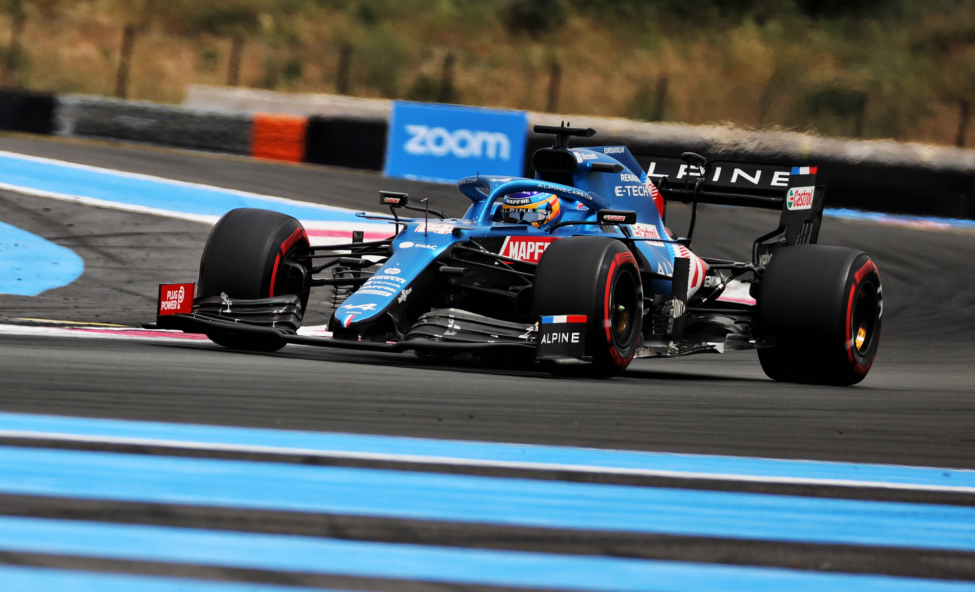
Following a two-year break, Alonso made a comeback to the F1 grid in 2021 by signing a two-year deal with the Alpine team, formerly known as Renault.
Other racing categories
Alonso made his endurance racing debut at the 1999 24 Hours of Barcelona, finishing 10th in a Hyundai Accent. In 2018, he took part in the 24 Hours of Daytona, sharing the No.22 United Autosports Ligier JS P2 with Lando Norris and Philip Hanson, though they finished 38th.
He then took part in the full 2018/19 FIA World Endurance Championship alongside Sebastien Buemi and Kazuki Nakajima, wining the title after claiming five victories, including the 24 Hours of Le Mans in both 2018 and 2019.
Alonso participated in the 2017 Indianapolis 500 for McLaren Honda Andretti, qualifying fifth and leading four times before retiring from seventh due to an engine failure with 21 laps remaining. Although he tried to take part in the 2019 event as well, he ultimately failed to qualify.
Lastly, Alonso took part in the 2020 Dakar Rally for Toyota. Driving alongside Marc Coma, the duo finished 13th.
A competitive comeback
Alonso's Formula 1 comeback did not get off to the best start when he had a pre-season cycling accident. He suffered a broken jaw and was required to have two metal plates fitted as a result.
Remarkably, he was back in the car for the season-opening race in Bahrain, but suffered a bizarre retirement when a sandwich wrapper lodged itself in the car's brake duct, severely affecting brake temperatures.
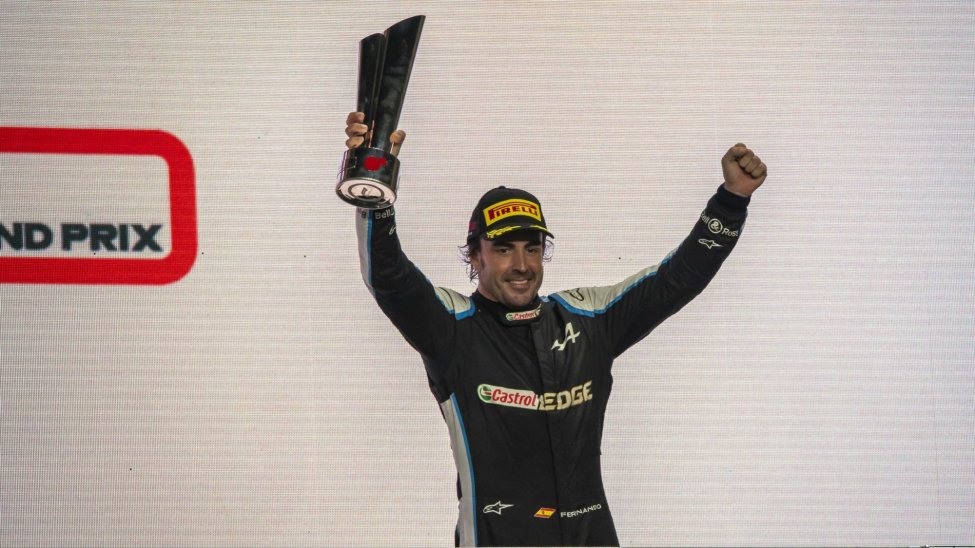
What followed was a relatively mediocre season in terms of results as he finished in the points on 15 occasions, including a high of third in Qatar, which helped the team finish fifth in the constructors' championship. Alonso was 10th in the drivers' standings, just ahead of team-mate Esteban Ocon.
The following year was a similar affair. Whilst there was a run of 10 races in the points in the middle of the season, it sandwiched six retirements - including four in the last seven races - leading to him scoring 81 points for the second consecutive season, albeit finishing a place higher.
By that stage, though, Alonso and the team knew there would be no third season. He shocked many in the F1 paddock with the mid-season announcement that he would be moving to Aston Martin for 2023, to replace the retiring Sebastian Vettel.
In that year's Singapore Grand Prix, he set a remarkable new record with his 349th start, beating Kimi Raikkonen's previous mark.
The Aston Martin era
Alonso enjoyed a superb start to 2023, finishing on the podium in six of the first eight races, including second in Monaco and Canada. It seemed a matter of time before he would finally claim the elusive 33rd grand prix victory, but Aston's form dipped.
Although further podiums followed in the Netherlands, where he was second again, and Qatar, from second in the constructors' championship at one stage, the team slipped to fifth by the end of the campaign. Alonso was fourth in the drivers' standings, his best finish for a decade.
In 2024, Aston Martin struggled with the development of its car throughout the year, and although Alonso started it with six points-scoring finishes, the AMR24's performance fluctuated wildly. The team finished fifth in the constructors' standings again, albeit with 186 points less than the previous year.
Last season was a disaster for the team and Alonso, who had to wait until the ninth round, and his home race in Spain, to score his first points, finishing ninth.
Beyond that, the rollercoaster form continued, albeit with the team prioritising the development of the 2026 car, given the new regulations, and under the leadership of Adrian Newey. Alonso finished 10th in the standings, scoring just 56 points.
With Newey taking on the role of team principal for 2026, expectations are high on Aston Martin and Alonso to finally deliver.
Don't miss out on any of the Formula 1 action thanks to this handy 2026 F1 calendar that can be easily loaded into your smartphone or PC.
Download the calenderFernando Alonso news
Fernando Alonso videos
| Race | Date |
|---|---|

|
8 Mar |

|
15 Mar |

|
29 Mar |

|
12 Apr |

|
19 Apr |