


As the Soviet Union kicked off the space race in 1957 with the launch of the first satellite, Sputnik and then put the first man in space four years later in Yuri Gagarin, the United States responded.
After Gagarin had plonked himself back into a field, much to the shock and awe of the local peasants, and indeed the Americans, who he had beaten into space, President Kennedy decided set an almost impossible challenge in May 1961.
Weeks after the first US manned flight, he declared that, before the decade was out, the US would land a man on the Moon and return him safely to the Earth.
As NASA figured out how to do that, with its Mercury, Gemini, and ultimately Apollo programmes, in Florida, just down the coast from Daytona International Speedway, if you spent enough time in the sand dunes by the Kennedy Space Centre, chances are you would have seen a few Chevrolet Corvettes racing through the dunes as the throttle-jockeys selected as astronauts played up to type.
1960 Indy 500 winner Jim Rathmann befriended those all hoping to take that first small step, and set up a deal to provide the so-called 'Mercury 7' first group of astronauts with 'vettes for $1, which is where some were introduced to the real world of racing.
One of the first group selected was Air Force Captain Gordon Cooper, known as 'Gordo.'
As the decade passed and Kennedy's goal loomed, Cooper was an integral part of the Mercury and Gemini programmes, and received a plum assignment as back-up commander for the May 1969 Apollo 10 mission - a full dress rehearsal of the first Moon landing, save the landing itself.
If all went well, Cooper could then expect to command Apollo 13 three flights later and walk on the Moon.
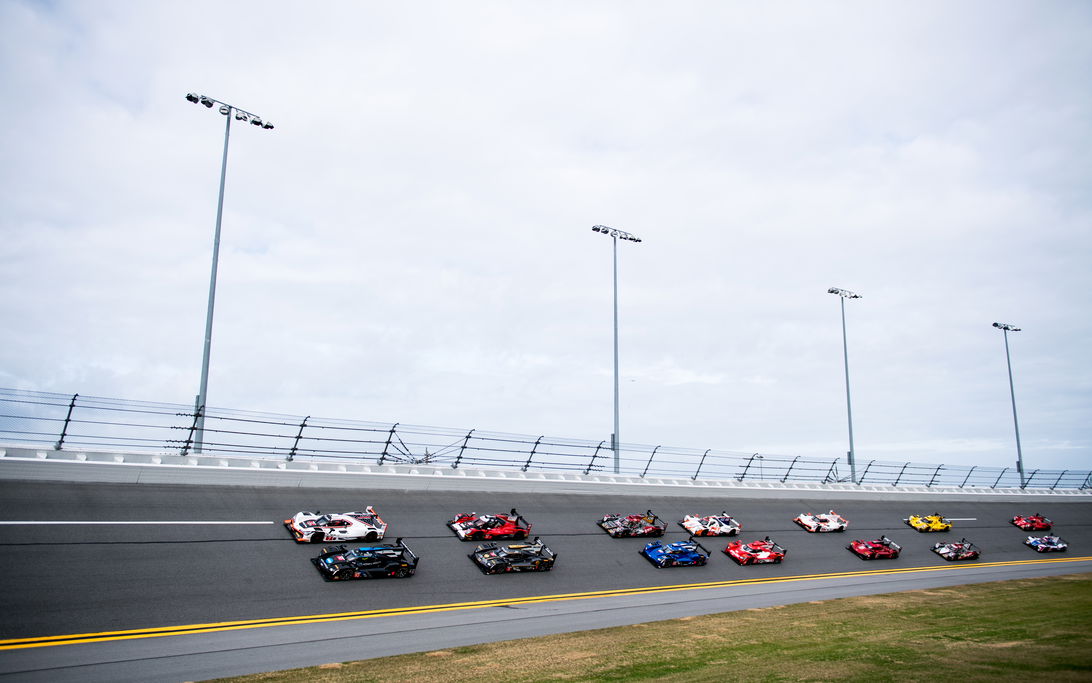
The only trouble, slap-bang in the middle of training for Apollo 10, Cooper decided to enter himself, and NASA's head of security at Kennedy, in the Daytona 24 Hours!
Cooper the racer
Throughout the 1960s, Cooper had been a familiar face at the Indy 500, with the likes of Alan Shepard, the first American and runner-up to Gagarin in the 'first man in space race' tagging along.
Cooper even founded his own race team, Grissom, Cooper, Rathmann (GRC), with fellow astronaut Gus Grissom and Rathmann and ran cars at Indy.
In 1967, he finally got to drive the IMS oval - but was firmly kept in check by officials who prevented him from flooring it, much to his dismay.
Come February 1969, Cooper actually qualified 25th of 67 runners for the 24 hours, but on the eve of the race, NASA nixed the plan.
Coming a few months before the launch of Apollo 10, NASA was not best enamoured with the idea of the commander of the back-up crew, who could potentially have to step in should anything have happened to the prime crew commander, Tom Stafford, potentially being injured, or worse, at Daytona.
Cooper reluctantly followed orders to withdraw, describing the decision as NASA wanting astronauts to be "tiddlywinks."
Despite Apollo 10 going flawlessly and paving the way for Apollo 11's giant leap with Neil Armstrong and Buzz Aldrin, Cooper never flew on Apollo 13.
Due to this episode and his perceived lax attitude towards training, he was bumped from commanding Apollo 13, which suffered the in-flight explosion that ruled out a landing attempt and became a fight for survival for the crew.
Cooper never flew an Apollo mission, leaving NASA for the engineering and design world, passing away in 2004 aged 77, having also become a strong believer in UFOs, having made multiple sightings in his career as a test pilot.
Also interesting:
The 2026 F1 Cars Revealed: Everything You Need to Know!
Discover how the 2026 F1 regulations will revolutionise the sport, with a shift to movable wings instead of traditional DRS, to the increased electrical power in the hybrid systems, and the introduction of 100% sustainable fuel.
Most read
In this article
Never miss a thing from the Formula 1 season! Add the 2026 F1 schedule to your calendar at the touch of a button. Subscribe below and put the dates and times of every race directly on your PC or smartphone, so you don't miss a second from the new season.
Download the F1 calendar Download the F1 calendar
A variant with just the race and qualifying is also available.
Click here to download it..


Join the conversation!