

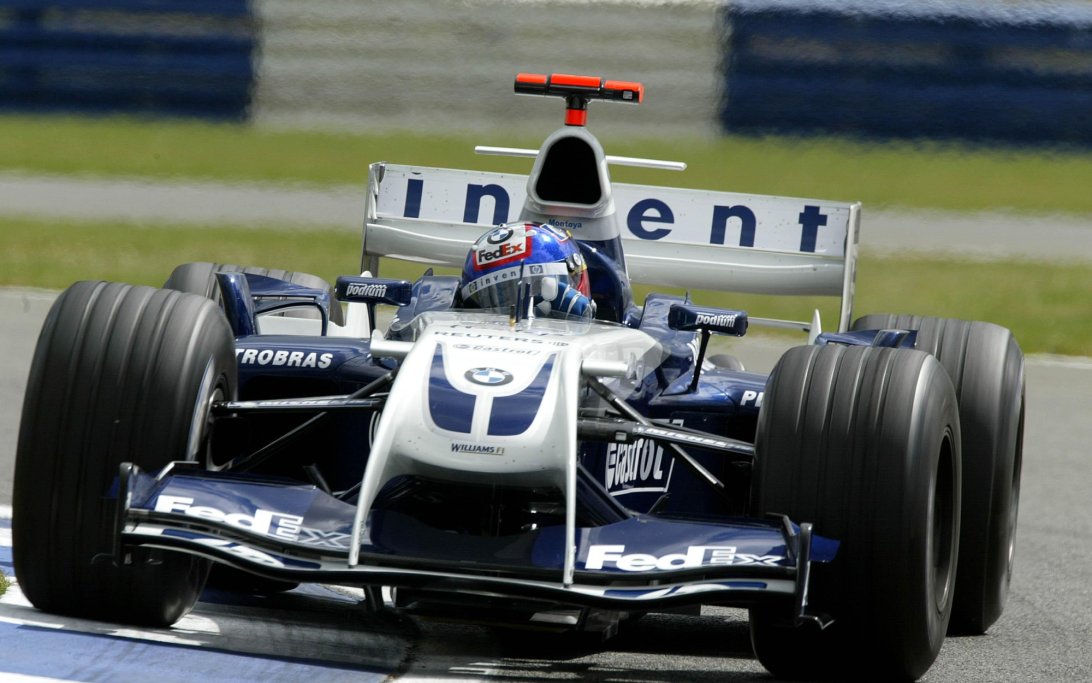
On this day 22 years ago, Formula 1 witnessed one of its most audacious design gambles when Williams unveiled the radical FW26.
The car's most striking feature was immediately apparent: a truncated nose cone supported by two distinctive tusks that connected to the front wing, a design that would quickly earn the nickname "walrus nose."
The brainchild of aerodynamicist Antonia Terzi, the concept represented Williams' bold attempt to maximise airflow beneath the car whilst minimising drag.
Patrick Head, the team's technical director, was bullish about the innovation at launch. "It is not a styling exercise," he declared. "We have eliminated part of the nose above the front wing. It allows more freedom for the airflow. It is to minimise drag and increase downforce."
The theory was sound. By shortening the nose cone and using the twin-keel suspension configuration, Williams aimed to channel air more effectively towards the floor and rear aerodynamic components.
The design eliminated the conventional nose section that typically interfered with front wing airflow, whilst the dagger-shaped pylons acted as flow guides to direct air away from the car's centreline.
Initial testing proved encouraging. Juan Pablo Montoya was effusive in his praise during early runs, describing his first impression of the FW26 as "very good" and declaring he felt comfortable immediately. "I think we have an excellent potential car," he enthused. "Everything feels just right."
Viewed by others:

Reality bites
However, the promise of winter testing never translated to on-track success. The radical nose, designed to be as short as possible, struggled to meet F1's stringent frontal impact requirements.
The resulting structure was heavier than anticipated, compromising the car's overall balance and stability.
Head would later admit the concept's fundamental flaw: "It gave very small advantage to the performance of the front wing and those two pillars sticking forwards were a bit like trying to fly an aeroplane backwards. Any level of crosswind had a massive effect on trying to steer the car."
The FW26's early-season form was disappointing. Whilst the car showed flashes of pace, it was outgunned by Ferrari's dominant F2004 and struggled against Renault and BAR-Honda.
After just 12 races and two podiums for Montoya, Williams abandoned the experiment, introducing a conventional nose at the Hungarian Grand Prix in August.
Vindication in Brazil
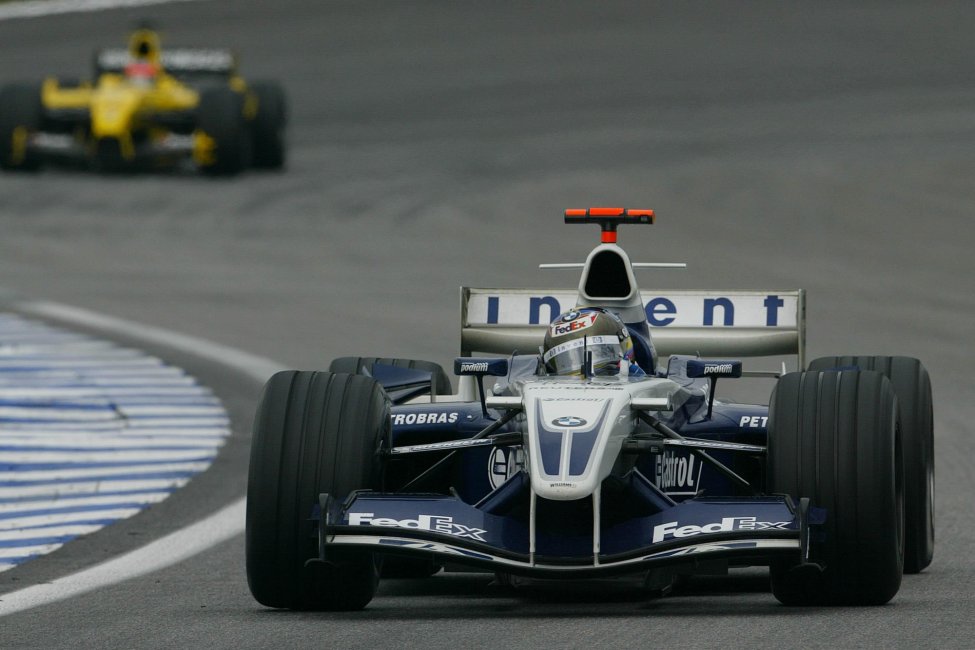
The change paid dividends, and at the season finale in São Paulo, Montoya delivered Williams' only victory of 2004, capitalising on a masterful wet-weather drive at Interlagos.
It would prove to be the team's final race win until Pastor Maldonado's shock triumph in Spain eight years later.
The walrus nose remains a fascinating footnote in F1 history. As Head reflected years later, it was "a bit of a disaster," but one born from genuine innovation.
Also interesting:
Join RacingNews365's Ian Parkes, Sam Coop and Nick Golding in the final episode of the year, as Ian and Sam battle it out again in the RacingNews365 Big Fat F1 Quiz of the Year! Join in the fun by yourself or with other people to test your 2025 F1 knowledge!
Rather watch the podcast? Then click here!


Don't miss out on any of the Formula 1 action thanks to this handy 2026 F1 calendar that can be easily loaded into your smartphone or PC.
Download the calenderMost read


In this article



Join the conversation!