


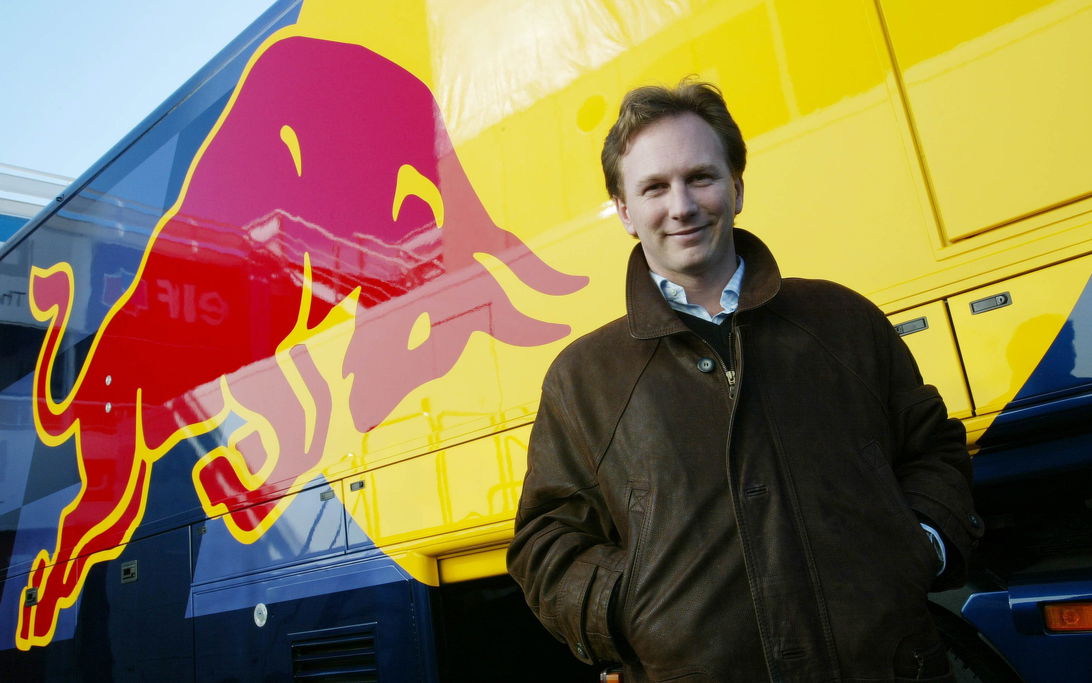
Twenty-one years ago today, on January 7, 2005, Christian Horner was handed the keys to a Formula 1 team that few took seriously.
At 31, he became the sport's youngest ever team principal, tasked with transforming what many saw as nothing more than a marketing exercise into a credible racing operation.
Horner's appointment came with just eight weeks until the season opener in Australia, leaving precious little time to establish his authority over what had been the struggling Jaguar outfit.
Red Bull's entry to the sport was surrounded by scepticism about whether an energy drink company could succeed where established manufacturers had faltered.
The challenges were stark. Jaguar had managed a meagre nine points in 2004, and Red Bull carried the baggage of being seen as a "publicity-hungry party team" with no meaningful racing pedigree.
For Horner, who had built his reputation managing Arden International to F3000 championship glory in 2002, this represented the ultimate test of his managerial capabilities.
Horner's response was swift and decisive - at the season opener in Melbourne, Red Bull drivers David Coulthard and Christian Klien finished fourth and seventh respectively, immediately signalling that the new regime meant business.
Over the course of the season, the team accumulated 34 points, nearly quadruple Jaguar's previous tally.
More crucially, Horner secured the signature of Adrian Newey as chief technical officer in November 2005.
This masterstroke brought one of Formula 1's most respected technical minds to Milton Keynes, laying the foundation for what would become Red Bull's championship-winning era under Max Verstappen and before that, Sebastian Vettel's four consecutive titles.
That gamble in 2005 has paid extraordinary dividends. Today, with six constructors' championships to their name, Red Bull stands as one of Formula 1's most successful teams, validating Mateschitz's original vision and Horner's leadership from the very beginning.
Horner was ultimately relieved of his duties midway through the 2025 season, bringing an end to his 20-year reign of the squad.
Also interesting:
The 2026 F1 Cars Revealed: Everything You Need to Know!
Discover how the 2026 F1 regulations will revolutionise the sport, with a shift to movable wings instead of traditional DRS, to the increased electrical power in the hybrid systems, and the introduction of 100% sustainable fuel.
Most read

In this article
Never miss a thing from the Formula 1 season! Add the 2026 F1 schedule to your calendar at the touch of a button. Subscribe below and put the dates and times of every race directly on your PC or smartphone, so you don't miss a second from the new season.
Download the F1 calendar Download the F1 calendar
A variant with just the race and qualifying is also available.
Click here to download it..





Join the conversation!