


Liam Lawson has raised the unknown levels of reliability as the major "question mark" hanging over Formula 1 ahead of the new rules era.
For 2026, the power units have undergone their biggest fundamental change since the turbo hybrids were adopted in 2014, with beefed-up electrical systems.
The new systems are now capable of producing 350k/w of power, up from 120k/w in 2025, with the removal of the MGU-H, and the use of sustainable fuels.
This is in addition to the chassis changes, such as the introduction of active aerodynamics and the shorter, narrower wheelbases, whilst a further complication for Lawson's Racing Bulls' team is the fact that it will be using Red Bull's first in-house power unit, with boss Laurent Mekies indicating "struggles" will be expected.
Looking ahead to the cars finally getting on track and the season-opening Australian Grand Prix on March 8th, Lawson detailed how reliability was the big question hanging over every team.
"I mean, immediately, to be honest, after testing, I think obviously the question mark will be reliability," Lawson told TalkSPORT at the Racing Bulls launch.
"[It will be] for a lot of teams going into the race, but we'll obviously try and figure that stuff out very quickly in testing.
"We'll do a lot of different styles of planned running, and I think obviously through the season, there'll be development and there'll be teams finding their way.
"But I think very quickly, after testing, we'll have an idea of what sort of package we have."
Also interesting:
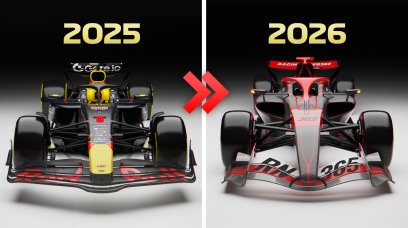
The 2026 F1 Cars Revealed: Everything You Need to Know!
Discover how the 2026 F1 regulations will revolutionise the sport, with a shift to movable wings instead of traditional DRS, to the increased electrical power in the hybrid systems, and the introduction of 100% sustainable fuel.
Don't miss out on any of the Formula 1 action thanks to this handy 2026 F1 calendar that can be easily loaded into your smartphone or PC.
Download the calenderMost read




In this article




Join the conversation!