


Eddie Irvine never needed a slow lap to land a hit. When it came to verbal sparring, he was often the fastest man in F1.
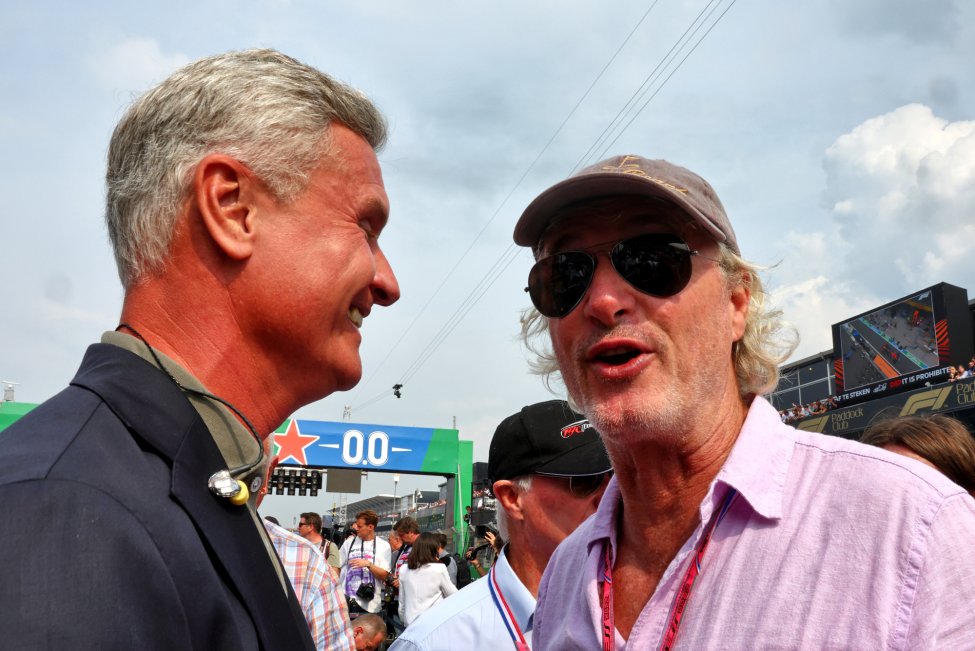
Twenty-five years ago today, the Northern Irishman delivered one of the most brutal character assessments in modern F1 history — aimed squarely at McLaren rival David Coulthard.
Speaking during a January 2001 interview about Coulthard’s world championship prospects, Irvine was unsparing.
"He’s a loser," Irvine said bluntly. "He’s got as much chance of being crowned Formula 1 world champion as I have of winning the lottery — and I don’t do the lottery."
It was vintage Irvine: ruthless, quotable, and impossible to ignore. And while it may have sounded like gratuitous provocation, the timing — and context — made it cut far deeper.
Coulthard was coming off the strongest season of his F1 career. In 2000, he finished third in the championship with 73 points, claimed three victories, and beat team-mate Mika Hakkinen on merit several times.
Wins at Monaco and Silverstone had cemented his reputation as a front-line contender, and Coulthard was openly talking about his belief that a title challenge was realistic.
"I feel I have the experience and the speed now," Coulthard said at the time, convinced that McLaren could give him the tools to fight Ferrari. Irvine was having none of it.
What made the remark sting was Irvine’s own recent past. Just 18 months earlier, he had come agonisingly close to winning the world championship himself.
In 1999, thrust into the Ferrari spotlight following Michael Schumacher’s broken leg, Irvine won four races and pushed Hakkinen to the final round, ultimately finishing runner-up. Coulthard, by contrast, had never finished higher than third.
Career paths moving in opposite directions
The insult carried an added layer of irony. By early 2001, Irvine’s own career trajectory was heading sharply downhill.
His move to Jaguar had promised leadership and the hope of long-term success, but the reality was grim. The 2000 season delivered just four points and a distant P13 in the standings.
Whilst things improved in Irvine's final two seasons in F1, he had to settle for a pair of podium finishes before walking away at the end of 2002.
Coulthard, meanwhile, already had nine of his eventual 13 grand prix victories to his name, but would remain at McLaren until the end of 2004, when he left for the fledgling Red Bull team, which had purchased Jaguar.
But time ultimately proved Irvine’s words uncomfortably accurate.
Coulthard did enjoy the best championship result of his career in 2001, finishing second — but he was never truly in the fight.
Schumacher dominated the campaign with Ferrari’s F2001, finishing a staggering 58 points clear. Any genuine title challenge evaporated long before the season finale.
Coulthard never came closer.
Also interesting:
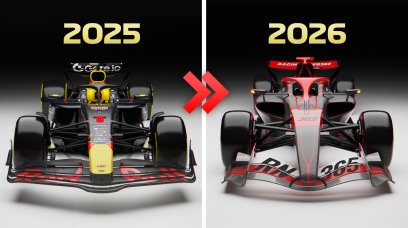
The 2026 F1 Cars Revealed: Everything You Need to Know!
Discover how the 2026 F1 regulations will revolutionise the sport, with a shift to movable wings instead of traditional DRS, to the increased electrical power in the hybrid systems, and the introduction of 100% sustainable fuel.
Don't miss out on any of the Formula 1 action thanks to this handy 2026 F1 calendar that can be easily loaded into your smartphone or PC.
Download the calenderMost read

In this article


Join the conversation!