

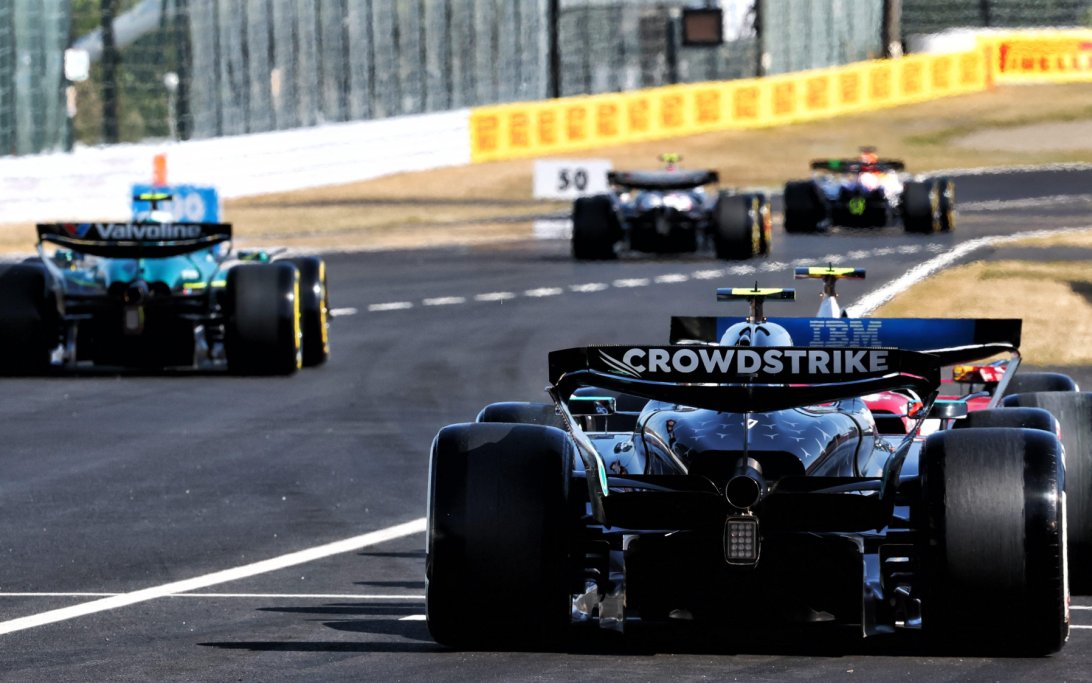
The new chapter of F1 officially begins at the end of January with the first winter test in Barcelona.
During this private test, teams will run their brand-new cars and engines on track for the first time, offering an early glimpse into what could be a dramatically reshaped competitive order.
The headline technical change is the power unit regulation. From 2026 onwards, the balance between the internal combustion engine and electric power will shift from the current 80/20 split to an even 50/50.
This move reflects F1’s push towards greater sustainability while maintaining performance and innovation at the highest level of motorsport.
However, more pertinent to this article: Two new names will appear on the Formula 1 grid in 2026.
Stake F1 will officially become Audi’s factory team, marking the German manufacturer’s long-awaited full works entry into the championship.
Meanwhile, Cadillac F1 will make its debut as a completely new team, strengthening Formula 1’s presence in the American market and expanding the grid to 11 teams.
Cadillac will field an experienced driver line-up, with Sergio Perez and Valtteri Bottas taking the wheel.
Viewed by others:


How qualifying will change in 2026
The expanded grid means the traditional qualifying format must adapt. From 2017 until the end of 2025, five cars were eliminated in both Q1 and Q2. From 2026 onwards, six drivers will be knocked out at each of those stages.
The revised structure looks like this:
- Q1: 22 cars → 16 advance
- Q2: 16 cars → 10 advance
- Q3: Top 10 fight for pole position
Importantly, the session lengths remain unchanged:
- Q1: 18 minutes
- Q2: 15 minutes
- Q3: 12 minutes
There will be no changes to the breaks between sessions: seven minutes between Q1 and Q2, and eight minutes between Q2 and Q3. While the format stays familiar, the extra competition means mistakes will be punished more severely — especially for midfield teams.
F1 2026 qualifying rules
| Session | Duration | Number of participating drivers | Number of dropouts |
|---|---|---|---|
| Q1 | 18 minutes | 22 | 6 |
| Q2 | 15 minutes | 16 | 6 |
| Q3 | 12 minutes | 10 | 0 |
Sprint weekends in 2026
The same qualifying adjustments will apply to sprint weekends, which in 2026 are scheduled for:
- Chinese Grand Prix
- Miami Grand Prix
- Canadian Grand Prix
- British Grand Prix
- Dutch Grand Prix
- Singapore Grand Prix
Sprint qualifying (SQ) will also see six drivers eliminated in each segment. Remember, the session durations are shorter:
- SQ1: 12 minutes
- SQ2: 10 minutes
- SQ3: 8 minutes
Tyre regulations remain strict: medium tyres are mandatory in SQ1 and SQ2, while soft tyres will decide sprint pole position in SQ3.
Another notable tweak concerns sprint weekends’ only free practice session. From 2026, the clock will be stopped during red flags in FP1.
This ensures teams do not lose valuable track time and allows sprint qualifying to be slightly delayed if necessary, while still respecting the mandatory time gaps between sessions.
2026 F1 sprint qualifying rules
| Session | Duration | Number of participating drivers | Number of dropouts | ||||
|---|---|---|---|---|---|---|---|
| SQ1 | 12 minutes | 22 | 6 | ||||
| SQ2 | 10 minutes | 16 | 6 | ||||
| SQ3 | 8 minutes | 10 | 0 |
Also interesting:
The 2026 F1 Cars Revealed: Everything You Need to Know!
Discover how the 2026 F1 regulations will revolutionise the sport, with a shift to movable wings instead of traditional DRS, to the increased electrical power in the hybrid systems, and the introduction of 100% sustainable fuel.
Don't miss out on any of the Formula 1 action thanks to this handy 2026 F1 calendar that can be easily loaded into your smartphone or PC.
Download the calenderMost read



In this article



Join the conversation!