


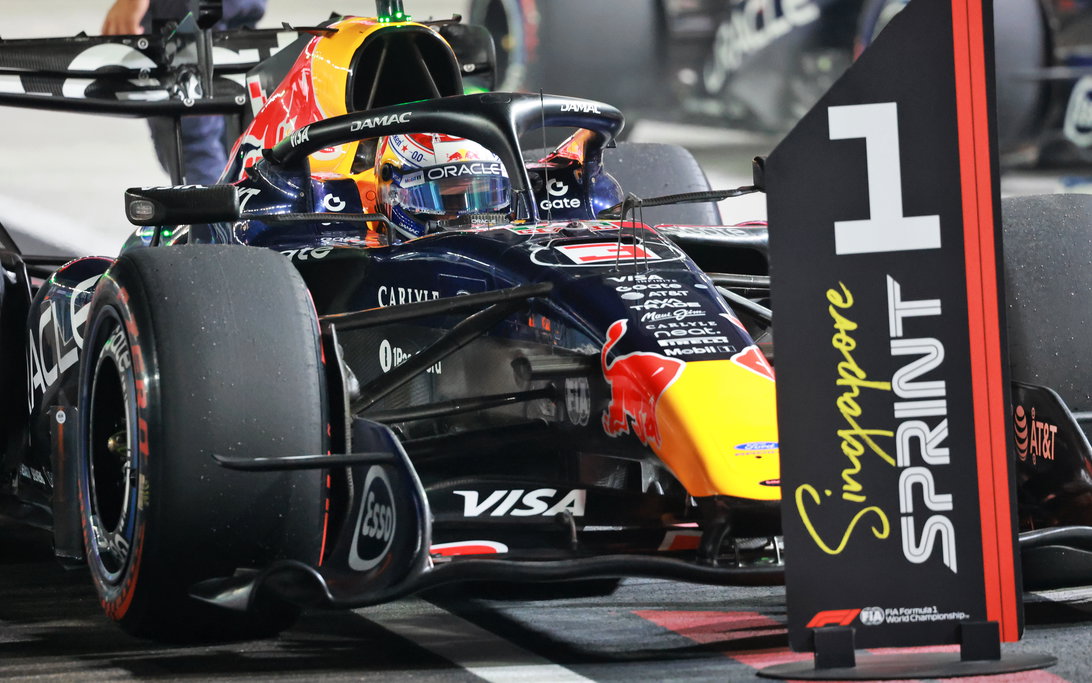
Sprint Qualifying at the Singapore Grand Prix threw up a fascinating technical picture, with the preferred aerodynamic setups around the Marina Bay Street Circuit looking very different from what the track has traditionally demanded.
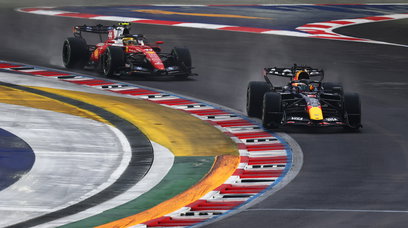
Max Verstappen, much as he did in Malaysia, extracted top performance from his RB22 without resorting to the most heavily-loaded aero package available to Red Bull. The balance of the car did the talking instead.
Precision on corner entry and rear-end stability, built on the upgrades introduced over the past few rounds, gave Verstappen a strong overall platform on Marina Bay's unforgiving surface.
Ferrari followed a similar logic, opting against the extra rear wing elements that had featured on the SF-26 in Hungary and instead running a high-downforce configuration without pushing it to the extreme.
RacingNews365 understands that the choice stemmed from simulation data on the baseline setup, which led Maranello's engineers to prioritise straight-line efficiency, judging the load generated by the latest floor and diffuser evolution introduced in Malaysia to already be sufficient for Marina Bay's demands.
 Singapore GP
A circuit redefined by energy management
The current generation of cars, in which energy management plays such a decisive role, has altered what this track actually rewards.
Traction remains crucial, particularly in keeping tyre degradation under control by limiting lateral sliding, but optimised energy deployment through the straights has become just as important to overall lap time.
Building a Marina Bay setup around maximum downforce alone has effectively become outdated. Straight-line efficiency, tied to how well a car deploys its energy, has taken on unexpected significance.
That shift is illustrated clearly by the contrast between the two Mercedes cars, which are not running identical aerodynamic configurations.
Kimi Antonelli stuck with the package introduced in Malaysia, leaving a newer wing untouched in the garage. The Italian repeatedly complained about the balance of his car, which felt heavily loaded at the rear compared to a noticeably lighter front end, producing clear understeer.
George Russell's W17, by contrast, ran the configuration used before Malaysia, meaning less overall downforce than his team-mate's car.
Like Ferrari, Russell was able to optimise his setup by leaning into straight-line efficiency, reading the characteristics of Marina Bay in the way that has proven most effective with this generation of cars.
Most read



In this article
Never miss a thing from the Formula 1 season! Add the 2026 F1 schedule to your calendar at the touch of a button. Subscribe below and put the dates and times of every race directly on your PC or smartphone, so you don't miss a second from the new season.
Download the F1 calendar Download the F1 calendar
A variant with just the race and qualifying is also available.
Click here to download it..




Join the conversation!