


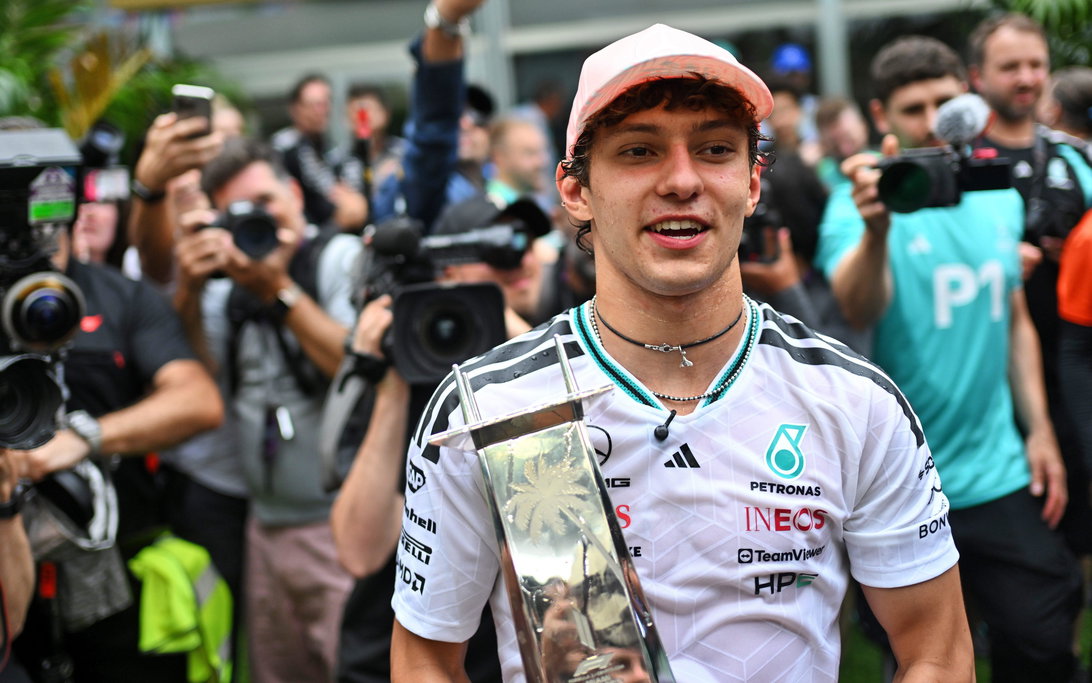
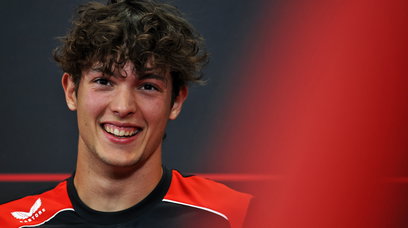
Kimi Antonelli has enjoyed a remarkable opening to his Formula 1 campaign, something few anticipated when Mercedes unveiled their driver pairing for 2026.
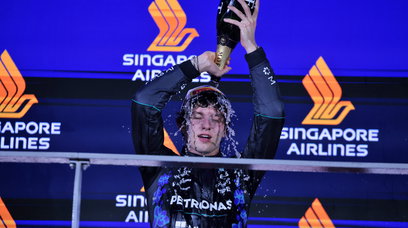
The 19-year-old sits atop the F1 drivers' championship and has become the first driver in a decade to reach triple figures after just four grand prix weekends, a feat that underlines the extraordinary nature of his early-season form.
The narrative seemed set from the outset. Mercedes had quickly established itself as the benchmark team, with George Russell the title favourite.
Antonelli was viewed as undoubtedly talented but perhaps not yet seasoned enough to genuinely trouble his more experienced team-mate.
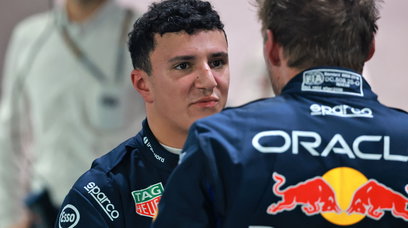
The Australian Grand Prix appeared to confirm those expectations, though the Italian still managed second place behind Russell. The China sprint further reinforced the pecking order, with Russell clearly superior while Antonelli caused a collision with Red Bull's Isack Hadjar and could only manage fifth.
But the tide turned dramatically during that same Shanghai weekend. Russell encountered difficulties in Q3, and since then, it has been Antonelli who has dominated proceedings with three pole positions and three grand prix victories.
His only defeat came in the Miami sprint, won by McLaren's Lando Norris, where Antonelli dropped to sixth following a time penalty.
These results have propelled Antonelli to championship leader status, making him the youngest driver in F1 history to top the standings. He has also become only the second driver to accumulate 100 points after four race weekends, joining Nico Rosberg, who achieved the same milestone in 2016.
The crucial difference lies in the maximum potential. Rosberg's century represented a perfect score, having won every available point. Antonelli could theoretically have reached 116 points had he claimed victory in every grand prix and sprint race.
Nevertheless, breaching the magical 100-point barrier after four weekends remains a significant achievement. Sebastian Vettel, Lewis Hamilton, and Max Verstappen all came close during their dominant periods but failed to cross that threshold.
See below all of the F1 drivers' standings leaders after four rounds since 2016. Article continues beneath.
F1 drivers' standing leaders after four rounds (since 2016)
| Year | Driver | Points scored | Maximum points available | Eventual champion |
|---|---|---|---|---|
| 2016 | Nico Rosberg | 100 | 100 | Nico Rosberg |
| 2017 | Sebastian Vettel | 86 | 100 | Lewis Hamilton |
| 2018 | Lewis Hamilton | 70 | 100 | Lewis Hamilton |
| 2019 | Valtteri Bottas | 87 | 104 | Lewis Hamilton |
| 2020 | Lewis Hamilton | 88 | 104 | Lewis Hamilton |
| 2021 | Lewis Hamilton | 94 | 104 | Max Verstappen |
| 2022 | Charles Leclerc | 86 | 112 | Max Verstappen |
| 2023 | Max Verstappen | 93 | 112 | Max Verstappen |
| 2024 | Max Verstappen | 77 | 104 | Max Verstappen |
| 2025 | Lando Norris | 77 | 108 | Lando Norris |
| 2026 | Kimi Antonelli | 100 | 116 | TBC |
Whilst it may seem premature to draw conclusions, the historical precedent offers fascinating insight into championship trajectories.
An analysis of drivers who led the standings after four race weekends reveals intriguing patterns about their ultimate success.
Since the current points system was introduced in 2010, awarding 25 points to race winners and extending rewards through the top 10, 16 drivers have been crowned champion. In 10 instances, the driver leading after four weekends went on to secure the title.
However, the sport has witnessed three major regulation changes during this period: in 2014, 2017, and 2022. Remarkably, in all three years, a different driver claimed the championship from the one leading after the opening quartet of races.
With 2026 marking another significant regulatory overhaul, the historical evidence suggests the odds are stacked against the young Italian. The pattern indicates that substantial rule changes often shuffle the competitive order as teams adapt at varying rates throughout the campaign.
Antonelli faces the challenge of bucking this trend and proving that early-season pace can translate into sustained championship success despite the inherent uncertainties accompanying major regulatory changes.
Also interesting:
Join RacingNews365's Ian Parkes and Nick Golding for a special episode, as they are joined by Formula E CEO Jeff Dodds! The trio discuss the rapidly closing performance difference between FE and F1, with Dodds opening up on where he sees the series going.
Rather watch the podcast? Then click here!

Most read


In this article
Never miss a thing from the Formula 1 season! Add the 2026 F1 schedule to your calendar at the touch of a button. Subscribe below and put the dates and times of every race directly on your PC or smartphone, so you don't miss a second from the new season.
Download the F1 calendar Download the F1 calendar
A variant with just the race and qualifying is also available.
Click here to download it..





Join the conversation!