


Charles Leclerc's 20-second time penalty at the Miami Grand Prix is a stewards' decision that raised eyebrows due to the severity of the punishment.
The Ferrari driver was hit with a drive-through penalty — later converted into the sanction he eventually recieved, as it was awarded following the chequered flag — after the FIA determined that he "left the track on several occasions without a justifiable reason."
Initially, the message relayed during the race suggested the more familiar wording: leaving the track multiple times and gaining an advantage. However, the final stewards' document — while still referencing advantage — placed greater emphasis on the act of repeated breaches itself.
But to understand why the penalty was applied, it is necessary to rewind to a chaotic final lap in Miami.
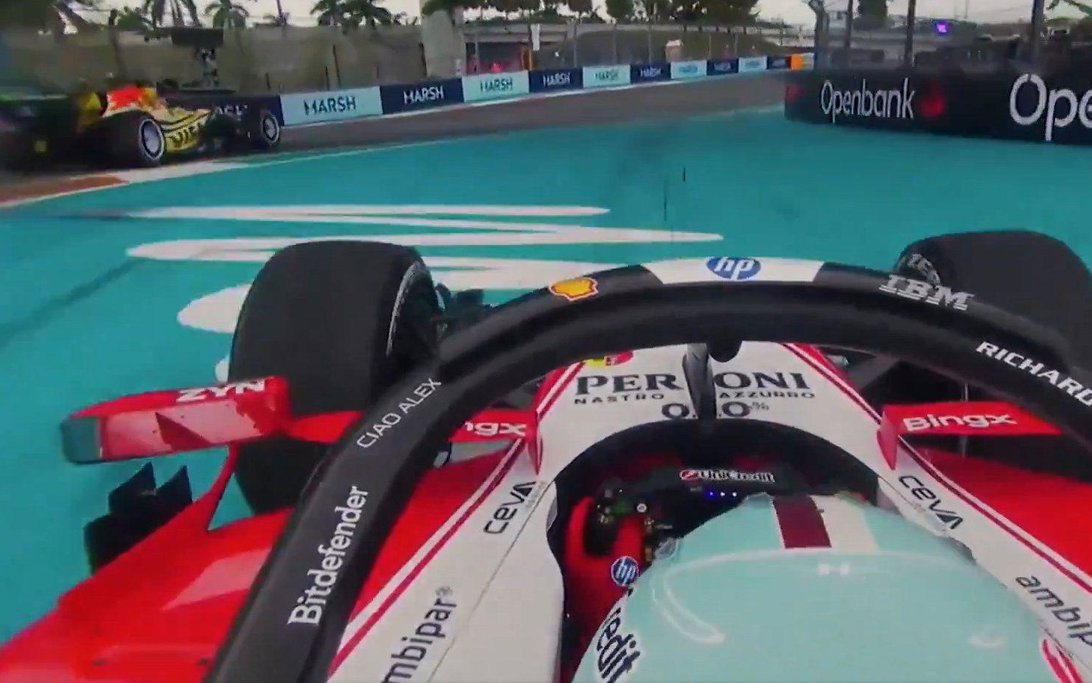
Leclerc had been battling Oscar Piastri for the final podium position when his race began to unravel. Exiting Turn 3, he lost control of his SF-26, spinning and making contact with the wall.
Although the impact was not heavy enough to force an immediate retirement, it left his car with a significant handling issue — particularly through right-hand corners.
As he tried to nurse the car to the finish, he repeatedly failed to make corners, running straight on and leaving the track multiple times.
Over team radio and in the stewards' hearing, he explained that the car "would not negotiate the right-hand corners properly." That explanation was accepted — but not as a defence.
The article continues after the onboard footage of Charles Leclerc's final lap of the Miami Grand Prix.
A contentious verdict?
The stewards were clear in their assessment. After reviewing positioning data, video footage, team radio and in-car evidence, they concluded that the damage forced Leclerc into those errors, stating: "Given this problem, he was forced to cut chicanes on the way to the chequered flag."
However, they drew a firm line on what constitutes justification. A mechanical limitation, in their view, did not meet the threshold required under the regulations. Crucially, they added that by leaving the track in this manner, "he gained a lasting advantage."
That point is where the decision becomes contentious, because, in real terms, Leclerc's race was already slipping away.
Following his spin and subsequent off-track moments, he was overtaken by both George Russell and Max Verstappen. Far from gaining an advantage, he was losing positions and struggling to keep the car on the road at all.
He crossed the line sixth on the road, having failed to fend off the faster cars behind, before the 20-second penalty demoted him further to eighth in the final classification, behind Lewis Hamilton and Franco Colapinto.
This apparent contradiction — a "lasting advantage" that did not translate into track position — is at the heart of the debate.
Although it remains possible that the panel of officials deemed that finishing in sixth was a lasting advantage for the Monegasque driver, even though Hamilton was a further nine seconds down the road and Colapinto was a further eight seconds back.
Either way, while the FIA's initial communication explicitly mentioned gaining an advantage, the final outcome leaned more heavily on the repeated nature of the infringement rather than any clear sporting gain. In effect, the focus shifted.
The severity of the penalty reflects that interpretation. A drive-through penalty, even when converted post-race, is significantly harsher than the standard five- or 10-second sanctions typically associated with track limits violations.
The stewards justified it based on frequency, noting the number of times Leclerc left the track in a very short period — effectively compressing multiple infringements into a single lap.
Alongside the track limits issue, there was also the question of whether Leclerc should have continued at all. Driving a damaged car can constitute a separate breach if it is deemed unsafe.
However, on this point, the stewards were more forgiving. Despite Leclerc's own admission about the handling problem, they found "no evidence of there being an obvious or discernible mechanical issue" that would render the car unsafe, and therefore took no further action.
From a regulatory standpoint, the case was handled under Article B1.8.6 of the FIA F1 regulations, which centres on leaving the track without a justifiable reason and any advantage that may arise from doing so.
The stewards accepted the cause of the excursions but rejected it as justification, thereby completing the criteria for a penalty.
Viewed by others:
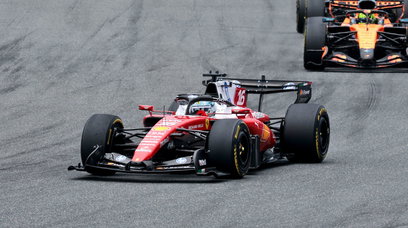
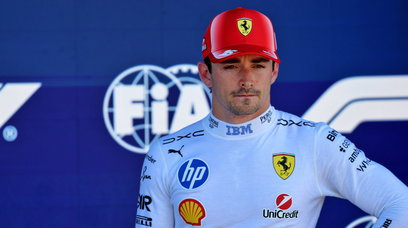
Hamilton comparison
A useful comparison can be made with Hamilton's penalty at the Singapore Grand Prix last year, which on the surface appears strikingly similar.
The seven-time F1 drivers' champion was handed a five-second time penalty for "leaving the track without a justifiable reason, multiple times," having been managing a brake issue.
There, too, the driver cited a mechanical problem. There, too, the stewards dismissed it as insufficient justification. Yet the outcome was very different.
Hamilton's case was processed under Article 33.3 of the FIA F1 sporting regulations, alongside Article 12.2.1 i) of the international sporting code, relating to non-compliance with the race director's event notes.
Those provisions form the backbone of standard enforcement of track limits, where penalties tend to follow the usual structured escalation — warnings, then incremental time penalties.
Leclerc's infringement, by contrast, was treated as a more acute and concentrated breach. Rather than a gradual accumulation over several laps, his multiple offences occurred in rapid succession on a single lap, immediately after sustaining damage.
Combined with the stewards' interpretation that he gained a "lasting advantage," that appears to have justified bypassing the usual step-by-step approach in favour of a more severe sanction.
Most read



In this article
Never miss a thing from the Formula 1 season! Add the 2026 F1 schedule to your calendar at the touch of a button. Subscribe below and put the dates and times of every race directly on your PC or smartphone, so you don't miss a second from the new season.
Download the F1 calendar Download the F1 calendar
A variant with just the race and qualifying is also available.
Click here to download it..





Join the conversation!