


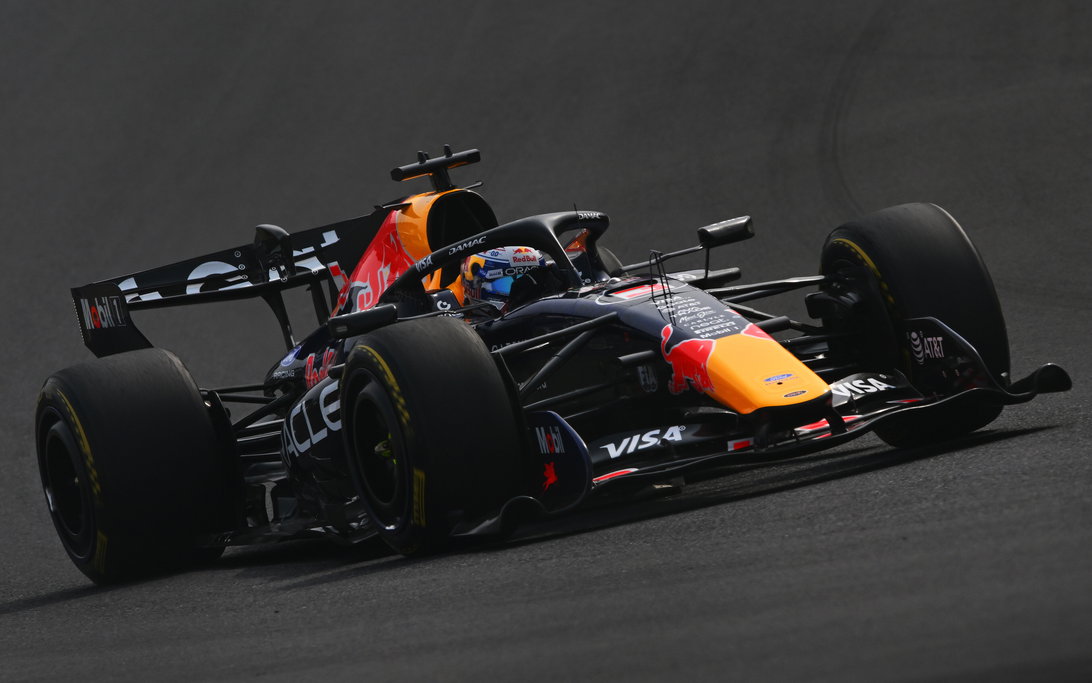
Red Bull can, at present, be described as a team with two very different faces when assessing the overall performance of the RB22.
On the one hand, the RBPT–Ford power unit has proven significantly stronger and more reliable than expected.
Whilst on the other, the chassis produced in Milton Keynes has so far fallen short of the level required to compete on equal terms with the other front-running teams.
In short, outright power does not appear to be the primary concern.
According to paddock sources, RBPT may not qualify for Additional Development and Upgrade Opportunities (ADUO).
Its performance deficit relative to the Mercedes power unit is believed to be below 2 per cent — unlike Ferrari, Honda and Audi — meaning it is unlikely to benefit from additional budget allowances or development freedoms to close the gap.
Instead, the main issues appear to lie with the car itself, particularly in terms of vehicle dynamics and aerodynamics.



What is the problem?
Across the opening three races — most notably in Japan — the RB22 has exhibited pronounced instability between the front and rear axles. The car has been affected by significant understeer on corner entry, followed by equally marked oversteer on exit.
In addition, sudden snaps of instability were clearly visible in Japan, forcing drivers into abrupt corrective inputs.
Addressing such behaviour in a short timeframe will not be straightforward. With only a brief break in the calendar, major mechanical changes are unlikely, beyond a detailed analysis of how the car responds to different set-up configurations.
Revising suspension geometry, for example, appears unrealistic given the limited time available. What is more achievable — and urgently required — is a better integration between the car's aerodynamic platform and its mechanical behaviour.
Put simply, the RB22 needs improved aerodynamic balance, with more stable operating maps and a more consistent distribution of downforce.
At the same time, the suspension response must be adapted to these revised aerodynamic characteristics, helping to smooth load transfers and reduce the car's tendency to react sharply to changes in direction or grip. The goal is a more predictable and less 'pointy' balance.
Viewed by others:
The weight issue
One key factor, however, may be exerting a decisive influence on the RB22's behaviour: weight.
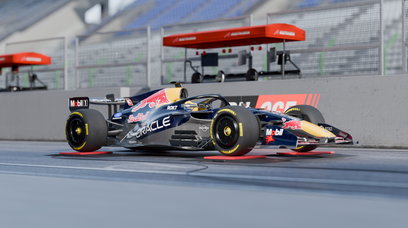
According to various estimates, the car is significantly overweight — RacingNews365 understands this to be by as much as 10kg. This not only affects overall performance but also limits optimal weight distribution.
As a result, a weight reduction programme became an immediate priority following pre-season testing in Bahrain.
It is therefore highly likely that, by the Miami Grand Prix, Red Bull will introduce revised components that appear visually identical to their predecessors but have been engineered to be lighter.
Such developments would deliver benefits across multiple areas, including energy management. A lighter car inherently improves energy efficiency, enhancing both recovery and deployment phases of the hybrid system.
In summary, Red Bull's to-do list is clear: refine the aerodynamics, reduce weight, and improve the integration between vehicle dynamics and aerodynamic performance.
The team will aim to address these areas in parallel ahead of Miami, although with limited time available, prioritisation will be crucial in tackling a set of issues that are both complex and interdependent.
Also interesting:
Join RacingNews365's Ian Parkes, Sam Coop and Nick Golding as they look back on last weekend's Japanese Grand Prix! The trio discuss what F1 and the FIA must change across the five-week break and if Max Verstappen could actually retire.
Rather watch the podcast? Then click here!


Most read



In this article
Never miss a thing from the Formula 1 season! Add the 2026 F1 schedule to your calendar at the touch of a button. Subscribe below and put the dates and times of every race directly on your PC or smartphone, so you don't miss a second from the new season.
Download the F1 calendar Download the F1 calendar
A variant with just the race and qualifying is also available.
Click here to download it..





Join the conversation!