


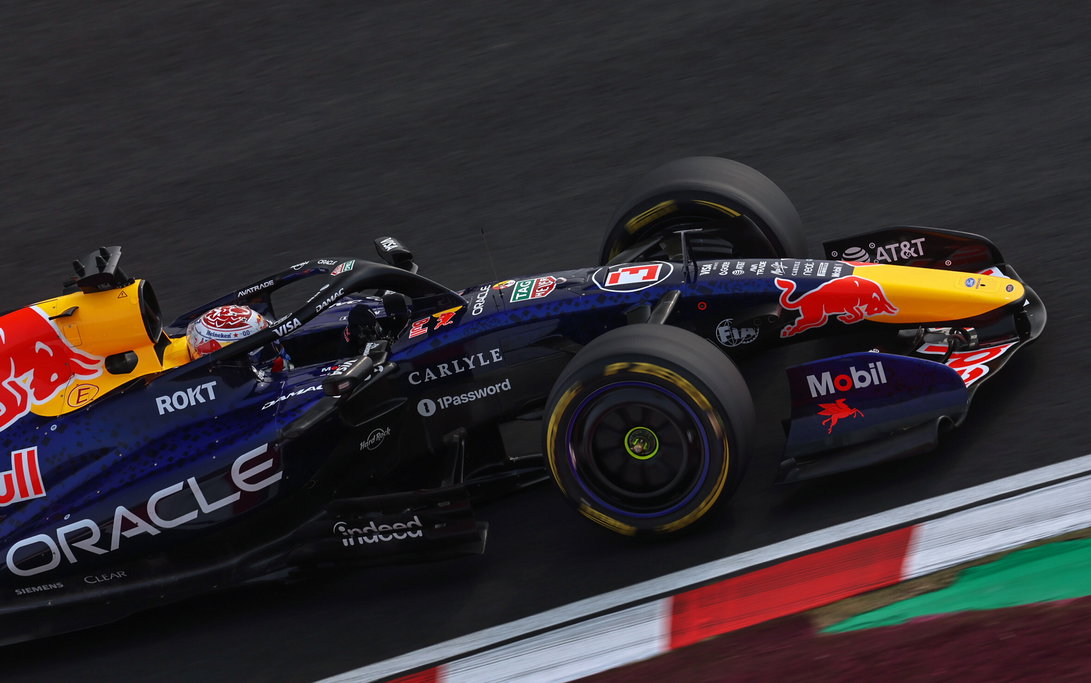
All 11 F1 teams are using April to finalise upgrade packages set to debut at the Miami Grand Prix, most of which were already planned within structured development roadmaps.
However, early-season performance across the opening three races has inevitably prompted some revisions to initial targets.
Mercedes, despite currently fielding the car to beat, will introduce updates in line with its original programme.
The team has encountered only minor reliability concerns so far — primarily software-related issues that surfaced intermittently during the first three race weekends.
A key objective for the W17's ongoing development is a gradual weight reduction, aimed at increasing ballast flexibility and optimising weight distribution.
Aerodynamic refinements are also expected, with early indications pointing to a further evolution of the car's concept, particularly at the rear end.
By contrast, Ferrari is set to revise the aerodynamic concept of the SF-26 around its so-called 'macarena' rear wing philosophy — a solution centred on maximising airflow efficiency.
The updates will focus primarily on the floor and the lower section of the sidepods, alongside revised front wing flap geometries. In addition, a significant step forward is expected in the software governing energy recovery systems.
Elsewhere, McLaren will introduce a substantial upgrade package in Miami, designed to move the MCL40 beyond the 'under development' phase that has defined its season so far.



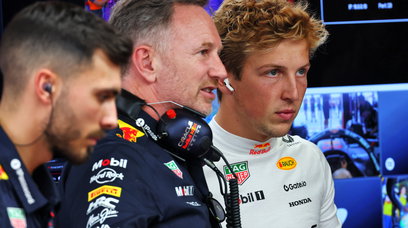
The situation at Red Bull
More intriguing still, however, is the situation at Red Bull, which is aiming to return to consistent front-running form with the RB22.
Paddock sources indicate that the primary focus lies in vehicle dynamics — specifically, the suspension's response to load variation. This has emerged as a critical weakness, contributing to abrupt and unpredictable behaviour in cornering.
Paradoxically, the RB22's current strength appears to be its power unit, which has not shown a performance deficit significant enough to fall within the scope of the first ADUO (Additional Development and Upgrade Opportunities) allowances.
In essence, Red Bull's challenge is to achieve a more effective integration between aerodynamics and mechanical behaviour, chiefly through a comprehensive remapping of aerodynamic load distribution.
This is unlikely to result in visually dramatic changes, but rather in a more cohesive interaction between components — ultimately delivering a more stable and predictable car.
Weight reduction will also form a central pillar of the Miami upgrade package. In this regard, shedding excess mass is expected to have a significant influence on the car's overall dynamics.
Also interesting:
Join RacingNews365's Nick Golding and Samuel Coop as they dissect the major story of Gianpiero Lambiase leaving Red Bull to join McLaren. The impact of Lambiase leaving is discussed and what it means for Max Verstappen, plus the FIA's April meetings are looked into.
Rather watch the podcast? Then click here!


Most read


In this article
Never miss a thing from the Formula 1 season! Add the 2026 F1 schedule to your calendar at the touch of a button. Subscribe below and put the dates and times of every race directly on your PC or smartphone, so you don't miss a second from the new season.
Download the F1 calendar Download the F1 calendar
A variant with just the race and qualifying is also available.
Click here to download it..





Join the conversation!