


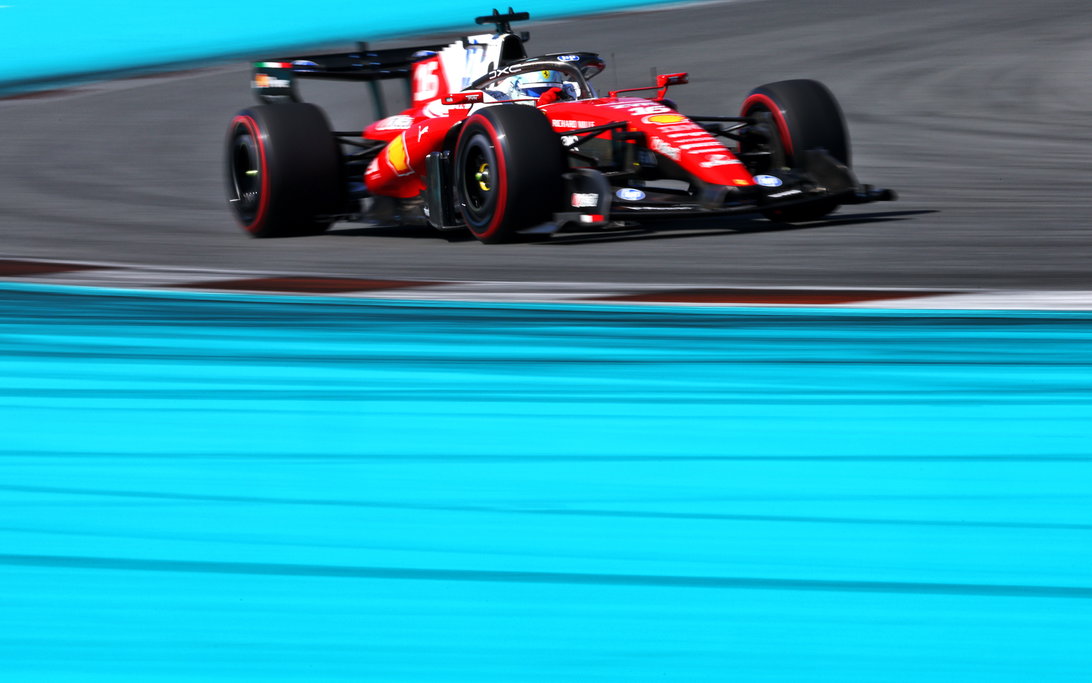
Ferrari chose the Miami Grand Prix to roll out a major aerodynamic upgrade package on the SF-26, with no fewer than eleven changes declared in the FIA’s official submissions.
As expected, the updates spanned the entire car — from front wing to diffuser — but it is the rear end that has received the most intensive and refined development work. Here’s a closer look at what’s new.
Front wing
The primary changes here focus on the endplates, which now feature a revised curvature in their vertical profile.
This is a crucial area, as it heavily influences how airflow is directed towards the central section of the car, including the barge boards positioned ahead of the sidepods.
The update results in a markedly different management of airflow heading both towards the mid-body and into the sidepod inlets.
Barge boards
The deflectors ahead of the sidepods have been significantly overhauled. Most notably, the vertical element preceding the horizontal profiles has effectively been doubled, with the two sections separated by a full-length slot gap.
This configuration helps guide airflow rearwards while pushing turbulence generated by the front wheels further outboard.
The revised design plays a critical role in stabilising the car’s aerodynamic map, ensuring a more consistent load distribution by reducing the impact of turbulent airflow along the car’s flanks.
Sidepod inlets and undercut
Ferrari has also introduced a new profile for the sidepod air intakes, along with revisions to the undercut — the channel between the sidepods and the floor.
The aim is to optimise airflow management along the inner surfaces of the sidepods as it travels towards the rear. This contributes to increased aerodynamic load at the rear axle, working in tandem with targeted floor modifications.
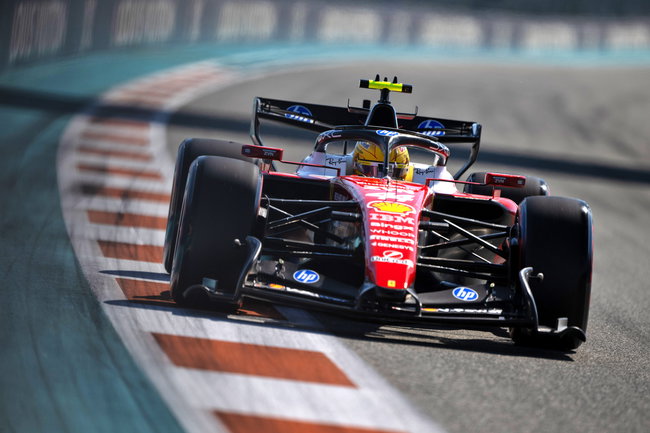
Floor edge and diffuser area
The floor has been updated in the region ahead of the rear wheels, leading into a redesigned central section of the diffuser and an expanded outlet.
These changes are geared towards improving airflow extraction and overall efficiency at the rear of the car.
Extended rear brake duct vanes
A particularly interesting addition is the presence of multiple vertical vanes that effectively split the diffuser flow into two lateral channels.
The rearward extension of the brake cooling duct covers creates an additional channel between the diffuser’s outer edge and these extensions, increasing airflow velocity at the exit and enhancing overall extraction.
"Macarena" wing
Perhaps the most anticipated element of the package is the so-called "Macarena" wing, which has undergone several months of validation, including use during free practice sessions earlier in the season.
The final specification shows meticulous attention to detail, especially in the endplates, which now incorporate the actuators responsible for adjusting the wing profiles.
The lower wing profile has also been revised, but the most significant change concerns the FTM — the sculpted fin with a pronounced central concavity located behind the exhaust outlet.
Its function is to promote rear wing stall on the straights while simultaneously boosting diffuser extraction.
Overall impact
Taken together, these updates amount to a thorough recalibration of the SF-26’s aerodynamic package.
Improvements have been made both to the upper surfaces — enhancing overall efficiency — and to the lower regions, particularly the diffuser, resulting in a clear increase in downforce generation.
Also interesting:
Join RacingNews365's Nick Golding and Samuel Coop as they look back on last weekend's Miami Grand Prix! The duo offer their thoughts on F1's rule changes in action and Max Verstappen remaining unhappy despite an exciting race.
Rather watch the podcast? Then click here!


Most read

In this article
Never miss a thing from the Formula 1 season! Add the 2026 F1 schedule to your calendar at the touch of a button. Subscribe below and put the dates and times of every race directly on your PC or smartphone, so you don't miss a second from the new season.
Download the F1 calendar Download the F1 calendar
A variant with just the race and qualifying is also available.
Click here to download it..





Join the conversation!