


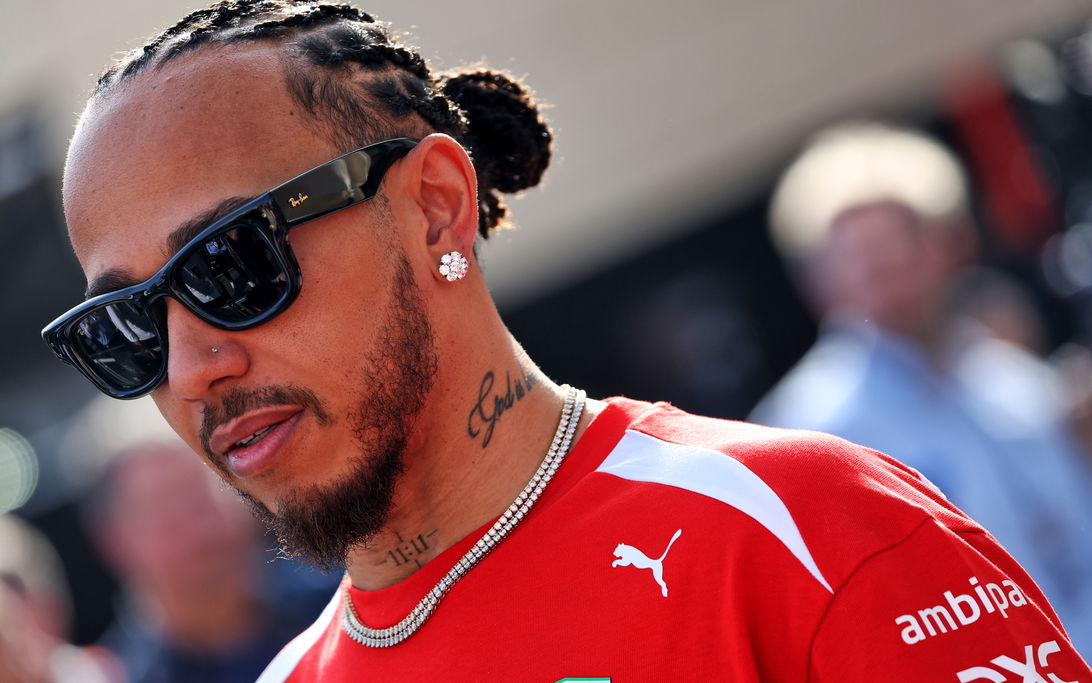
Lewis Hamilton has explained why F1 drivers must change their driving styles in 2026 owing to the "crucial" demands of the new energy systems.
With power output now coming from a 50-50 split between internal combustion and the beefed-up electrical systems, drivers are having to manage their energy levels to a far greater extent than in 2025, with a depletion of battery power meaning the car would revert to ICE power only.
Drivers are having to lift and coast to protect their batteries' state of charge, with Max Verstappen even experimenting with an aggressive driving style on Wednesday of changing down into first gear for the low-speed Turn 10 and revving the engine.
This forces more energy back into the system for a driver to use, with Verstappen launching an astonishing broadside against the regulations, branding them "anti-racing" and like "Formula E on steroids."
Reflecting on the new demands placed on drivers, Hamilton broke down the importance of mastering the technique and of energy management.
"The low gears that we have to go down into are because we can't recover enough battery power, so we have to rev the engines very, very high," Hamilton observed to media, including RacingNews365.
"We're going down into second, or first in some places, just to try and recover that extra bit of power.
"If you look at somewhere like Barcelona, we're doing 600 metres lifting and coasting on a qualifying lap, so that's not what racing is about.
"Here, we're not having to do that, as there are lots of braking zones, but it doesn't help because the steps between the ratios are quite heavy, quite high, and so when you kick down into first gear, it can snap, but there is also very low downforce.
"Energy management is going to be key. Which team is most on top of deployment and all of that, and which driver is on top of that. The management control which drivers are getting those things is going to be crucial.
"But we'll find out more as we get into the race scenarios, but everyone is in the same boat."
Also interesting:
In this video, we explore a fascinating Mercedes engine theory that is engulfing the F1 paddock. We break down how it works, why it matters, and why this advantage — if real — may be brilliant, legal… but only temporary.
Get the latest F1 news from RacingNews365 directly in your Google feed! Click on the link below and you’ll see your favourite F1 website appearing even more often. That way, you’ll never miss any news, analyses, interviews, or exclusives.
Follow RacingNews365 on GoogleMost read



In this article
Never miss a thing from the Formula 1 season! Add the 2026 F1 schedule to your calendar at the touch of a button. Subscribe below and put the dates and times of every race directly on your PC or smartphone, so you don't miss a second from the new season.
Download the F1 calendar Download the F1 calendar
A variant with just the race and qualifying is also available.
Click here to download it..





Join the conversation!