


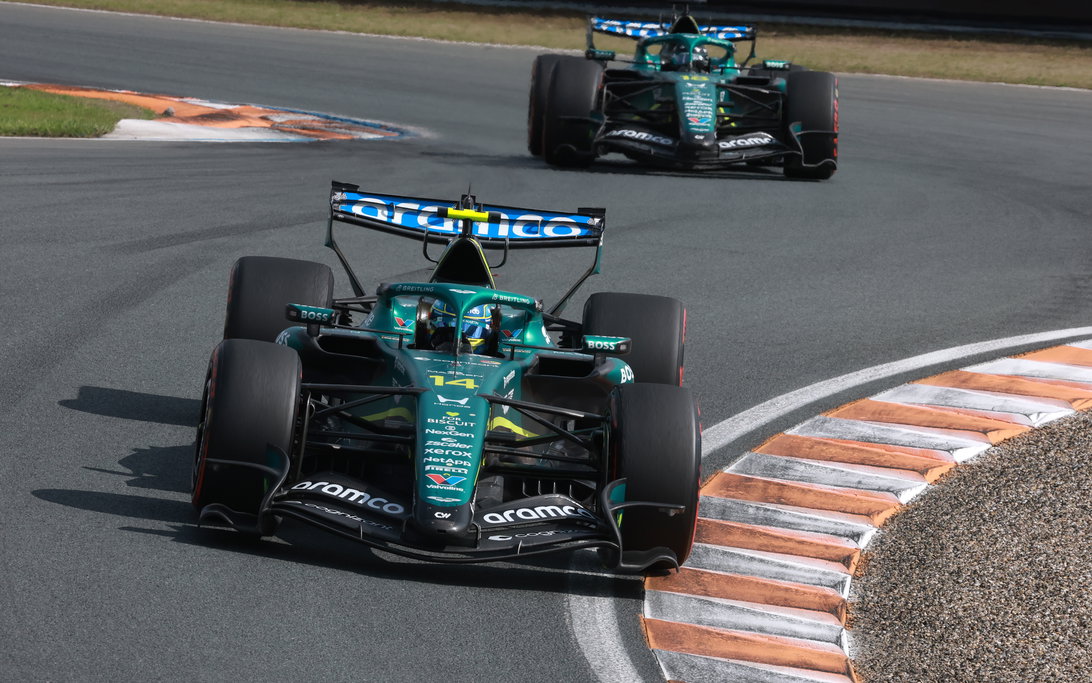
Honda has detailed the challenge facing every F1 team in the Mexico City Grand Prix, as the new power units are run at high altitude for the first time.
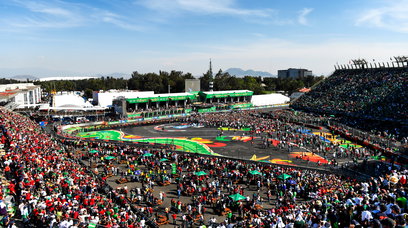
At 2,285m above sea level, the air density at the Autodromo Hermanos Rodriguez is around 25% lower than at sea level, meaning the turbo must spin faster to ensure it can provide the air the engine requires to perform.
Previously, this function was aided by the MGU-H, which helped to reduce turbo lag - the delay between the demand for power and the turbo actually providing it.
Now, with the MGU-H removed from the 2026-spec engines, the turbo will receive no support and have to work considerably harder to fulfil the same duties as in 2025.
Analysing the situation, Honda's chief engineer Shintaro Orihara explained the challenge in detail.
"This is the first time running in Mexico, and last year, we had the MGU-H, so we had some support from the MGU-H, but this year, we don't have it," Orihara told media, including RacingNews365.
"That is quite challenging, and for example, in idle, we had MGU-H support to get inner boost pressure, but this year, we don't have any support in idle.
"I think not only Honda, but all power unit manufacturers will struggle with power with these power units, but it is not only power.
"In Mexico, turbocharger speed is quite high to get airflow, and then we may need to check, but we may have some restrictions on engine function in the worst case.
"We have done a lot of dyno testing, and we believe there is almost no impact on energy operations, but we need to check in practice."
Orihara was then questioned about why, if higher turbo RPM was being recorded, turbo lag could be an issue.
"The turbocharger has some limitations in terms of operating speed," he said.
"And if we hit the operating speed, we can provide a good solution, and at the moment, we don't have any concerns."
[Article continues below]

Honda's turbocharger
One issue Honda has struggled with since introducing its second ADUO boost in Spain and Azerbaijan has been turbo lag.
However, following a positive weekend last time out in the United States, Orihara was positive that knowledge had been gained to reduce the effect of it.
"In Austin, we worked with countermeasures for turbo lag, and we have confirmed the effect of the turbo lag, and it was quite positive for us coming here," he said.
"So I think that is a positive, and also in Sakura, they are still working hard to optimise power, and in Sakura, they are still working on how to improve turbo lag.
"So it is quite important to see how our turbo behaves in free practice, but I am sure this is not only for Honda, but other manufacturers.
"We have done dyno testing in Sakura to simulate Mexico conditions, so we have some idea of what will happen, but without any running at high altitude physically for the first time, it will be quite interesting to see how our turbocharger behaves."
Also interesting:
Join RacingNews365's Ian Parkes, Sam Coop and Nick Golding as they look back on the United States GP and look ahead to Mexico City! Red Bull's return of gearbox gremlins is a lead discussion, as is Kimi Antonelli being just days away from becoming world champion.
Rather watch this episode? Then click here!


Most read






In this article
Never miss a thing from the Formula 1 season! Add the 2026 F1 schedule to your calendar at the touch of a button. Subscribe below and put the dates and times of every race directly on your PC or smartphone, so you don't miss a second from the new season.
Download the F1 calendar Download the F1 calendar
A variant with just the race and qualifying is also available.
Click here to download it..


Join the conversation!