


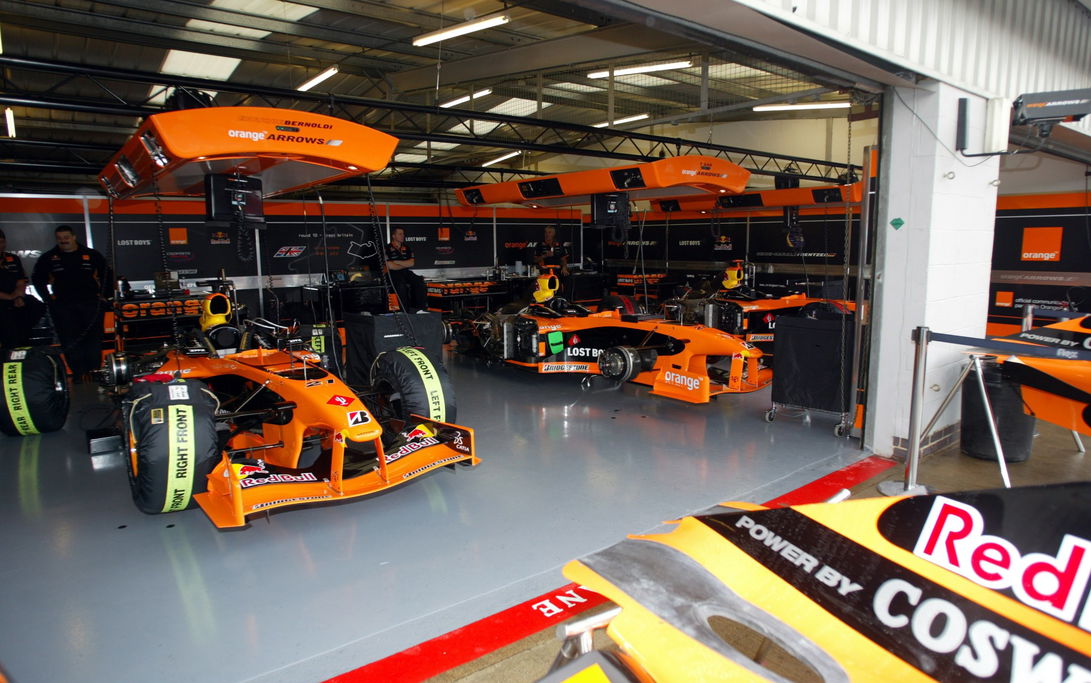
Twenty-five years after bursting onto the Formula 1 grid as one of the sport’s most ambitious independent ventures, Arrows Grand Prix International collapsed into receivership on 2 January 2003.
The closure brought an abrupt end to one of F1's longest-serving teams and left hundreds of employees facing redundancy as the new season approached.
Arrows' demise was both sudden and long foretold. Financial instability had defined much of the team's existence, but the crisis reached its terminal phase during the 2002 season, when mounting debts, legal disputes, and unpaid suppliers steadily strangled operations.
The result was an ignominious exit from the sport without a single grand prix victory across 394 championship entries — the most of any F1 team without at least one win.
Viewed by others:

Financial crisis reaches breaking point
The 2002 campaign began with cautious optimism, but by mid-season the scale of Arrows' financial distress could no longer be concealed.
At the French Grand Prix, the team took the extraordinary step of deliberately withdrawing both cars from qualifying.
By appearing at the event yet avoiding full participation, Arrows sought to reduce operating costs while temporarily deferring demands from creditors.
It was a short-term survival tactic that bought little more than time. Engine supplier Cosworth, already owed substantial sums, began insisting on payment in advance before releasing power units.
When those guarantees could not be met, Arrows' participation became impossible.
After the German Grand Prix, the situation deteriorated rapidly, and from the Hungarian Grand Prix onwards, the team failed to appear for the final five rounds of the championship, effectively ending its season months early.
Team principal Tom Walkinshaw attempted to stabilise the operation through personal funding and last-ditch negotiations, but the underlying problems proved insurmountable.
Legal action from creditors, including a winding-up petition linked to unpaid contractual obligations, compounded the crisis. With finances frozen and suppliers unwilling to continue, Arrows' collapse became inevitable.
The final reckoning
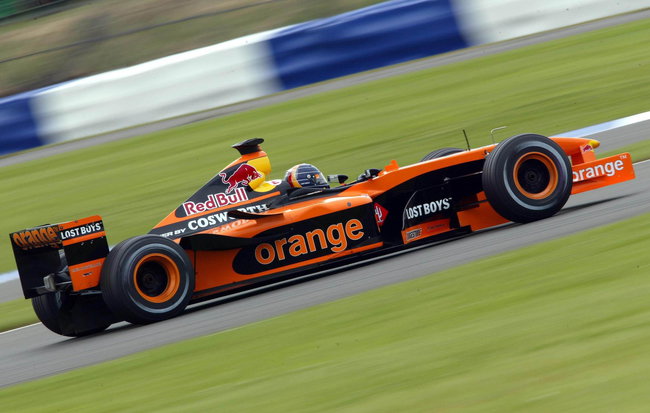
The irony of Arrows' end lay in how boldly it had begun. Founded in late 1977 by five former Shadow employees — Franco Ambrosio, Alan Rees, Jackie Oliver, Dave Wass and Tony Southgate — the team's name was derived from their initials.
Its debut season was famously turbulent: after a successful copyright claim forced the abandonment of their original FA1 chassis, Arrows constructed a replacement in just over 50 days to remain on the grid.
Moments of genuine competitiveness followed. The team enjoyed its strongest period in the late 1980s, finishing fourth in the constructors' championship in 1988, and regularly scored points despite limited resources.
Drivers such as Thierry Boutsen, Riccardo Patrese and Derek Warwick delivered standout performances, while Damon Hill's near-victory at the 1997 Hungarian Grand Prix, undone by a late hydraulic failure, became the enduring symbol of Arrows' misfortune.
By early 2003, all rescue efforts had collapsed. Potential investment deals failed to materialise, and the FIA rejected Arrows' application to enter that year's championship.
Receivers were appointed, staff were made redundant, and one of Formula 1's most resilient independent teams quietly disappeared.
Also interesting:
Join RacingNews365's Ian Parkes, Sam Coop and Nick Golding in the final episode of the year, as Ian and Sam battle it out again in the RacingNews365 Big Fat F1 Quiz of the Year! Join in the fun by yourself or with other people to test your 2025 F1 knowledge!
Rather watch the podcast? Then click here!


Most read


In this article
Never miss a thing from the Formula 1 season! Add the 2026 F1 schedule to your calendar at the touch of a button. Subscribe below and put the dates and times of every race directly on your PC or smartphone, so you don't miss a second from the new season.
Download the F1 calendar Download the F1 calendar
A variant with just the race and qualifying is also available.
Click here to download it..



Join the conversation!