


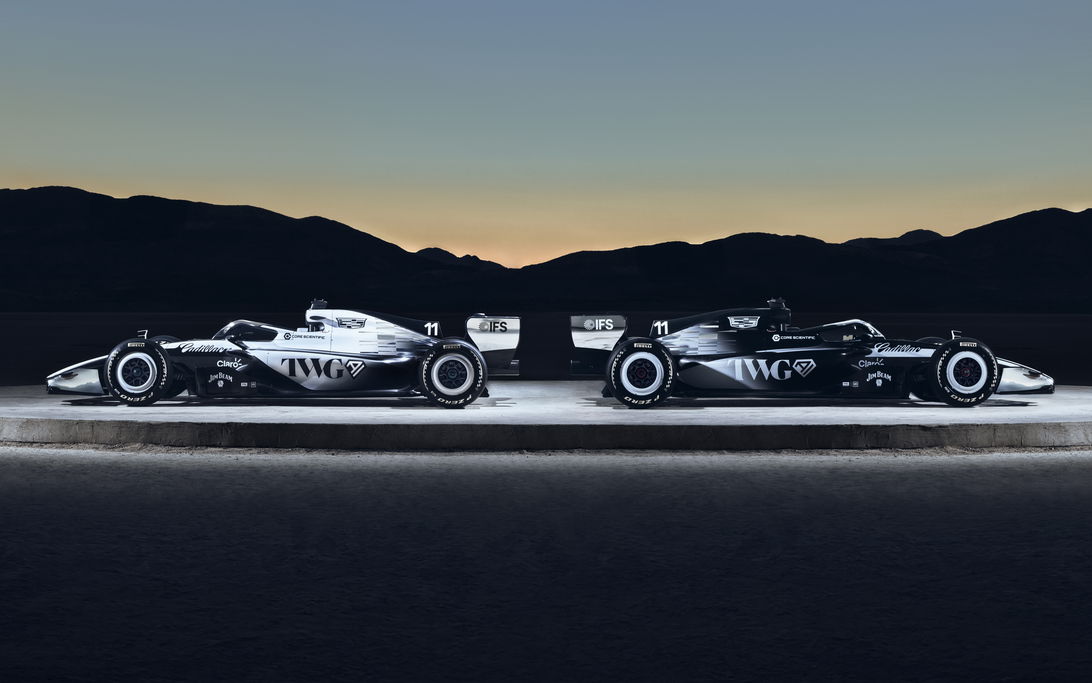
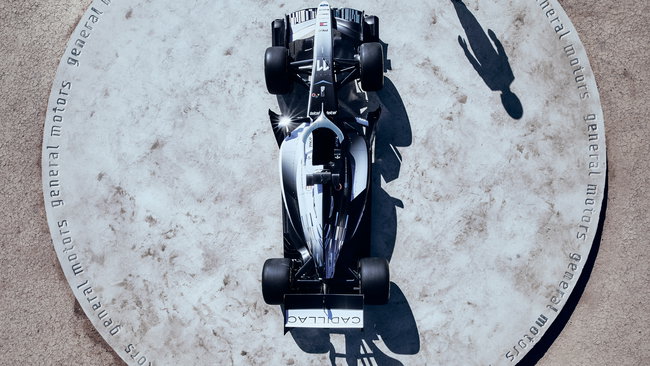
Cadillac has opted for a strikingly unconventional concept for its first F1 livery: an asymmetrical design. It is a bold move, one that instantly grabs attention.
But history suggests that such creativity can come with risks — especially for an American team entering F1 for the first time.
The last time the grid saw anything comparable was at the tail end of the 1990s, when British American Racing (BAR) arrived with what remains one of the most infamous liveries the sport has ever seen. The parallels with Cadillac are hard to ignore, and BAR's debut season is hardly encouraging reading.
When Craig Pollock acquired the legendary Tyrrell team in December 1997 for £30 million, he did so with the full backing of tobacco giant British American Tobacco.
BAR officially entered F1 in 1999, boasting Pollock as team principal, Adrian Reynard as technical director and minority shareholder, and 1997 F1 drivers' champion Jacques Villeneuve as its lead driver.
On paper, it looked like a dream combination. Reynard Motorsport had enjoyed huge success in Formula Ford, Formula 3, Formula 3000 and CART. Villeneuve brought pedigree, speed and star power. Financial backing was virtually unlimited. Pollock even declared before the season that BAR would "take the fight to McLaren and Ferrari".
But F1 has a habit of punishing big talk — and the first thing the world sees of a new team is not its ambition, but its car. And BAR certainly ensured no one would overlook the BAR 01.
Viewed by others:
The livery with the zipper
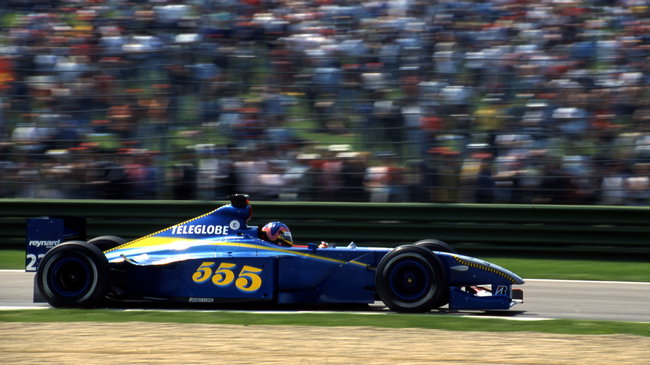
On 6 January 1999, BAR unveiled not one car, but two. Villeneuve's was decked out in the white, black and red colours of Lucky Strike, while team-mate Ricardo Zonta's machine wore the blue and yellow of fellow sponsor 555. Even the drivers' race suits were different.
The intention was to race both liveries at the Australian Grand Prix — a marketing masterstroke, at least in theory. The FIA, however, intervened.
Regulations required both cars from the same team to carry near-identical liveries, with only minor variations permitted.
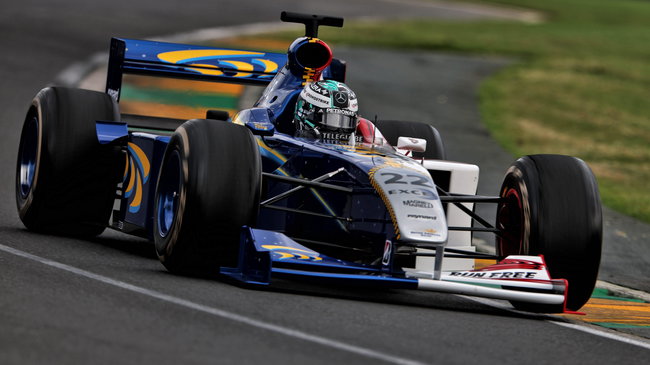
BAR was forced to improvise, and the solution was as infamous as it was creative. The result was a single car split straight down the middle: Lucky Strike on the left, 555 on the right, separated by a 'zip' graphic running over the nose. The rear wing followed the same logic, with 555 on one side and Lucky Strike on the other.
Mechanics wore half-and-half overalls to match. Only the drivers kept their original suits. The concept met the letter of the law, but opinion was brutal.
Still, BAR could console itself with one thought: if the results were good, the livery would quickly be forgiven.
They were not.
Reality bites
The bigger the expectations, the harder the fall. Reynard had even suggested before the season opener that a win at Albert Park was possible. "Why not?" he said — words that would haunt the team almost immediately.
The Australian Grand Prix was a disaster. Villeneuve qualified 11th, more than 2.5 seconds off pole-sitter Mika Häkkinen. Zonta was nearly four seconds slower and started 19th.
The race was worse still. Villeneuve's rear wing failed at high speed after 14 laps, sending him into a heavy crash. Zonta retired ten laps from the finish with gearbox failure.
It was only the beginning. Villeneuve opened the season with 11 consecutive retirements. Hydraulic failures, gearbox issues, broken driveshafts — the BAR 01 was riddled with problems. The Canadian finally saw the chequered flag for the first time at race 12 in Belgium, finishing a distant 15th.
BAR ended 1999 without a single point. A seventh place for stand-in driver Mika Salo — replacing Zonta after a heavy crash in Brazil — was the team’s best result.
Neither Villeneuve nor Zonta finished higher than eighth. BAR came last in the constructors' championship, behind Arrows and Minardi, teams often several seconds per lap slower. Talk of McLaren and Ferrari vanished overnight.
Lessons learned
In 2000, BAR changed course. The split livery was abandoned. Lucky Strike remained, but in a clean, simplified white, black and red design — no more visual gimmicks.
The effect was immediate. Both drivers scored points in the opening race of the season, a welcome relief after the humiliation of 1999. That Lucky Strike look went on to define BAR’s identity and became a fan favourite, far better aligned with the team’s long-term ambitions.
BAR would never win a grand prix, but it did claim 15 podiums and finished second in the constructors' championship in 2004.
After 2005, the team became Honda and won the Hungarian Grand Prix at the hands of Jenson Button in 2006.
Then, in 2009, Button won the F1 drivers' championship as the team became Brawn GP. The Brackley-based squad won the constructors' title that year, too, and ultimately evolved into today's Mercedes works outfit — with its considerable success.
A warning from history?
The BAR 01 remains a cautionary tale — of overconfidence, marketing ideas pushed too far, and expectations wildly out of sync with reality.
It did, at least, leave F1 with one of its most memorable liveries. Creative, yes. Successful, absolutely not.
For Cadillac, the comparison is unavoidable. An American team. A debut season. An asymmetrical livery designed to stand out. BAR tried something similar a quarter of a century ago, and it ended in total failure.
Bold ideas can help define a new identity — but history suggests that, in F1, getting the fundamentals right matters far more than grabbing attention.
Cadillac may hope its split design becomes a symbol of innovation. BAR is a reminder that it can just as easily become a warning sign.
Also interesting:
Join RacingNews365's Ian Parkes, Sam Coop and Nick Golding, as they look ahead to the first of two three-day tests in Bahrain! The trio discuss who to keep an eye on and the fascinating approaches being taken to car development in 2026.
Rather watch the podcast? Then click here!


Most read
In this article
Never miss a thing from the Formula 1 season! Add the 2026 F1 schedule to your calendar at the touch of a button. Subscribe below and put the dates and times of every race directly on your PC or smartphone, so you don't miss a second from the new season.
Download the F1 calendar Download the F1 calendar
A variant with just the race and qualifying is also available.
Click here to download it..


Join the conversation!