


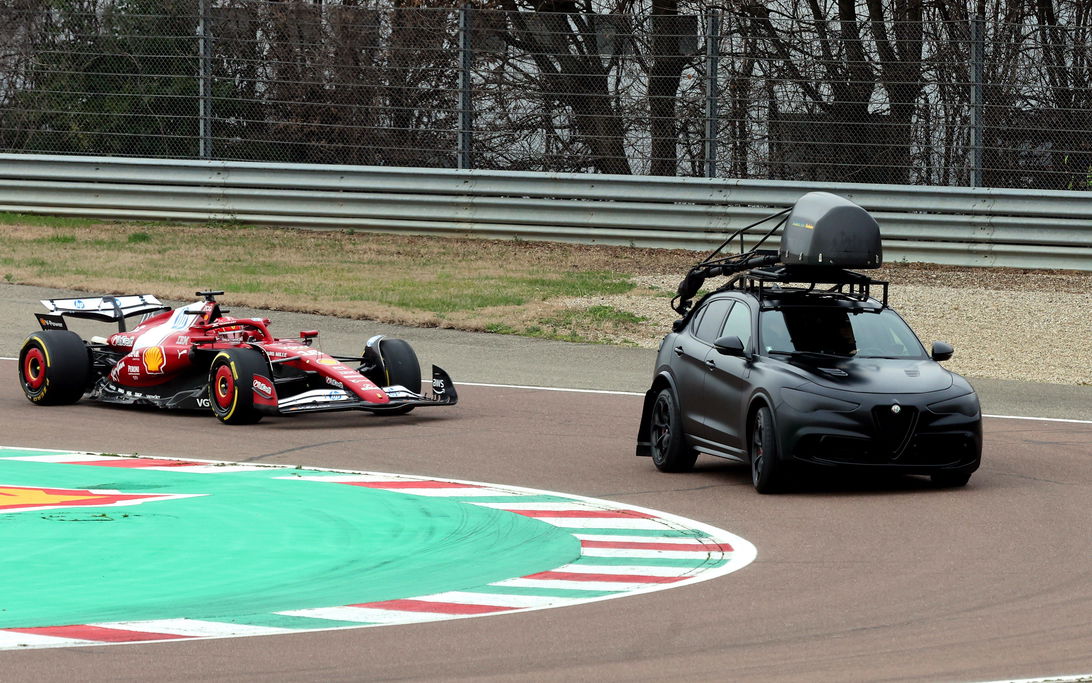
F1 teams often use the period before the opening pre-season test of the year to conduct a private outing with their new car.
2026 is no different, and earlier this week, Audi became the first team to hit the track with its new challenger, built under a fresh set of technical regulations.
These shakedowns represent a vital gateway between the design office and competitive racing, offering teams their first opportunity to verify that months of development work translate into functional performance on track.
Under current FIA regulations, teams are allocated two days in which 200 kilometres of running is permitted, often conducted in the days preceding official pre-season testing.
This limited mileage serves a specific purpose: ensuring basic systems functionality rather than performance development.
The restrictions are deliberately stringent to maintain competitive balance. Teams use Pirelli tyres - these are often wet-weather tyres and teams are unable to access any data relating to performance.
This prevents teams from gathering meaningful performance data while still allowing essential systems checks.
The 200km limit forces teams to prioritise carefully. Engineers focus on fundamental operations: steering responsiveness, brake feel, power unit integration, and basic aerodynamic balance.
Drivers use this precious track time to familiarise themselves with cockpit functions and initial handling characteristics.
For teams unveiling significant updates or completely new designs, shakedowns can reveal critical issues that computer simulations might miss.
Basic functionality checks, from ensuring wheels stay attached to verifying that complex hybrid systems operate correctly, form the foundation of what follows.
While shakedowns cannot replace comprehensive testing, they serve as an essential bridge between theoretical performance and track reality.
Teams can supplement their allocation with two annual demonstration events, though these carry even tighter restrictions.
Current-generation cars are limited to 15km for demonstrations, while previous-generation machinery can run up to 50km, provided all components have been previously tested.
Also interesting:
The 2026 F1 Cars Revealed: Everything You Need to Know!
Discover how the 2026 F1 regulations will revolutionise the sport, with a shift to movable wings instead of traditional DRS, to the increased electrical power in the hybrid systems, and the introduction of 100% sustainable fuel.
Most read








In this article
Never miss a thing from the Formula 1 season! Add the 2026 F1 schedule to your calendar at the touch of a button. Subscribe below and put the dates and times of every race directly on your PC or smartphone, so you don't miss a second from the new season.
Download the F1 calendar Download the F1 calendar
A variant with just the race and qualifying is also available.
Click here to download it..






Join the conversation!