


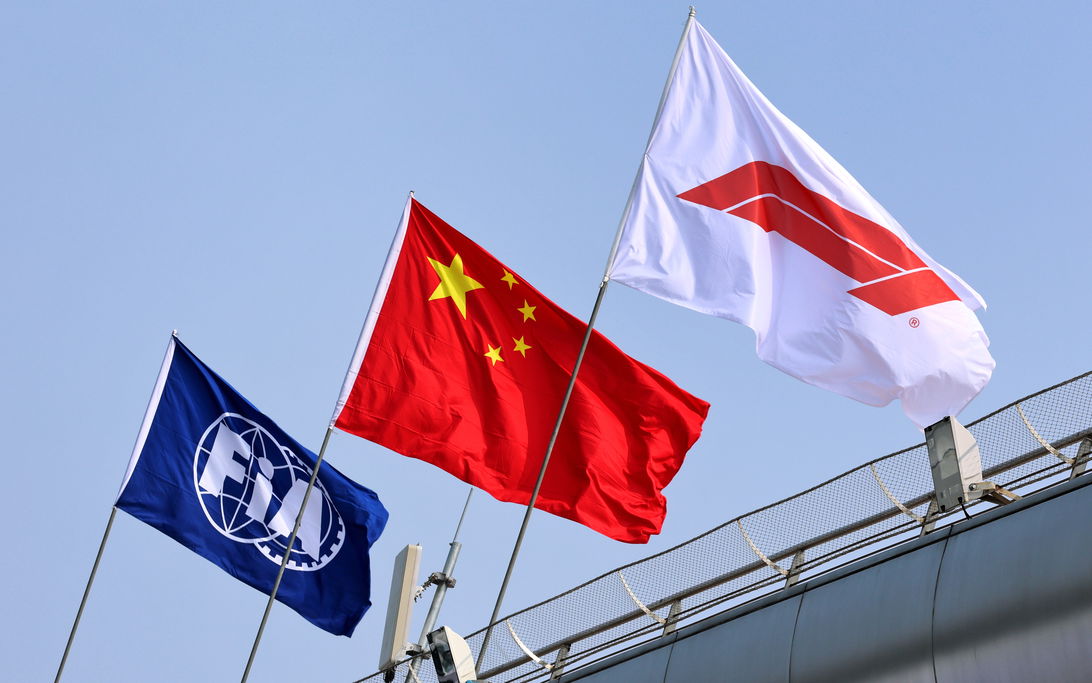
The season-opening Australian Grand Prix showed just how complex it is to recharge the battery as part of the new power unit regulations.
The second round of the campaign takes place this weekend in China and, significantly, features the sprint format.
The presence of a single free practice session on Friday morning in Shanghai greatly reduces the possibility for teams to experiment with different charging modes that could have a significant impact on the performance of the cars during the lap.
But it is also true that the Shanghai circuit is much less problematic in terms of energy recovery and management, with many more defined recharging points compared to Melbourne.
However, it remains clear that the sprint format will see teams rely heavily on simulations due to the little time in hand to gather data ahead of sprint qualifying.
But for some teams, an approach may be taken which sees them use Saturday's shorter race as a test to evaluate which charging strategy to use in Sunday's grand prix.
Undoubtedly, this choice seems obvious for the teams that are not currently at the top of the standings.
But the approach could also be adopted by the top teams, given how many points are up for grabs on Sunday compared to Saturday's outing.
In essence, it is becoming increasingly clear that energy management is influencing performance and strategies in the race.
However, in the case of the sprint format, it is also influencing the approach to the entire weekend.
Also interesting:
Join RacingNews365's Ian Parkes, Sam Coop and Nick Golding, as they look back on the Australian GP and look ahead to China! The trio discuss the first taste of F1's new regulations, Max Verstappen's frustration but also Lewis Hamilton's striking positivity.
Rather watch this episode? Then click here!


Most read






In this article
Never miss a thing from the Formula 1 season! Add the 2026 F1 schedule to your calendar at the touch of a button. Subscribe below and put the dates and times of every race directly on your PC or smartphone, so you don't miss a second from the new season.
Download the F1 calendar Download the F1 calendar
A variant with just the race and qualifying is also available.
Click here to download it..





Join the conversation!