


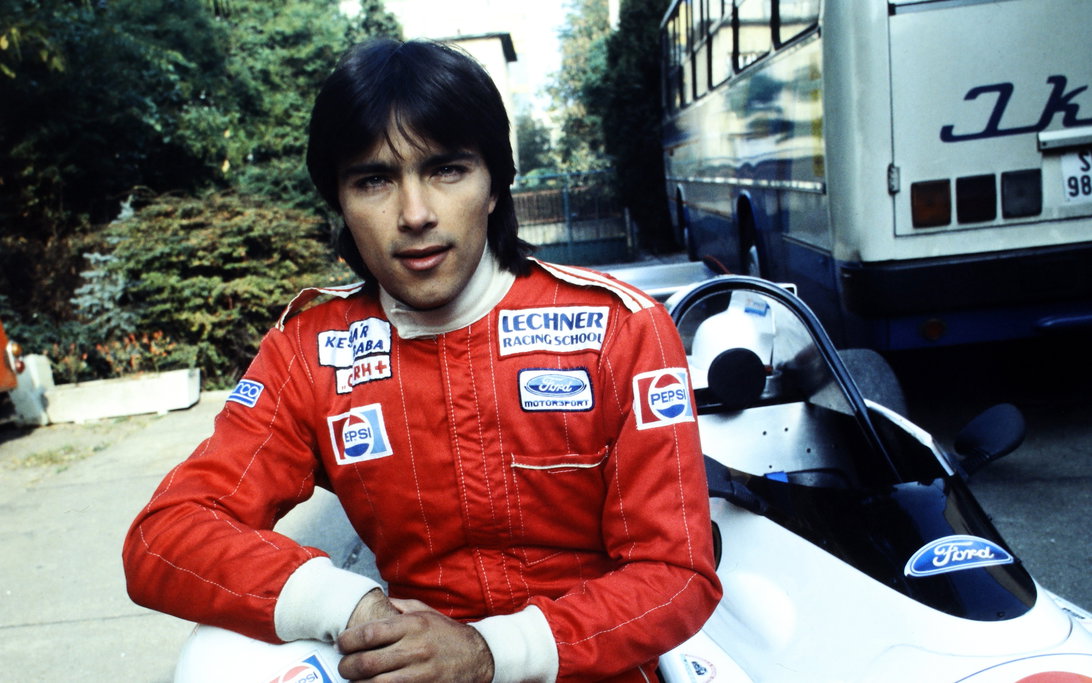
Csaba Kesjár might not be a name many F1 fans are familiar with, but the prodigious talent, who was the first Hungarian to ever sit in a Formula 1 car, was widely regarded as the greatest motorsport talent his country had ever produced.
Yet tragically, the promising young star, whose ability was forged behind the Iron Curtain, saw his dream end against a barrier in Nuremberg.
On 24 June 1988, his story came to an abrupt close. During a practice session for the German Formula 3 on the Norisring, Kesjár crashed heavily. His Dallara went straight on at high speed, and the 26-year-old died at the scene.
More than three decades on, the precise cause of the accident remains a matter of debate. The official conclusion cited brake failure, but contradictory witness accounts and lingering suspicions of sabotage meant the case was never truly closed.
What is beyond dispute is that Hungary lost, on that day, a driver who was on the cusp of making history.
The DNA of a champion
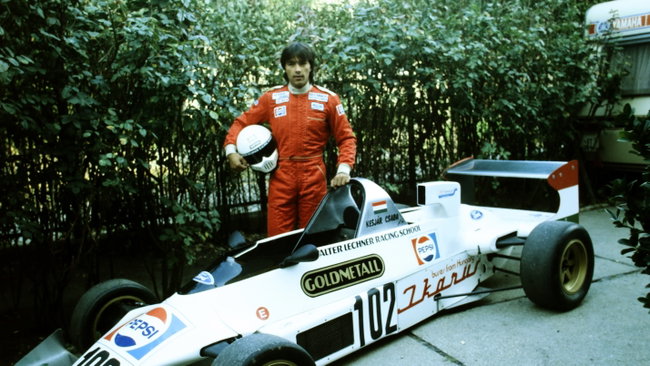
Motorsport ran deep in the Kesjár family. His grandfather had raced, and his father, János Kesjár Sr., became one of the most successful Hungarian drivers of his generation, winning fifteen national championships before later guiding his son's career.
Csaba took up karting in 1975 and made an immediate impression. Within a few years he had established himself as the finest young driver in Hungary. National kart titles followed in 1980 and 1981, after which he stepped up to Formula Easter, the leading single-seater category in Eastern Europe.
In that series, Kesjár found little meaningful opposition. He claimed the Hungarian title four years running and made his mark on the international stage through the Cup of Peace and Friendship, the championship in which the best drivers from socialist countries competed against one another.
But Kesjár understood that his future lay elsewhere. Anyone with genuine aspirations of reaching the very top had to go West.
 Hungarian GP
Crossing the Iron Curtain
In 1986, Kesjár made the move that very few Eastern European drivers ever managed. He joined the Austrian outfit of Walter Lechner, a team that had previously guided talents including Stefan Bellof.
The transition proved an immediate success. Kesjár won the Austrian Formula Ford title in his debut season, demonstrating that his pace was not merely a product of limited Eastern Bloc competition.
A year later came the step into German Formula 3 with Schübel Motorsport. His team-mate was Bernd Schneider, who won the title that season and subsequently reached Formula 1. Kesjár required more time to adapt, but a victory outside the championship at Hockenheim showed he was capable at that level.
His most significant moment arrived in August 1987. Following the second Hungarian Grand Prix at the Hungaroring, Kesjár was given the opportunity to climb into a real Formula 1 car: the Zakspeed 871.
It was not an official test, but a demonstration run. Even so, it made history. For the thousands of Hungarians who had witnessed the first Formula 1 race behind the Iron Curtain a year earlier, it carried enormous symbolic weight: a country that had long been cut off from the world stage finally had its own driver in the pinnacle of the sport.
The fatal accident
The 1988 season was supposed to be the year everything came together. Kesjár remained with Schübel Motorsport and had a new Dallara 388 at his disposal.
The results were visibly improving: across the opening six races he had already accumulated more points than in his entire debut season. The next step looked within reach.
On 24 June 1988, everything changed.
During practice for the German Formula 3 race on the Norisring, Kesjár approached the Dutzendteichkehre, a fast corner at the end of a straight. His speed was approximately 200 kilometres per hour. He did not brake. He did not steer. The car went straight on, broke through the barrier and came to rest upside down.
The official investigation subsequently concluded that a defect in the braking system was responsible, with the brake pedal reported to have fractured.
Yet questions persisted, partly because a marshal at the scene stated that Kesjár appeared to make no visible attempt to slow the car or take avoiding action. His father, János, later voiced the suspicion that the car had been tampered with. No evidence to support that was ever found.
The truth of what happened on the Norisring will in all likelihood never be fully established. What requires no establishment is Kesjár's significance to Hungary.
He died at a moment when the country itself stood on the threshold of extraordinary change. A year later, the Iron Curtain would fall, and the borders to the West would gradually open.
The world Kesjár had fought so hard to enter ultimately became accessible. He tragically never lived to see it.
Viewed by others:
Legacy
For Hungary, Kesjár remained for many years far more than simply a promising racing driver. He became the symbol of a generation that dared to dream of a place on the world stage despite the constraints of life in the Eastern Bloc, lending his story an almost mythological quality: the man who pushed the door to Formula 1 ajar, but never walked through it.
That distinction ultimately fell to Zsolt Baumgartner, whose two substitute appearances in 2003 and a full season in 2004 finally made real what Kesjár had come so close to achieving. Kesjár, of course, never got to witness that milestone.
His legacy in Hungary has taken tangible form in the years since. A primary school in Budaörs was named in his honour in 1992, and in 2018, exactly thirty years after his fatal accident, supporters erected a memorial in the fourteenth district of Budapest, close to the home where he once lived.
Also interesting:
Join RacingNews365's Ian Parkes, Samuel Coop and Nick Golding as they look back on the Belgian GP and look ahead to this weekend's race in Hungary. George Russell's major setback is a key discussion, as is Toto Wolff stating Mercedes has the best power unit.
Rather watch this episode? Then click here!


Most read
In this article
Never miss a thing from the Formula 1 season! Add the 2026 F1 schedule to your calendar at the touch of a button. Subscribe below and put the dates and times of every race directly on your PC or smartphone, so you don't miss a second from the new season.
Download the F1 calendar Download the F1 calendar
A variant with just the race and qualifying is also available.
Click here to download it..





Join the conversation!