


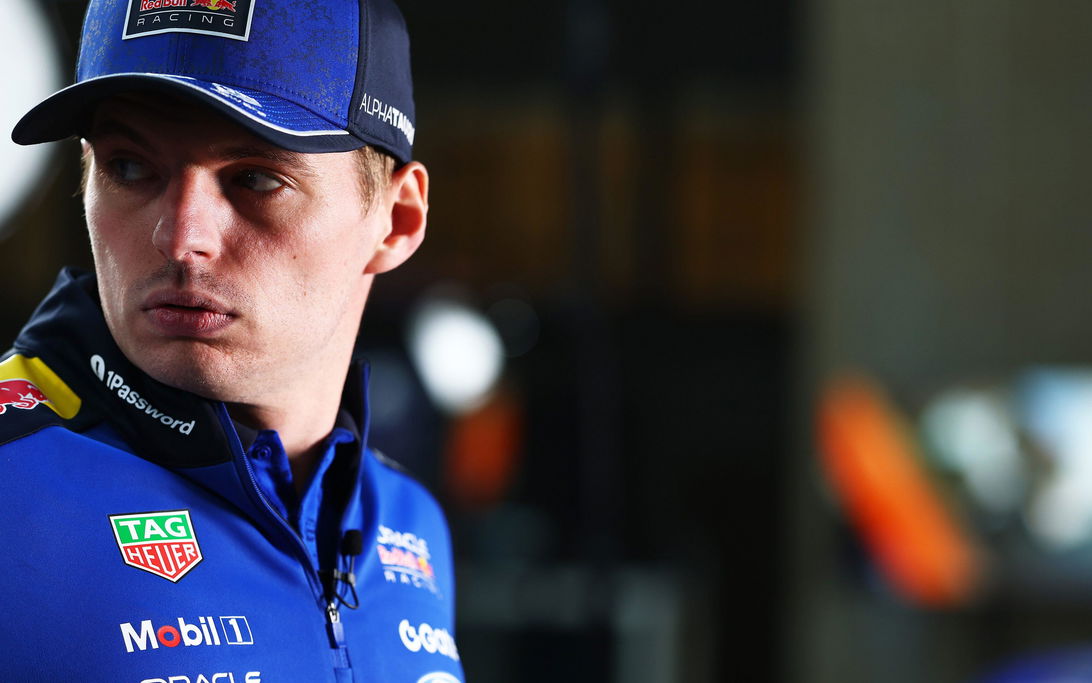
Max Verstappen has outlined that a "very important" factor this season will be drivers’ ability to "adapt quickly" to the new cars, as Formula 1 introduces its new power unit regulations.
F1 has introduced its biggest regulatory change, featuring power units consisting of a 50/50 split between internal combustion and electrical power.
With changes also made to the cars’ dimensions, the championship is set for a very different look from 2026 onwards.
These changes have seen the entire paddock start from scratch, in particular Red Bull, which for the first time in its history has become its own power unit supplier.
For all 22 drivers, entirely new systems need to be understood not only from the perspective of driving the car, but also in terms of energy deployment and battery management.
Verstappen has often been praised for how quickly he gets on top of difficult situations, perhaps handing him a small advantage ahead of the new campaign.
Asked how the new regulations could benefit him, Verstappen told Bloomberg: "I honestly have no idea.
"I haven't even done that many laps in the simulator. So for me, I will just see what happens when I sit in the car.
"I think what is always very important as a driver is that you can adapt quickly to the situation that you're in, if that is on a current car that you've known for a long time, or a completely new car.
"You just need to be able adapt quickly, learn quickly as well, because the cars will evolve, I think, also very quickly. But yeah, I'm not too stressed about that, to be honest."
Also interesting:
The 2026 F1 Cars Revealed: Everything You Need to Know!
Discover how the 2026 F1 regulations will revolutionise the sport, with a shift to movable wings instead of traditional DRS, to the increased electrical power in the hybrid systems, and the introduction of 100% sustainable fuel.
Most read

In this article
Never miss a thing from the Formula 1 season! Add the 2026 F1 schedule to your calendar at the touch of a button. Subscribe below and put the dates and times of every race directly on your PC or smartphone, so you don't miss a second from the new season.
Download the F1 calendar Download the F1 calendar
A variant with just the race and qualifying is also available.
Click here to download it..





Join the conversation!