


At this weekend's F1 season-opening Australian Grand Prix, the championship has officially welcomed two new names to the grid: Audi and Cadillac.
As ever, expectations are measured. New regulations, a cost cap era and an ultra-competitive field featuring the likes of McLaren, Ferrari, Mercedes and Red Bull leave little margin for immediate success.
The circumstances of the two newcomers could hardly be more different. Audi is entering F1 through its takeover of the Sauber operation, inheriting infrastructure and experience, and becoming a works team with its own power unit from the get-go.
Cadillac, by contrast, is building a team structure from the ground up, and whilst an entirely new entry, will take a Ferrari power unit supply for at least the first three campaigns.
But both projects represent significant long-term investments rather than short-term gambles.
History suggests that instant glory is rare — but not impossible. On five occasions, a constructor has won its very first world championship grand prix...
Viewed by others:
Alfa Romeo - 1950 British Grand Prix
The inaugural Formula 1 World Championship race took place at Silverstone Circuit in May 1950.
By definition, every marque was making its debut. Five manufacturers — Alfa Romeo, Maserati, Talbot-Lago, ERA and Alta — contested the historic event in front of an estimated 200,000 spectators.
Alfa Romeo arrived with a formidable pedigree and overwhelming pace. Its four entries locked out the first two rows of the grid, led by Nino Farina on pole, ahead of Luigi Fagioli, Juan Manuel Fangio and Reg Parnell.
The race quickly became an intra-team contest. Fangio retired with a broken oil line, leaving Farina and Fagioli to dispute victory.
Farina ultimately prevailed, becoming the first winner of a Formula 1 World Championship Grand Prix, while Alfa Romeo secured its place in history as the championship’s first victorious constructor.
Viewed by others:
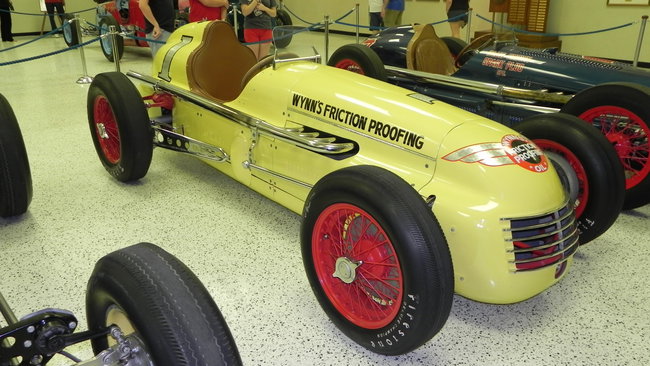
Kurtis Kraft - 1950 Indianapolis 500
Few contemporary F1 fans will recognise the name Kurtis Kraft. The American constructor specialised in midget and Indy cars and never competed in European grands prix.
However, from 1950 to 1960, the Indianapolis 500 counted towards the Formula 1 World Championship.
In 1950, European powerhouses such as Alfa Romeo and Ferrari did not participate at Indianapolis. Instead, the contest was between American specialists, including Kurtis Kraft and Diedt.
After a race punctuated by lead changes and attrition, Johnny Parsons emerged at the front.
Rain curtailed proceedings after 138 laps, handing Parsons victory and ensuring Kurtis Kraft won on its world championship debut.
Parsons would not contest another F1 round that season, yet his Indianapolis triumph was sufficient to secure sixth in the final standings.
Mercedes - 1954 French Grand Prix
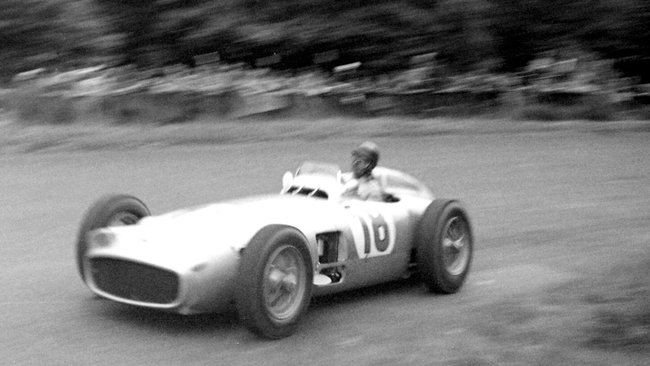
Mercedes’ modern dominance between 2014 and 2020 is well documented, but the marque’s first Formula 1 victory dates back to its return midway through 1954.
The team made its championship bow at the high-speed Reims-Gueux circuit with the innovative W196, featuring an advanced straight-eight engine at a time when many rivals ran four- or six-cylinder units.
Fangio, who had switched from Maserati, immediately underlined Mercedes’ intent by claiming pole position.
In the race, early retirements for key challengers left the two Silver Arrows of Fangio and Karl Kling to fight for victory. After 61 laps, Fangio crossed the line just 0.1 seconds ahead — a statement win on the team’s debut.
Fangio went on to secure the 1954 and 1955 world titles with Mercedes before the manufacturer withdrew from motorsport at the end of 1955.
Walter Wolf Racing - 1977 Argentine Grand Prix
It would take 23 years for another newcomer to repeat the feat.
Walter Wolf Racing emerged from the restructuring of Frank Williams Racing Cars and assets acquired from the defunct Hesketh operation.
For 1977, the team entered as an entirely new constructor.
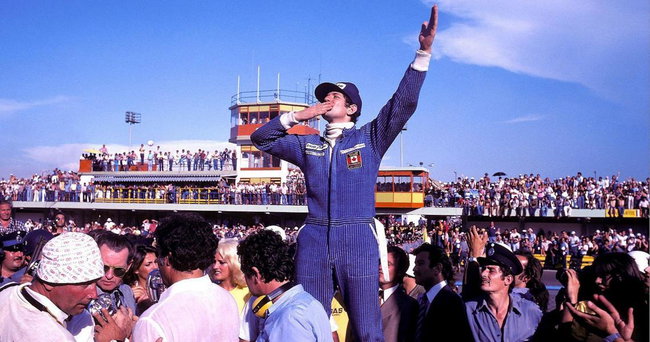
At the season-opening Argentine Grand Prix in Buenos Aires, Jody Scheckter qualified a modest 11th.
However, reliability proved decisive. The leading contenders fell by the wayside, promoting Scheckter into contention.
Late retirements for John Watson and overheating issues for José Carlos Pace handed Scheckter the opportunity. He seized it, delivering an unlikely debut victory for Walter Wolf Racing.
Two further wins followed that season as Scheckter finished runner-up in the championship behind Niki Lauda.
Brawn GP - 2009 Australian Grand Prix
Perhaps the most remarkable debut triumph of all came in 2009. Following Honda’s withdrawal amid the global financial crisis, the Brackley-based team was sold for a symbolic £1 to Ross Brawn.
Rebranded as Brawn GP, it arrived in Melbourne amid considerable uncertainty.
What few anticipated was the team’s interpretation of the new aerodynamic regulations — most notably the double diffuser concept — which conferred a significant early-season advantage.
At the season-opening Australian Grand Prix, Jenson Button and Rubens Barrichello locked out the front row.
Button controlled the race despite multiple safety car interruptions, while incidents behind eliminated key challengers, including Sebastian Vettel and Robert Kubica.
Button secured Brawn GP’s debut victory — the first of six wins in the opening seven races. Although rivals closed the gap as the season progressed, the early advantage proved decisive.
Button clinched his maiden world title, and Brawn GP was subsequently acquired by Mercedes, laying the foundations for one of the most dominant eras in Formula 1 history.
Also interesting:
Join RacingNews365's Ian Parkes and Nick Golding, as they are joined by former Ferrari race engineer Rob Smedley to look ahead to the Australian GP! Max Verstappen, Lewis Hamilton and McLaren are key discussions in this special episode.
Rather watch the podcast? Then click here!


Most read
In this article
Never miss a thing from the Formula 1 season! Add the 2026 F1 schedule to your calendar at the touch of a button. Subscribe below and put the dates and times of every race directly on your PC or smartphone, so you don't miss a second from the new season.
Download the F1 calendar Download the F1 calendar
A variant with just the race and qualifying is also available.
Click here to download it..


Join the conversation!