


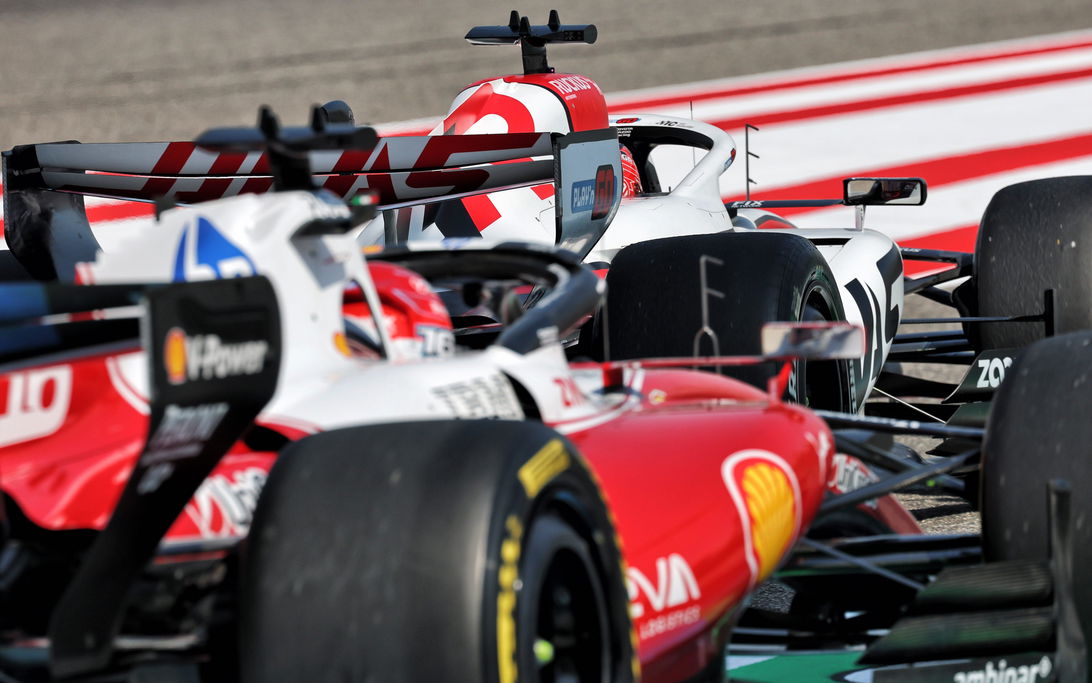
Haas has explained how the sole free practice session in Miami will feature a major "priority shift" once the outcome of the energy management discussions are known.
With the FIA, F1, and the teams locked in talks through the April break over addressing concerns from the first three races, any changes to the energy deployment or harvesting rules will require fresh software code to be written by the power unit manufacturers to comply - in Haas's case, this being Ferrari, from whom it gets its supply of customer units.
A technical meeting was held on April 16th to discuss any changes, with another "high-level" meeting planned for April 20th where "preferred options" will be discussed in the hope of finding "consensus" on how F1 should move forward.
Any changes will require the formal ratification of the World Motor Sport Council (WMSC), with them set to be in place for the Miami Grand Prix on the first weekend in May.
However, this is a Sprint weekend, meaning drivers and teams will only have 60 minutes of free practice before entering parc ferme for the Sprint segment of the weekend, as opposed to three hours of running in practice for a conventional weekend.
Normally in practice at a Sprint weekend, teams seldom bring huge upgrades as they spend their 60 minutes setting the car up for qualifying and the race, but Haas's head of car engineering, Hoagy Nidd, has explained how attention will be given to understanding the new software in place instead.
"It is an interesting one and quite pertinent to the coming few weeks with the meetings that are going on this week," Nidd told media, including RacingNews365.
"Obviously, as a customer team, you are always the recipient of that, and previously in my career, I was in works teams. I was at Mercedes for 11 years, I was on the power unit side at Ferrari, and of course, the nature of being a customer team is that you have to get what you're given.
"There is an element of us being able to provide feedback, but we will never be the main priority; that's just the reality of being a customer team. But we have an opportunity with our power unit partner to work pretty well; it is one of the better relationships I've ever seen in Formula 1.
"But at the end of the day, you've got to race what you're given, and with the additional complexity of the energy management in the early parts of the year.
"The changes to the energy management is something is more managed by our power unit partners, and they will come up with a strategy based on that, and they'll have to introduce their software changes.
"Some of the required submission dates for the software before [Miami] have been delayed a little, which will help all the manufacturers get code written and deployed and then actually test it.
"Once it gets through that phase, it will then come to us with extra work we need to do in understanding how it will affect our vehicle performance, it is not massive, but it does shift the priorities slightly when we get to [Miami].
"You'll probably see teams doing slightly different things in P1 than they would normally do, but in Miami, in parralel, we're going to have to out and actually test the software and try to get through some different parts of the strategy, whether that is testing the boost, trying to look at the overtake and making sure the launch is okay.
"So there will definitely be some shifts in priorities across the whole grid."
Also interesting:
Join RacingNews365's Nick Golding and Samuel Coop as they dissect the major story of Gianpiero Lambiase leaving Red Bull to join McLaren. The impact of Lambiase leaving is discussed and what it means for Max Verstappen, plus the FIA's April meetings are looked into.
Rather watch the podcast? Then click here!


Most read




In this article
Never miss a thing from the Formula 1 season! Add the 2026 F1 schedule to your calendar at the touch of a button. Subscribe below and put the dates and times of every race directly on your PC or smartphone, so you don't miss a second from the new season.
Download the F1 calendar Download the F1 calendar
A variant with just the race and qualifying is also available.
Click here to download it..





Join the conversation!