


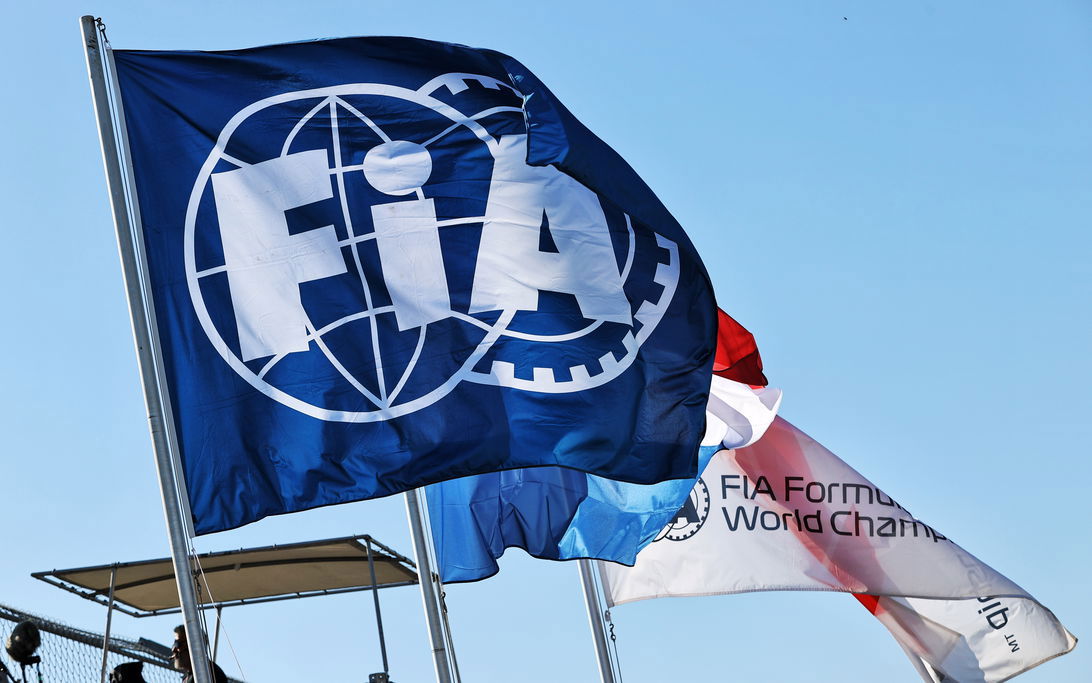
FIA single-seater director Nikolas Tombazis has officially confirmed that at least one F1 team has succeeded with a power unit trick that has sparked a row which is overshadowing the build-up to the new season.
The introduction of new PUs has played a significant role in attracting new manufacturers to the sport. Although Renault has left, Audi makes its long-awaited debut this season, Honda has returned, whilst Red Bull Powertrains has been formed. It is expected General Motors will also join in a few years to power F1's newest team on the grid this year, Cadillac.
The 50-50 split between combustion and electrical energy has played a crucial role in F1 taking a step in a different direction, but a loophole has been found which has been exploited by Mercedes, in particular.
Via the compression ratio of the pistons operating inside the internal combustion engine, Mercedes has been able to leverage a higher degree of efficiency, from the prescribed 16:1 when measurements are taken by the FIA at ambient temperatures, to 18:1 when running at racing speeds and higher temperatures.
This has prompted outrage from Mercedes' rivals, predominantly Ferrari, Audi, and Honda, leaving the FIA trying to resolve the matter and avoid the possibility of protests following the Australian Grand Prix, and potentially Court of Appeal hearings.
Initially explaining the idea behind a lower compression ratio, Tombazis said: "Many pistons are moving up and down, turning around the crankshaft, and when they move, the fuel and the air come into the engine
"It gets quite complicated to design those super-sophisticated engines with that [ratio] number being very high,
"In the early days, we wanted, with these regulations, to invite newcomers, and we've been quite successful. We have five PU manufacturers at the moment, and one on the way in. If we hadn't made those changes, we probably would have only two by now, and that would have been a problem.
"Because all of these newcomers have started way behind the established ones, we had to create some ways that would enable these newcomers to join the sport on a fair playing field, because otherwise they would have been way behind.
"As there's a cost cap, limitations, they would always have been struggling to catch up. It's still going to be massively challenging for them. It's not an easy task.
"That's why part of the conditions for these guys to come in was to create some simplifications, also some cost reduction, and the compression ratio was one of those.
"It's one of the reasons why we went from a limit of what used to be 18:1, which, frankly, was almost not a limit because you could hardly reach that level, to 16:1, which is a bit of a compromise."
The FIA has acknowledged, without explicitly naming names, that a team/teams have succeeded in increasing the compression ratio. The intention now is to ensure the issue does not rumble on to Melbourne.
"As these engineers are very clever and always pushing for an advantage, some have found ways to potentially increase it when the engine is running hot, and that is the discussion we're having now," added Tombazis.
"We have spent a lot of time discussing how we solve those issues. Our intention is to solve them before the start of the season. We don't want controversies. We want people to be competing on the track, not in the courtroom or the stewards' room, and that's what we're trying to do."
View the full video from the FIA with Tombazis and Monchaux below!
Also interesting:
Join RacingNews365's Ian Parkes, Sam Coop and Nick Golding, as they look ahead to the first of two three-day tests in Bahrain! The trio discuss who to keep an eye on and the fascinating approaches being taken to car development in 2026.
Rather watch the podcast? Then click here!


Most read


Never miss a thing from the Formula 1 season! Add the 2026 F1 schedule to your calendar at the touch of a button. Subscribe below and put the dates and times of every race directly on your PC or smartphone, so you don't miss a second from the new season.
Download the F1 calendar Download the F1 calendar
A variant with just the race and qualifying is also available.
Click here to download it..





Join the conversation!