


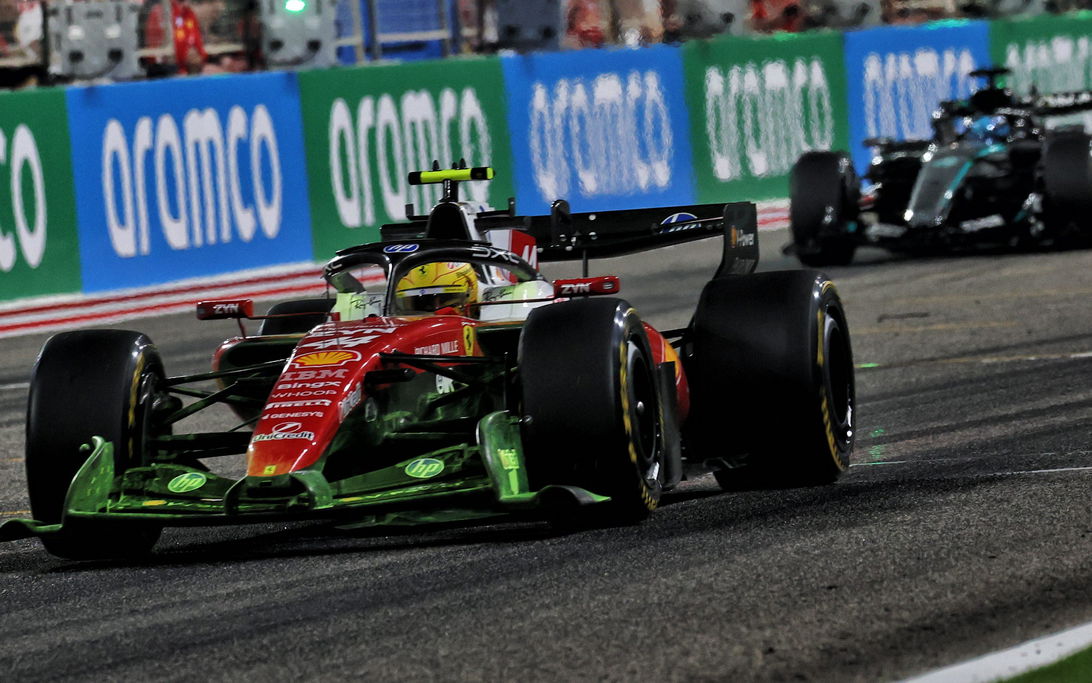
One of the most significant advantages identified across F1 pre-season testing is how well the Ferrari-powered cars are able to get off the line.
Race starts are an area of concern under the new power unit regulations, with worries surrounding their difficulty — and the subsequent safety of them — becoming a contentious issue within the paddock.
As a result, F1 has implemented some tests during the second and final pre-season test at the Bahrain International Circuit, with a view to extending the length of time the cars have on the grid between the formation lap being completed and the race properly getting underway.
However, despite this, Ferrari and its customer teams are enjoying a considerable benefit compared to rival power units and teams — and there is a good reason for it.
Under the new rules, the MGU-H has been removed from F1 power units. Previously, one of its functions was to ensure the turbo of the engine was running at the correct speed for an effective launch.
However, drivers are no longer permitted to preload the turbo and have to manually spool it up to speed once they reach their grid slot, a process that can take up to 10 seconds.
Not only does this disadvantage cars further down the grid, as they have less time to prepare their car between reaching the grid and lights out, but it also increases the potential for cars to stall, in part because the drivers have to keep the turbo at the correct RPM whilst they also do the rest of the start procedure — these points are where the safety concerns have arisen from.
To counteract this, F1 is trialling a revised start process during testing, with a view to implementing it for the opening round in Melbourne.
Ferrari is unhappy with this development, as the Italian team brought associated concerns to the FIA last year, only for the motorsport governing body to be unconcerned by the foreseen situation.
As a result of that, the Scuderia developed a smaller turbo for its power unit than other teams, which helps it get the turbo up to speed quicker and therefore produce a better launch.
This approach also allows the power unit to harvest energy more efficiently in higher gears, which prevents the need to run through certain corners in a lower gear than is ideal, as seen throughout testing by Max Verstappen.
Nonetheless, the SF-26 and the Haas VF-26 have both still enjoyed notably better starts than rival cars during the end-of-session practice starts. (Cadillac is also Ferrari-powered.)
This is clearly illustrated by the video below, which shows Lewis Hamilton leading by the first corner, having started on the fifth row of the grid.
Also interesting:
Join RacingNews365’s Ian Parkes, Sam Coop and Nick Golding as they look back on last week’s first test in Bahrain and this week’s second test at the same venue. The trio debate Max Verstappen’s criticism of the regulations and whether Formula 1 is facing an identity crisis.
Rather watch the podcast? Then click here!


Most read



In this article
Never miss a thing from the Formula 1 season! Add the 2026 F1 schedule to your calendar at the touch of a button. Subscribe below and put the dates and times of every race directly on your PC or smartphone, so you don't miss a second from the new season.
Download the F1 calendar Download the F1 calendar
A variant with just the race and qualifying is also available.
Click here to download it..





Join the conversation!