


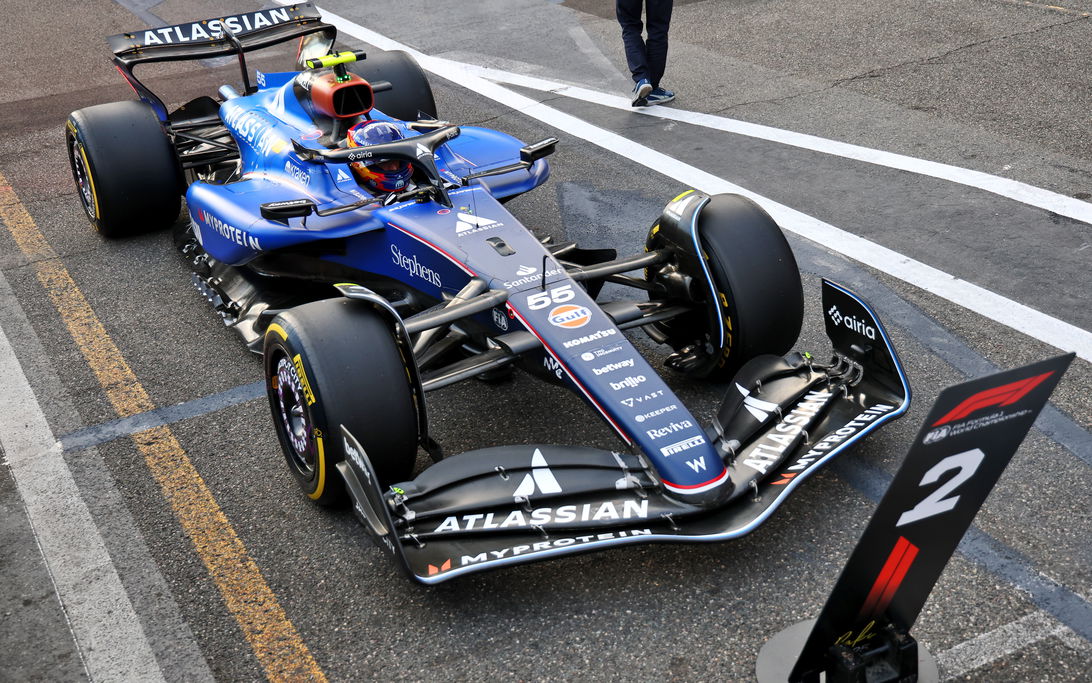
Williams' 2025 campaign delivered their strongest Formula 1 performance in nearly a decade, culminating in fifth place in the constructors' championship.
The season marked a dramatic transformation for a team that had languished at the grid's rear for years, with both drivers contributing significantly to what team principal James Vowles described as a foundation-building year.
Alex Albon established himself as Williams' pace-setter through the opening half of the season, securing three top-five finishes in the first seven races.
The Thai driver's immediate adaptation to the FW47's revised characteristics provided crucial early points, accumulating nearly four times Carlos Sainz's tally during this period. Albon's consistency proved vital as Williams sought to establish a buffer over midfield rivals.
Sainz's arrival from Ferrari initially proved challenging, with the Spaniard requiring extended time to adapt to Williams' fundamentally different approach. However, his struggles transformed into spectacular late-season form.
Two podium finishes in Azerbaijan and Qatar demonstrated Sainz's ability to extract maximum performance once comfortable with the machinery. These results elevated him from a disappointing start to finish just nine points behind Albon in the final standings.
The contrasting trajectories highlighted each driver's strengths. Albon's immediate adaptability and consistent point-scoring ability provided stability, whilst Sainz's technical feedback and development insight proved invaluable for the team's long-term progress.
Team engineers praised Sainz's detailed aerodynamic analysis and ability to pinpoint specific balance issues through data examination.
Viewed by others:
Williams' eyes 2026 breakthrough
Williams' 2025 season represented a deliberate sacrifice year, with significant resources allocated to 2026's regulation overhaul rather than maximising immediate performance.
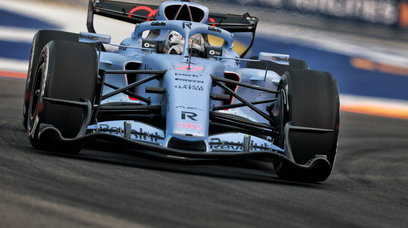
The FW47 incorporated substantial technical improvements, including a pushrod rear suspension layout that expanded diffuser space and delivered aerodynamic gains. Weight reduction efforts enabled ballast flexibility for circuit-specific optimization.
The team faced cooling challenges in warmer conditions, particularly affecting performance at Miami and Canada. These vulnerabilities highlighted areas requiring attention as Williams refined their technical package. Despite these issues, the car's fundamental architecture proved sound, with both drivers ultimately scoring over 130 points combined.
Looking ahead to 2026, Williams has confirmed driver continuity with Albon and Sainz, both actively contributing to development through simulator work and wind tunnel feedback.
The dramatic regulation changes, featuring simplified aerodynamics and active systems replacing traditional DRS, represent an opportunity for Williams to challenge the established order.
The team's rebranding to Williams F1 Team, accompanied by a reimagined logo and fan-chosen livery, reflects renewed ambition.
Having established operational foundations through 2025's progress, Williams enters 2026 targeting advancement into F1's front four, positioning themselves to capitalise on the first simultaneous chassis and power unit regulation overhaul in over a decade.
Williams' 2025 journey demonstrated that patience and strategic planning can yield substantial progress, setting the stage for what could be a breakthrough 2026 campaign.
Also interesting:
Join RacingNews365's Ian Parkes, Sam Coop, and Nick Golding as they continue to review the 2025 Formula 1 season. The trio answer crucial questions such as who was the best driver this year, who was the most improved, the biggest disappointment, and much more!
Rather watch the podcast? Then click here!


Most read
In this article
Never miss a thing from the Formula 1 season! Add the 2026 F1 schedule to your calendar at the touch of a button. Subscribe below and put the dates and times of every race directly on your PC or smartphone, so you don't miss a second from the new season.
Download the F1 calendar Download the F1 calendar
A variant with just the race and qualifying is also available.
Click here to download it..





Join the conversation!