


The various safety issues which have arisen this week in Bahrain are, in a way, exactly what F1 testing is for, to find and iron out the gremlins before the season begins with the Australian Grand Prix.
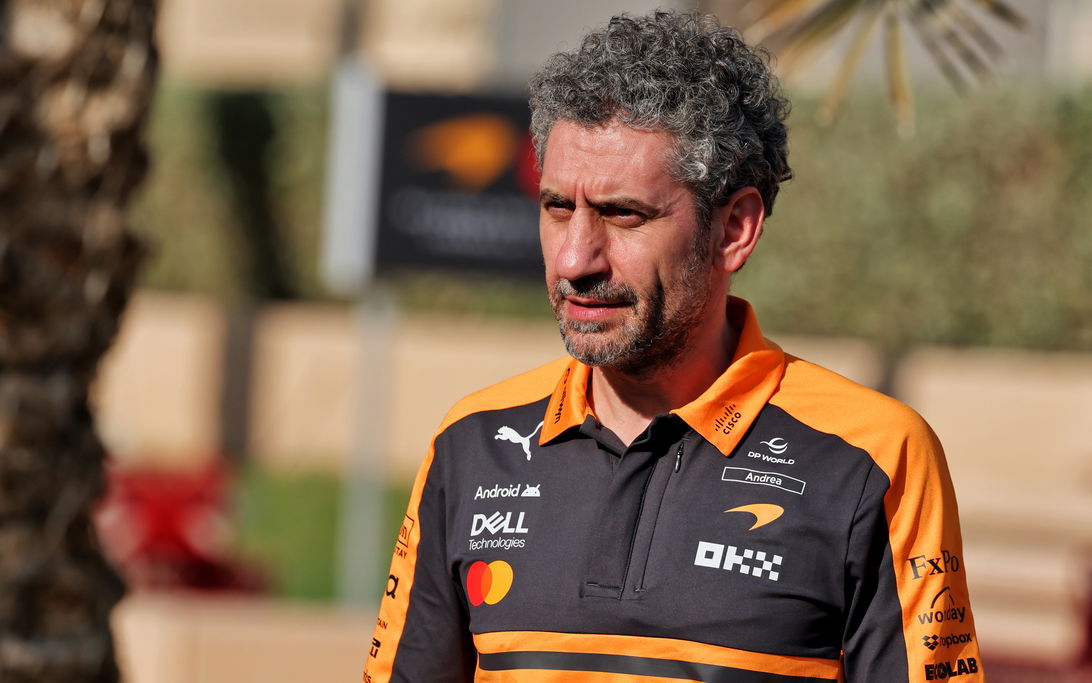
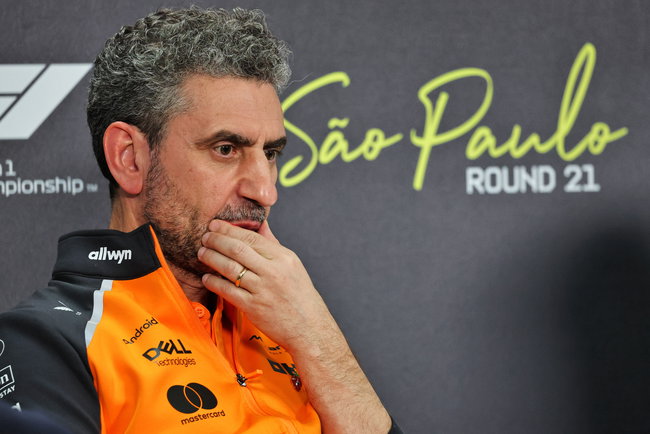
During the week, three major areas have arisen, with McLaren boss Andrea Stella explaining on Friday evening that he would to see the 11 teams and the FIA engage in "responsible" talks to find a solution.
Stella's areas of concern are race starts, the increase of lift and coast to manage energy demands and huge closing speeds between cars, harvesting and those not.
The article continues below.
The race start concern
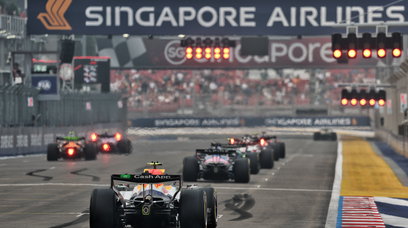
The new generation of power units does not feature the MGU-H, which was a crucial aid to the turbo during the launch sequence.
Instead, drivers must now manually spool up the turbo for around 10 seconds to eliminate turbo lag, but must maintain a delicate balancing act as over-reving the engine could force too much energy into the system.
This creates the possibility of a car near the front of the grid stalling at lights out after the driver gets the sequence wrong, and as the field roars past, a driver further back could be unsighted and ram into the back of the stricken machine.
This is what happened at the start of the 1994 San Marino Grand Prix when JJ Letho stalled his Benetton on the grid, and was rammed by an unsighted Pedro Lamy in the Lotus.
Debris flew into the grandstands, causing minor injuries to spectators. Although the threat of flying wheels has been eradicated by the use of wheel tethers, the possibility of a flying wing or bodywork component making it over the catch-fencing and into the spectator areas cannot be dismissed.
Nor should the unknown which follows when any F1 car gets aerial, which could be possible in such a scenario.
It is understood talks are planned next week during the second test, including a meeting of the F1 Commission.
The article continues below.
Lift and coast and closing speeds
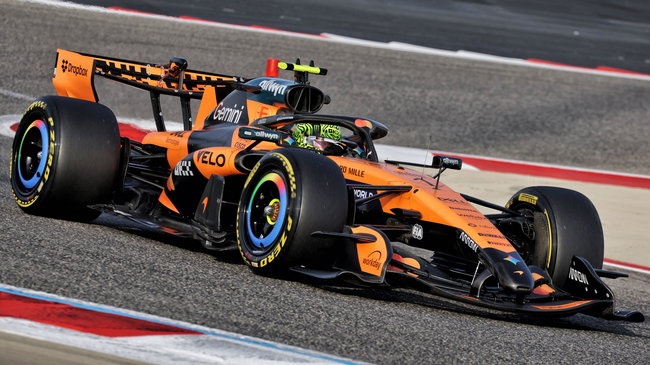
The new energy management demands have already been given short shrift by Max Verstappen, who branded them as "anti-racing" and as "Formula E on steroids."
Whilst that may be a drastic interpretation, the new demands on the drivers are clear, with power output from the new breed of engines coming from a 50-50 split between the internal combustion engine and the beefed-up electrical systems, now generating 350kw of power, up from 120kw in 2025.
A driver can choose to spend their energy allocation to get past a rival on one straight, but then immediately pay the price on the next straight and lose out overall as they wait to recharge their charge to attack once again.
This is why, during the shakedown in Barcelona, some drivers were lifting and coasting on the straights to not deploy all of their batteries in one chunk and save more for later around the lap. In Bahrain, this was not so much of a concern owing to the increased heavy braking zones around the lap.
At heavy-braking races such as Bahrain and Canada, the requirement of lift and coast is not so great as the braking zones forces energy back into the battery, but at low-energy braking tracks, or those with extremely long straights, such as Albert Park, Jeddah, Baku, Monza, and Lusail, there are serious concerns about the level of lift and coast required.
This feeds into Stella's concerns about closing speeds, as he used two famous examples of drivers being launched aerially to make his point.
At the 2010 European GP in Valencia, Mark Webber was memorably launched through 360 degrees after whacking the back of Heikki Kovalainen's ailing Lotus. 18 years earlier at the 1992 Portuguese GP, Gerhard Berger swerved across the track to enter the pit-lane and collected Riccardo Patrese's Williams, who was extremely lucky not to land on the pit-wall or in the pit-lane after his 360 degree rotation.
Whilst neither of those incidents were caused by lift and coast or energy management demands, and were just misunderstandings, the threat remains. It was such a misunderstanding between Mike Hawthorn's Jaguar and Lance Macklin's Austin-Healey which prompted Macklin to swerve left and into the way of Pierre Levagh's Mercedes, causing the 1955 Le Mans disaster in which 81 spectators, and Levagh were killed.
If a car ahead suddenly slows to go into harvesting mode or lift and coast, the driver behind could be caught out and not be able to react in time to avoid a collision as they attempt to pass, leading to a high-speed vs low-speed collision.
The major danger zones for this could be at such circuits with a fast, straight-in approach to the pit-entry, such as Shanghai, Montreal, Silvestone, Monza, and Las Vegas.
The article continues below.
What happens next?
At the meeting of the F1 Commission next week, any proposed changes to areas causing Stella, and F1 in general, concern will be debated by the key players.
Any changes required will be put towards the World Motor Sport Council (WMSC) for formal ratification.
Stella also called for teams to put their partisan views aside, describing the situation as "a bigger interest than any competitive interest," before going onto make his call for "responsible" talks between the parties to find a solution.
Also interesting:
In this video, we explore a fascinating Mercedes engine theory that is engulfing the F1 paddock. We break down how it works, why it matters, and why this advantage — if real — may be brilliant, legal… but only temporary.
Most read


In this article
Never miss a thing from the Formula 1 season! Add the 2026 F1 schedule to your calendar at the touch of a button. Subscribe below and put the dates and times of every race directly on your PC or smartphone, so you don't miss a second from the new season.
Download the F1 calendar Download the F1 calendar
A variant with just the race and qualifying is also available.
Click here to download it..





Join the conversation!