


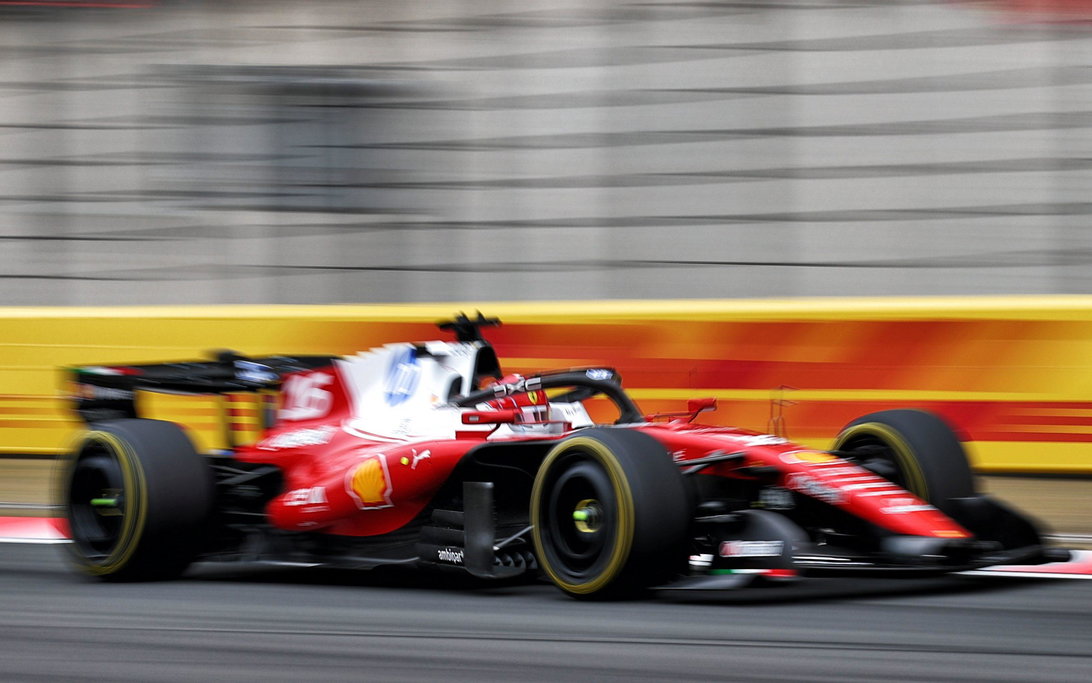
Following the opening two rounds of the F1 season, in Melbourne and Shanghai, the FIA gathered feedback from drivers.
After concerns were raised, particularly surrounding qualifying, the motorsport governing body adopted a change to the recharge limits for the grid-setting session at Suzuka.
It had become clear that energy harvesting from the power unit (PU) was too restrictive in terms of outright qualifying performance.
Under the regulations, the maximum amount of energy that could be recovered over a single lap was set at 9.0 MJ.
To achieve such a high level of energy recovery, drivers had been forced to fundamentally alter their driving style in qualifying.
Rather than focusing purely on extracting maximum performance on track, the emphasis had shifted to carefully managing battery recharge, which would have been the case at the Japanese Grand Prix.
Charles Leclerc summed up the frustration in Australia: "It’s no longer possible to push flat out in qualifying because you have to manage the energy, and that’s particularly disappointing for me because qualifying has always been where I can extract the most performance."
With the limit now reduced to 8.0 MJ for the weekend, even though the difference is just 1.0 MJ, drivers should no longer be forced into unnatural lift-and-coast techniques during a qualifying lap or into taking corners in lower gears than would normally be optimal for that section of track.
In essence, the tweak introduced by the FIA this weekend should allow a return to more natural driving, where competitors can fully showcase their ability to extract peak performance from the car without being overly constrained by energy management concerns.
It would be an exaggeration to describe the change as revolutionary, but it does move Formula 1 in the direction of ensuring that on-track action more accurately reflects the true performance of both car and driver.
Naturally, a rule designed specifically for qualifying is far easier to implement, given that it applies to a single flying lap.
Introducing similar measures in race conditions would be significantly more complex — particularly if the aim is to eliminate the 'fake overtakes' that have become commonplace when a driver completes a pass using energy boost, only to be vulnerable immediately afterwards due to depleted energy reserves.
However, this represents a first step, as also underlined by the FIA in a statement it released. The process of refining how energy management rules are applied to power units is ongoing — and still very much in its infancy.
Also interesting:
Join RacingNews365's Ian Parkes, Sam Coop and Nick Golding as they look ahead to this weekend's Japanese Grand Prix. Jonathan Wheatley's Audi exit is a key talking point, as is whether Max Verstappen's critical comments are damaging F1.
Rather watch the podcast? Then click here!


Most read


In this article
Never miss a thing from the Formula 1 season! Add the 2026 F1 schedule to your calendar at the touch of a button. Subscribe below and put the dates and times of every race directly on your PC or smartphone, so you don't miss a second from the new season.
Download the F1 calendar Download the F1 calendar
A variant with just the race and qualifying is also available.
Click here to download it..





Join the conversation!