


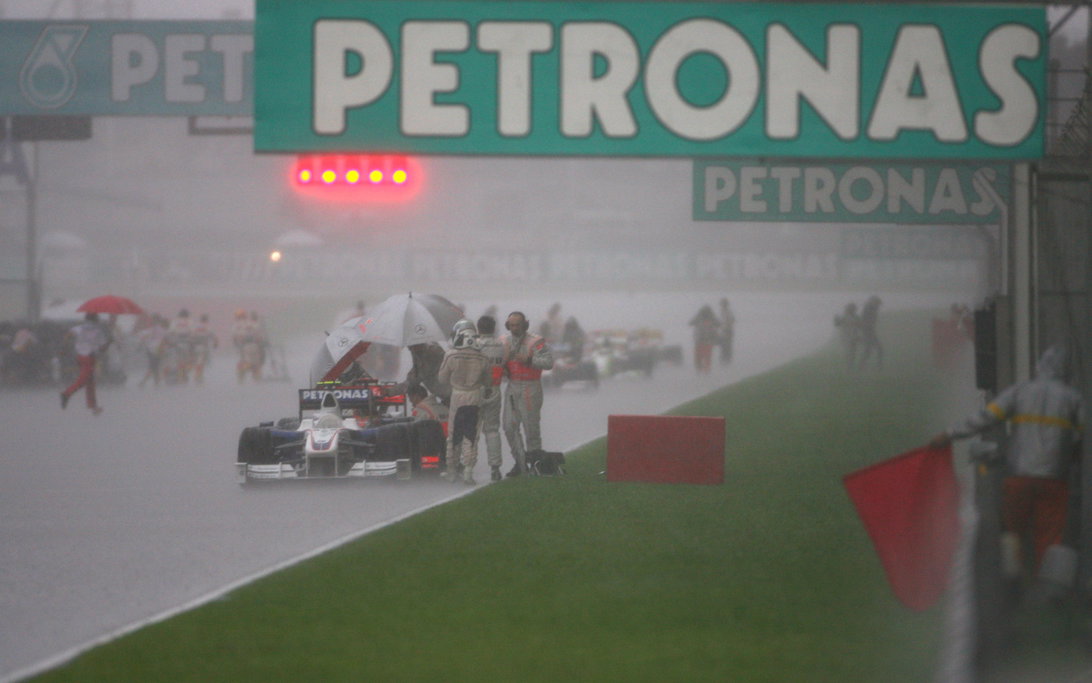
The heavens opened, visibility collapsed to nothing, and Formula 1's shortest Malaysian Grand Prix entered the history books as one of the sport's most dramatic weather-induced abandonments.
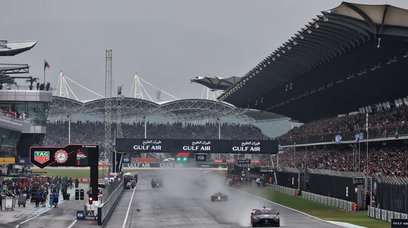
On 5 April 2009, a massive tropical downpour turned the Sepang International Circuit into a waterlogged nightmare, forcing race officials to red-flag proceedings after just 33 laps of the scheduled 56.
The race would not resume, with the results being taken from the classification at the end of lap 31, due to it being the penultimate lap fully completed in according with Article 42.8 of the sporting regulations.
It awarded Jenson Button a fortuitous victory that masked a critical problem lurking beneath his Brawn GP machine.
What appeared to be a commanding performance from the future world champion could have unravelled spectacularly had the race restarted.
Years later, Williams team principal James Vowles, who served as Brawn's head of strategy in 2009, revealed that rainwater had infiltrated the electronics in Button's steering wheel during the stoppage.
Had racing resumed, Button's car would have been unable to continue, a mechanical failure that would have cost him five crucial championship points in what became a title-winning season.
Article continues below the image...
From drizzle to deluge
The race began at 17:00 local time, a controversial late start designed to accommodate European television audiences rather than Malaysia's notorious evening monsoons.
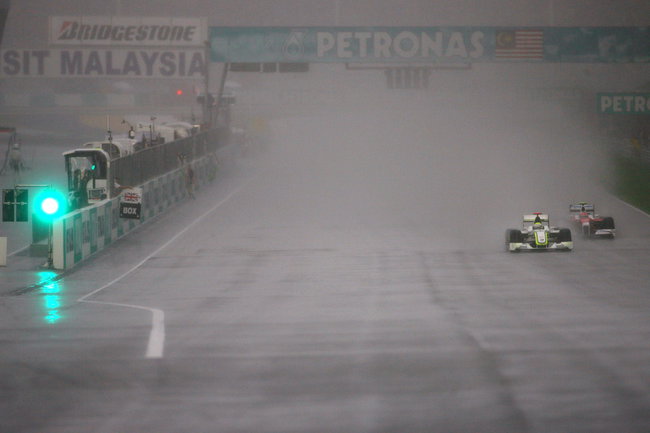
Rain threatened from the opening lap, with conditions manageable until lap 23 when the first heavy showers arrived. Drivers scrambled for full wet tyres as the track deteriorated rapidly.
By lap 31, the situation became untenable. Lewis Hamilton described it as "the most dangerous conditions I have ever raced in," adding that "it was impossible to drive out there, it was very, very dangerous."
Fernando Alonso was equally emphatic, stating that "the visibility is nothing, [we] could have a serious accident if we restart."
Sebastian Vettel and Sebastian Buemi both spun into retirement despite running wet tyres, whilst Heikki Kovalainen had already exited after sliding wide.
The safety car was pulling away at 20 seconds per lap, a damning indicator that conditions exceeded safe racing parameters.
With torrential rain hammering down and daylight fading through storm clouds, officials had no choice. The race was called after 55 minutes, with results taken from lap 31.
For only the fifth time in F1 history, half-points were awarded, Button collecting five instead of the standard 10 for victory.
Nick Heidfeld finished second for BMW Sauber, 22 seconds behind, with Timo Glock third for Toyota. Button's teammate Rubens Barrichello salvaged fifth despite the treacherous conditions.
The abbreviated result stood, and Button's steering wheel malfunction remained a secret for years, a hidden footnote to one of the wettest races in modern F1 history.
Also interesting:
Join RacingNews365's Ian Parkes, Sam Coop and Nick Golding as they look back on last weekend's Japanese Grand Prix! The trio discuss what F1 and the FIA must change across the five-week break and if Max Verstappen could actually retire.
Rather watch the podcast? Then click here!


Most read


In this article
Never miss a thing from the Formula 1 season! Add the 2026 F1 schedule to your calendar at the touch of a button. Subscribe below and put the dates and times of every race directly on your PC or smartphone, so you don't miss a second from the new season.
Download the F1 calendar Download the F1 calendar
A variant with just the race and qualifying is also available.
Click here to download it..





Join the conversation!