


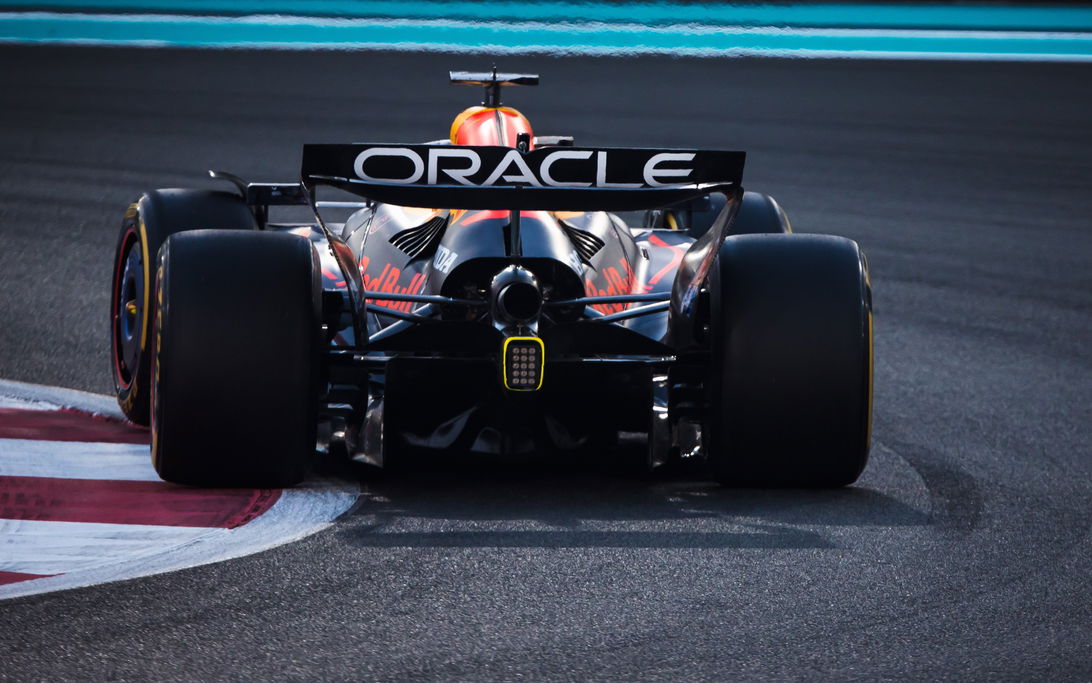
2026 is shaping up to be a truly landmark year for Red Bull Racing.
The Milton Keynes–based team has never shied away from bold decisions since entering Formula 1 in 2005, but next season’s project eclipses all previous challenges: competing with a fully in-house power unit.
Under former team principal Christian Horner, Red Bull took the extraordinary decision to design and build its own engine.
It is a move that, according to the name who replaced him, Laurent Mekies, only Red Bull would dare to make — a testament to the scale and ambition of the undertaking.
The objective is clear: ultimate success in Formula 1, the highest possible achievement in the sport.
Until now, Red Bull has always depended on customer engines, leaving its fortunes partly in the hands of suppliers.
The consequences of that reliance were most evident in 2014, when the introduction of Renault’s V6 turbo engines left Red Bull trailing behind a dominant Mercedes.
After four consecutive world titles, the team suddenly found itself playing catch-up — a situation that lasted until Max Verstappen finally dethroned Mercedes in the drivers’ championship in 2021.
Viewed by others:

A fond farewell
The partnership with Honda, which started in 2018, eventually delivered major success, but Red Bull’s long-term ambition went further. The team wanted full control over its destiny by conquering Formula 1 with its own power unit.
That ambition comes with enormous risk. Red Bull had no historical background in power unit development, forcing the team to build expertise from scratch.
A state-of-the-art engine facility was constructed in Milton Keynes, while experienced engineers were recruited from established manufacturers such as Mercedes and Honda.
Strategic partner Ford is also contributing crucial knowledge, particularly in the increasingly important electrical components of the 2026 hybrid engines.
The pieces are now coming together as Red Bull approaches the moment it has been preparing for over several years: racing with its own Formula 1 power unit.
Expectations, however, remain realistic. Red Bull does not anticipate starting 2026 with the strongest power unit, instead prioritising steady progress throughout the season.
FIA regulations could play a key role in that development. Manufacturers that begin at a disadvantage are granted additional development allowances, potentially enabling Red Bull to close the gap more quickly if rivals initially hold the upper hand.
That pragmatic outlook does not dilute Red Bull’s ultimate ambition. Winning a world championship with its own power unit would be nothing short of a fairy tale in a sport dominated by global automotive giants. The aim is explicit: to defeat Mercedes, Ferrari, Audi and Honda on their turf.
The 'Max' factor
For 2026, the focus is twofold: accelerate development and begin challenging for race victories as soon as possible.
Former Red Bull adviser Helmut Marko has indicated that, by the second half of the season, the team should once again be fighting consistently at the front.
If Max Verstappen can remain competitive during the early phase of the new regulations, a remarkable fifth world title is not out of the question. Should that happen, it may well be remembered as the most impressive achievement of his career.
Also interesting:
Join RacingNews365's Ian Parkes, Sam Coop, and Nick Golding as they continue to review the 2025 Formula 1 season. The trio answer crucial questions such as who was the best driver this year, who was the most improved, the biggest disappointment, and much more!
Rather watch the podcast? Then click here!


Most read

In this article
Never miss a thing from the Formula 1 season! Add the 2026 F1 schedule to your calendar at the touch of a button. Subscribe below and put the dates and times of every race directly on your PC or smartphone, so you don't miss a second from the new season.
Download the F1 calendar Download the F1 calendar
A variant with just the race and qualifying is also available.
Click here to download it..





Join the conversation!