


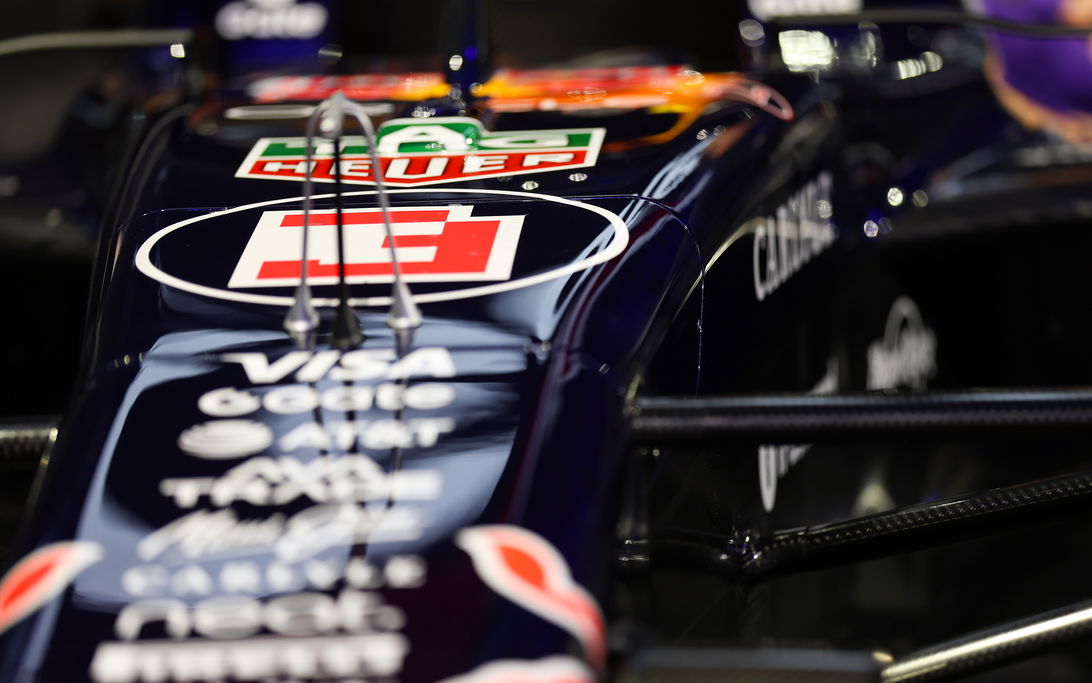
Red Bull's power unit boss Ben Hodgkinson has identified the internal combustion engine (ICE) as the potential "biggest difference" in F1's new era.
For the new generation of power units in 2026, there is a 50-50 split between the beefed-up electrical systems and the ICE in terms of output, with the new batteries capable of producing 350kw of energy, a rise from 120kw in the 2025 generation.
The final designs are yet to be submitted to the FIA, with homologation taking place before the season starts, with Mercedes, Ferrari, Honda, Audi and Red Bull Powertrains (RBPT) providing units to the 11 teams on the grid.
RBPT, supported by Ford, is the only non-manufacturer to provide a design, with boss Hodgkinson explaining how one component of the power unit could become the latest battleground as teams look to out-develop rivals.
"The FIA think the internal combustion engine might be the biggest differentiator, and within the power unit space itself, that could be true," Hodgkinson told select media, including RacingNews365.
"I think on the ERS side, everyone is going to be 99% efficient on their power, electronics, and motor, and I think the best engines last season were at about 50%, so there's still, in theory, quite a lot to go at.
"The biggest differences are probably going to be on the ICE side, and that works with your fuel partner, so Exxon Mobil has been really vital in trying to get as much performance as we can out of the ICE.
"It is tricky to answer how much more potential there is in the sustainable fuels, but it has been quite an enjoyable challenge.
"The sustainable fuels are a bit tricky because they are made up of lots of different elements which have different evaporation points, and the old fossil fuels used to evaporate at a lower temperature in a very clean, very narrow window, which meant you get vaporisation very, very cleanly.
"With the sustainable fuels, you get some elements which are evaporating later than others, and it can be a bit of a challenge with combustion, so we actually have a much closer combustion chamber than we've ever had before.
"It comes with a lot of challenges, but it has been an interesting challenge from an engineering point of view."
Also interesting:
The 2026 F1 Cars Revealed: Everything You Need to Know!
Discover how the 2026 F1 regulations will revolutionise the sport, with a shift to movable wings instead of traditional DRS, to the increased electrical power in the hybrid systems, and the introduction of 100% sustainable fuel.
Most read





In this article
Never miss a thing from the Formula 1 season! Add the 2026 F1 schedule to your calendar at the touch of a button. Subscribe below and put the dates and times of every race directly on your PC or smartphone, so you don't miss a second from the new season.
Download the F1 calendar Download the F1 calendar
A variant with just the race and qualifying is also available.
Click here to download it..





Join the conversation!