


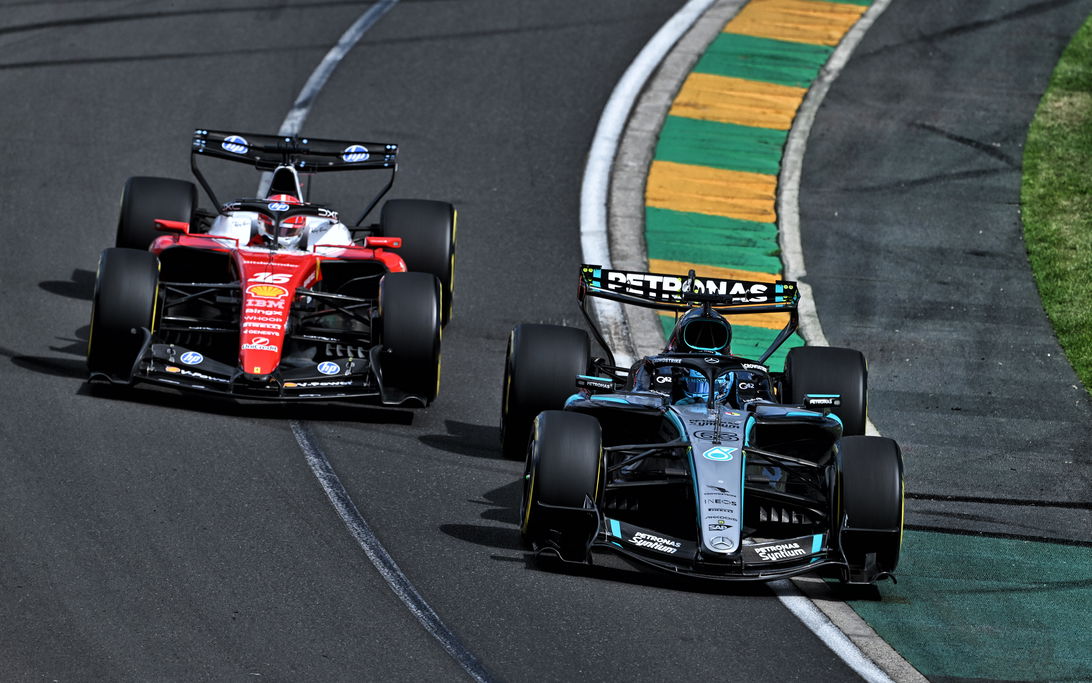
Analysing the F1 season-opening Australian Grand Prix from a technical perspective, two key factors must be considered.
Of those, one ultimately proved more decisive than the other, but battery energy management and tyre graining, particularly on the front-left tyre, were defining factors in the 58-lap race in Melbourne.
The first issue – energy availability – had already proven critical before the race even started, in fact, as early as the formation lap.
Several drivers, including both Red Bulls and both Mercedes, arrived on the grid with their battery charge effectively depleted despite completing two laps intended to carry out the usual recharge routines.
However, those procedures proved insufficient at the Albert Park Circuit. The issue was the MGU-K's rotational speed during those recharge phases, which was not high enough to fully recharge the battery.
What emerged clearly is that this particular circuit – and it is important to stress that Melbourne is especially demanding in this respect – exposes a weakness in the pre-start charging routines.
The procedures used before the race start were simply not capable of restoring battery energy in the same way they did during the 2025 season.
Naturally, the problem did not affect every team equally. The drivers of Scuderia Ferrari, for example, still had some battery charge available at the start, albeit at a relatively low level.
Viewed by others:
Energy management
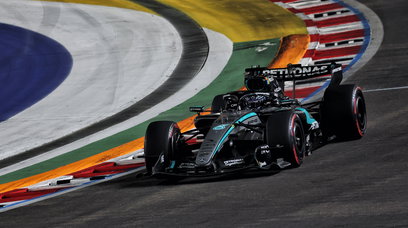
During the race itself, another element became clear: the efficiency of the energy management system on the Mercedes power unit.
This allowed a more effective super-clipping phase with less performance loss at the end of the straights.
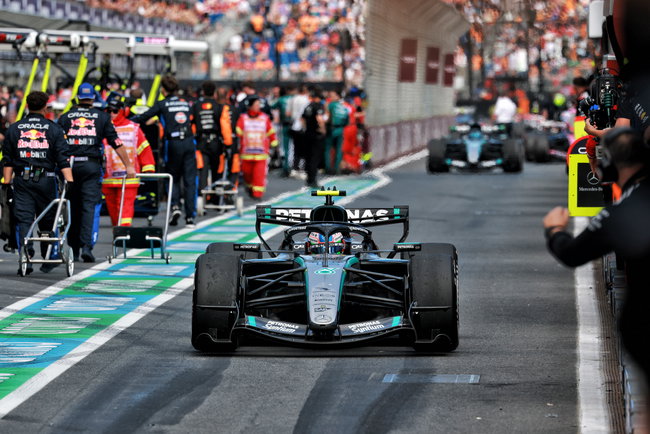
This was particularly evident following the pit stops made by Kimi Antonelli and George Russell under the Virtual Safety Car.
Regardless of Ferrari’s alternative strategic approach, both Mercedes drivers were immediately able to maximise the energy they had accumulated after their stops, significantly increasing their pace.
tyre advantage
At the same time, another strategic advantage emerged: tyre graining was notably limited on the W17.
As a result, when the Ferrari drivers eventually made their own pit stops, the time loss effectively ended any realistic chance of the Maranello-based team fighting for the top two positions.
The clearest conclusion from the race data is that Mercedes and Ferrari appear closely matched in race pace, with a noticeable gap to the chasing pack.
That said, it is worth noting that Red Bull currently looks to be the third-most competitive team, highlighted by an impressive recovery drive from Max Verstappen.
More broadly, while overtaking at Albert Park generally happens on the straights and requires a clear speed differential – typically generated by available electrical energy – corner performance should not be underestimated.
Car balance remains a key competitive factor. The RB22, although not quite on the level of the two teams ahead, appeared dynamically better balanced than McLaren's MCL40, despite the latter running the Mercedes power unit.
In essence, the first snapshot of the 2026 season highlights a technical landscape that remains highly fluid.
Mercedes showed slightly stronger race pace in Melbourne, but it would be premature to describe the team as dominant.
With the championship only just underway, the competitive picture could already evolve as early as the next race.
Did you enjoy the first race of the new F1 era? Let us know by voting below in the latest poll by RacingNews365!
 Chinese GP
Also interesting:
Join RacingNews365's Ian Parkes, Sam Coop and Nick Golding, as they look back on the Australian GP and look ahead to China! The trio discuss the first taste of F1's new regulations, Max Verstappen's frustration but also Lewis Hamilton's striking positivity.
Rather watch this episode? Then click here!


Most read



In this article
Never miss a thing from the Formula 1 season! Add the 2026 F1 schedule to your calendar at the touch of a button. Subscribe below and put the dates and times of every race directly on your PC or smartphone, so you don't miss a second from the new season.
Download the F1 calendar Download the F1 calendar
A variant with just the race and qualifying is also available.
Click here to download it..





Join the conversation!