


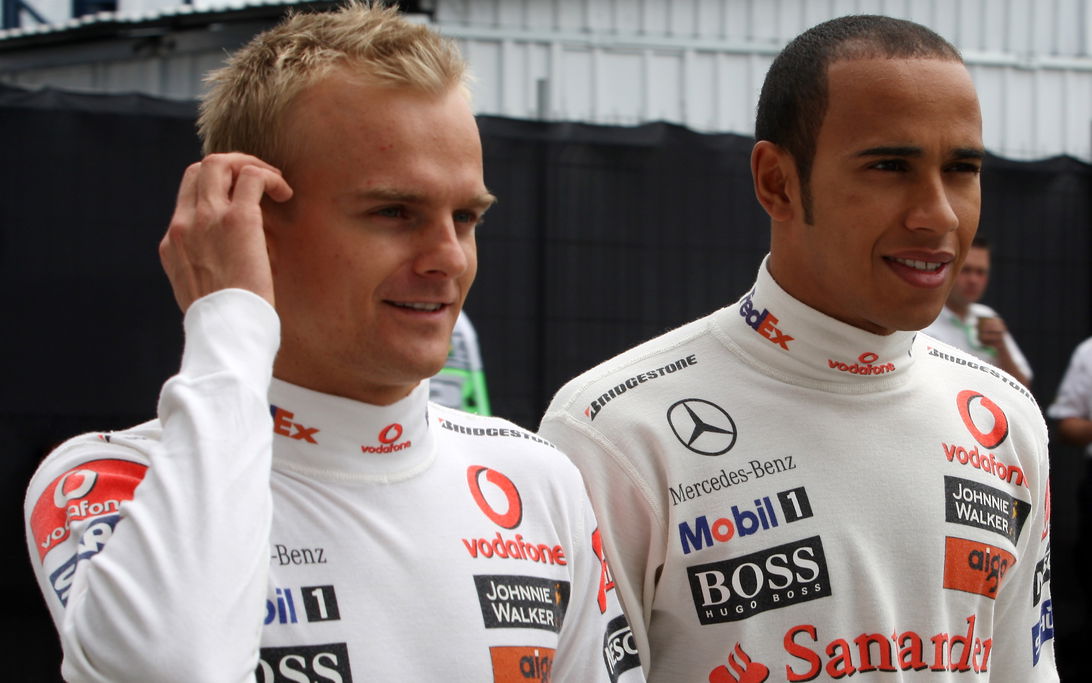
Eighteen years ago today, on 14 December 2007, Heikki Kovalainen was confirmed as Lewis Hamilton's new McLaren team-mate, replacing the departing Fernando Alonso.
The signing came after one of the most turbulent seasons in McLaren's history. Alonso's relationship with the team had deteriorated beyond repair, culminating in Ron Dennis's devastating comment after the Chinese Grand Prix that McLaren's "race isn't with Felipe Massa, it is with Fernando."
The Spaniard's early contract termination cleared the path for Kovalainen's promotion from Renault.
"I am so excited to join a team like McLaren Mercedes," Kovalainen said upon his announcement. "The dedication and commitment to winning here is incredible."
The Finnish driver arrived at Woking with modest but solid credentials. His 2007 rookie season had yielded that memorable third place at Suzuka, demonstrating the pace needed to compete at F1's highest level.
Unlike Alonso's acrimonious departure, Kovalainen's arrival promised stability alongside Hamilton, who had nearly claimed the championship in his debut year.
Viewed by others:
The promise and reality of 2008
Kovalainen's first season delivered mixed results that ultimately defined his McLaren tenure. While Hamilton stormed to his maiden championship with five victories and 10 podiums, the Finn struggled to match that intensity.
His breakthrough moment came at the Hungarian Grand Prix, where he claimed his first and only F1 victory after Felipe Massa's engine failure handed him the lead with three laps remaining.
That triumph made Kovalainen the 100th different winner in Formula 1 history, a statistical footnote that belied his broader struggles.
Across 18 races, he managed just three podiums and 53 points compared to Hamilton's 98. The 45-point deficit highlighted a consistent pace disadvantage that would plague his entire McLaren stint.
His pole position at Silverstone offered glimpses of genuine speed, yet Kovalainen's season was marred by technical failures and poor luck.
A front wheel failure in Spain caused a heavy crash, punctures, and safety car interventions disrupted promising performances, and he frequently found himself finishing in the mid-to-lower reaches of the points, despite qualifying much higher.
The decline of 2009
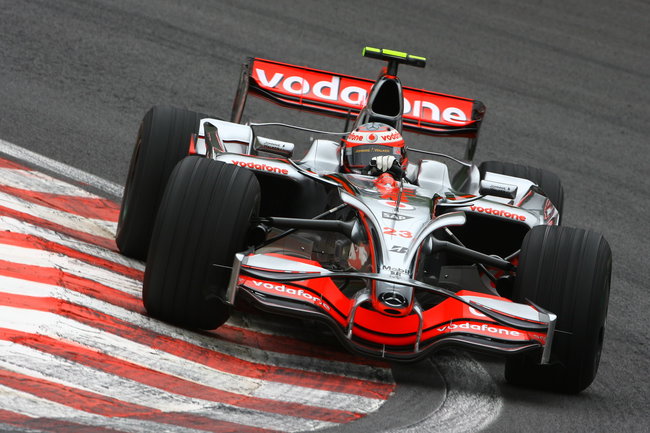
If 2008 revealed Kovalainen's limitations against a generational talent, 2009 exposed them further.
McLaren's regulation-change struggles affected both drivers, but Hamilton's ability to extract performance from difficult machinery highlighted the gap between them.
Kovalainen failed to reach the podium throughout 2009, with his best result a fourth place at Valencia.
Early-season struggles saw him miss the top ten in qualifying for the opening two races, whilst collisions and spins became frustratingly frequent. His first points came only at round three in China.
Meanwhile, Hamilton demonstrated why McLaren had invested so heavily in him. Despite a difficult start to 2009, the Briton recovered dramatically following mid-season upgrades, winning twice in the campaign's final nine races and outscoring the entire field during that period.
By season's end, McLaren's decision was clear. Kovalainen's replacement by Jenson Button for 2010 marked the end of a partnership that promised much but delivered little beyond that single Hungarian victory.
Yet Kovalainen's McLaren tenure served an important function. After the destructive Alonso experiment, his professionalism and commitment provided the stability Hamilton needed to flourish.
The youngest-ever world champion at the time required a supportive team-mate rather than another title contender, and Kovalainen filled that role admirably.
Most read

In this article
Never miss a thing from the Formula 1 season! Add the 2026 F1 schedule to your calendar at the touch of a button. Subscribe below and put the dates and times of every race directly on your PC or smartphone, so you don't miss a second from the new season.
Download the F1 calendar Download the F1 calendar
A variant with just the race and qualifying is also available.
Click here to download it..





Join the conversation!