


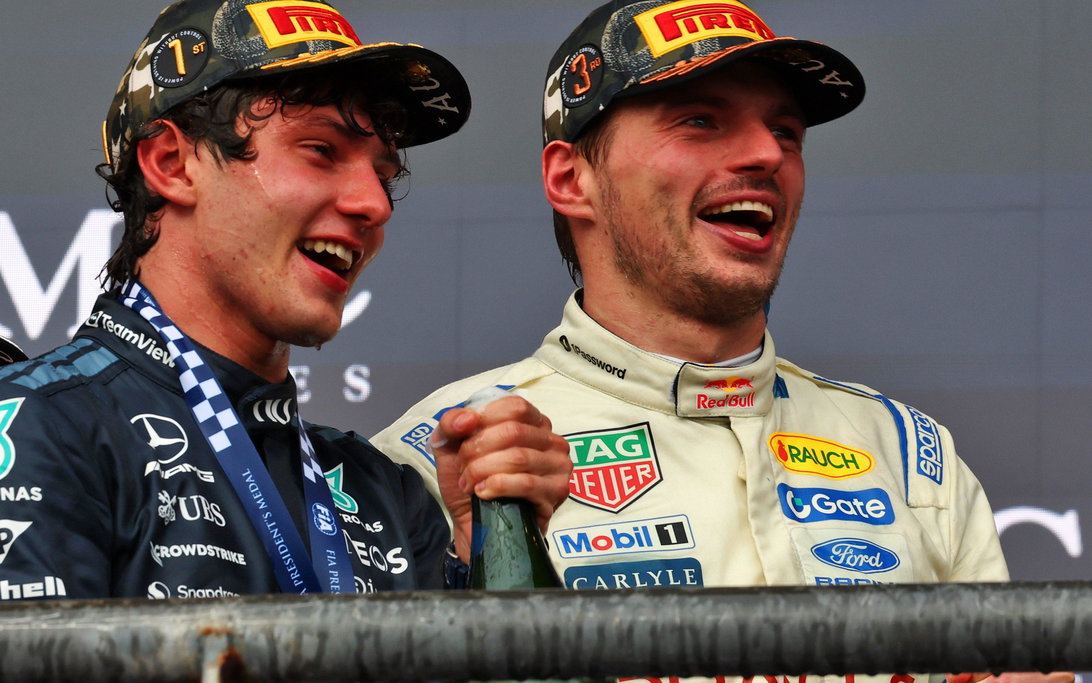
Kimi Antonelli's victory at the 2026 United States Grand Prix left the championship looking all but decided.
It was the Mercedes driver's ninth win of the season and moved him to 365 points, 123 clear of team-mate George Russell. Lewis Hamilton sits another point behind in his Ferrari.
Five grands prix remain, with 125 points available. Russell and Hamilton are still in contention mathematically, although either needs Antonelli to surrender almost his entire lead.
A title forecast had to reflect how unlikely that had become.
[Article continues below]
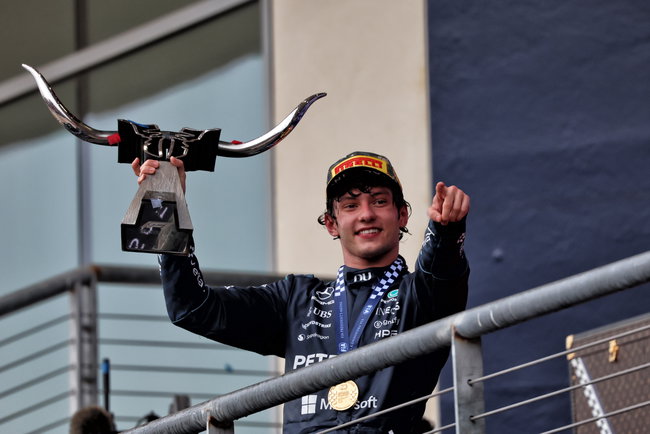
A points lead means more as the calendar shrinks.
Antonelli went into the summer break 50 points ahead of Hamilton. Mercedes had started the new regulations strongly, but Ferrari and McLaren were winning races, too. With 12 grands prix left, there was time for the order to change.
By October 25, the gap had more than doubled, with fewer than half as many races left.
The title maths:
- Russell trails Antonelli by 123 points.
- Only 125 grand prix points remain.
- Even five Russell wins will not suffice if Antonelli scores three more points.
[Article continues below]
Why forecasts and market prices can disagree
Championship forecasts are not all calculated in the same way. A statistical model can use recent race pace, past results and retirement rates to estimate how many points a driver is likely to collect. A prediction market reflects the prices at which people are willing to trade on an outcome. They can move quickly after a race.
Prediction markets also have a practical side that is separate from forecasting. A guide to a polymarket promo code, for example, explains account offers and participation conditions rather than how to assess a Formula 1 championship.
For anyone following a title market, that distinction matters: promotional terms describe access to the platform, while contract prices reflect trading activity. Neither replaces an assessment of the points gap, remaining races and each team's performance.
A driver whose title price improves after a fortunate safety car may not have become any quicker. Equally, a poor finish can conceal a strong car that was held back by an isolated incident.
[Article continues below]
One difficult weekend can alter expectations
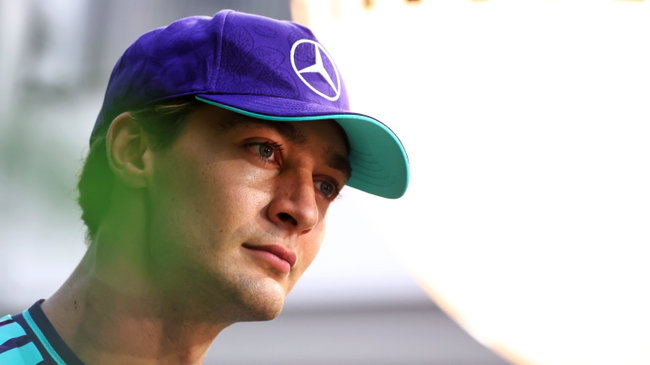
The Austin result gave forecasters more than another 25 points for Antonelli. He converted pole position into victory and finished over 13 seconds ahead of Charles Leclerc, while Russell came home eighth. The manner of the win gave Russell little encouragement.
A tighter race can change even faster. If a driver trails by 20 points, winning while the leader retires puts them five ahead. A convincing advantage in race pace would make that swing more significant than the points alone suggest.
Reliability can make an even bigger difference. One retirement costs a driver a weekend's points. Several failures suggest the car could lose more points later, and forecasts have to reflect that risk.
Qualifying can also flatter a car that struggles with tyre wear or race balance over a full grand prix.
[Article continues below]
Upgrades can overturn earlier form
The pace hierarchy rarely stays fixed across a season, particularly under a fresh set of technical regulations. Ferrari introduced significant developments during 2026, with Charles Leclerc urging an aggressive approach to upgrades as the team tried to close the gap.
An upgrade might work well at one circuit and offer less elsewhere. Race pace and tyre behaviour across several weekends provide better evidence of any sustained gain.
For a driver chasing the title, that improvement must also arrive early enough to turn into points.
[Article continues below]
The remaining races determine what's possible
Under Formula 1's championship points system, a grand prix win is worth 25 points and second place earns 18. Sprint weekends can create additional scoring opportunities, although none remained after Austin in 2026.
A seven-point loss to the leader can be recovered with half a season remaining. Late in the year, a challenger may need victories as well as a succession of low scores from the driver ahead.
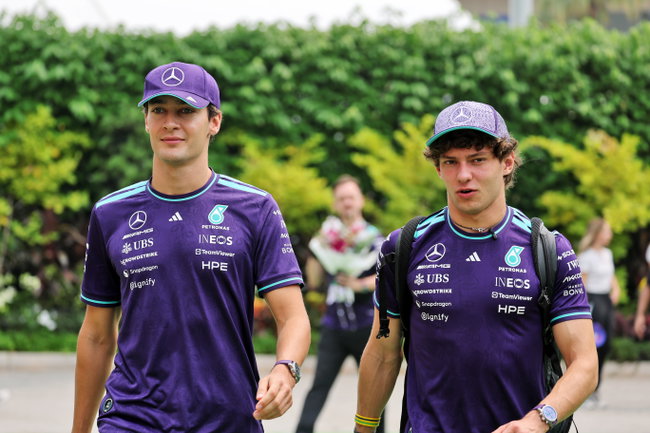
Russell's remaining chance after Austin depends on a succession of victories and unusually poor results from Antonelli. Given how consistently the Mercedes driver has scored, there is little reason to expect that combination to unfold.
Article provided by CBSsports
Most read


In this article
Never miss a thing from the Formula 1 season! Add the 2026 F1 schedule to your calendar at the touch of a button. Subscribe below and put the dates and times of every race directly on your PC or smartphone, so you don't miss a second from the new season.
Download the F1 calendar Download the F1 calendar
A variant with just the race and qualifying is also available.
Click here to download it..


Join the conversation!