


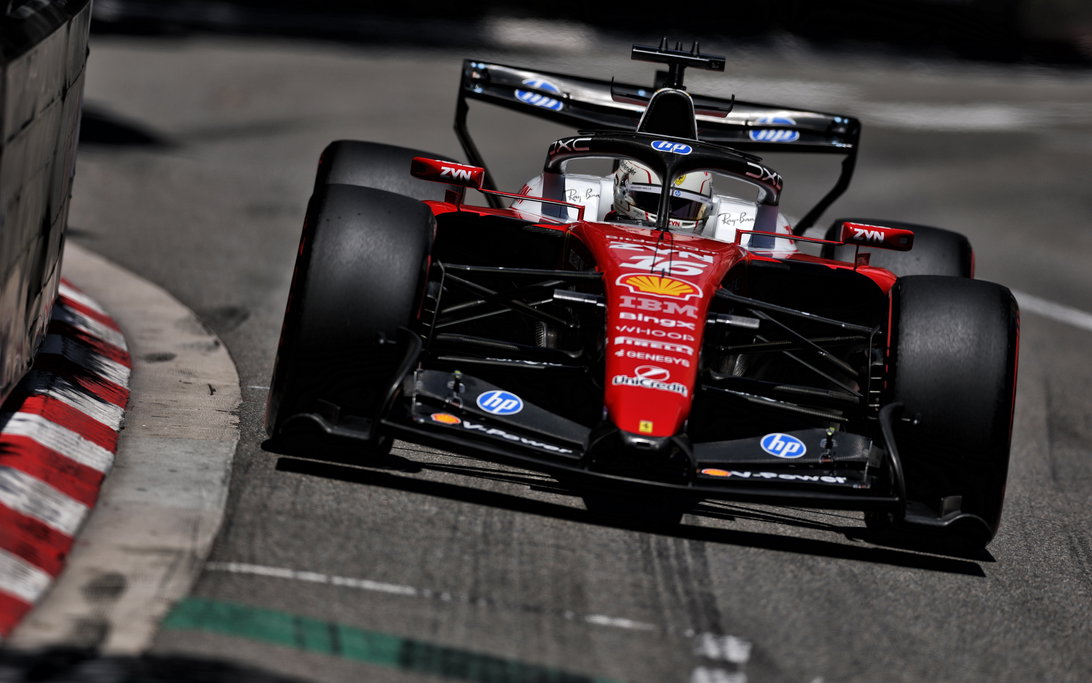
Charles Leclerc's retirement from the Monaco Grand Prix, the SF-26 buried in the barriers at his home race, was the most technically significant moment of the entire weekend in the Principality.
In the immediate aftermath, Leclerc did not hold back. He pointed squarely at his brakes, stating that the impact with the barriers was a direct consequence of three out of four brakes not having worked following the restart after the safety car period called to remove Lance Stroll's stricken Aston Martin.
Leclerc went on to explain in some detail how the root cause was excessively cold rear brakes and a partially cold right-front, which produced virtually no deceleration when pressure was applied to the brake pedal, sending the SF-26 straight into the outside barriers.
Visibly deflated, he described the situation as unacceptable and pointedly noted that a solution had already been available for that very race.
He had, however, personally chosen to defer its introduction until the following weekend at the Circuit de Barcelona-Catalunya.
That solution, which some have speculated involves a different friction material compound, specifically different discs and pads supplied by French manufacturer Carbone Industrie whilst retaining the callipers and brake-by-wire system from the Bergamo-based Brembo, appears to have been running on Hamilton's car for the previous three rounds.



Regeneration problem at the root of Leclerc's crash
The technical explanation as to what happened in Monaco, as best as it can be pieced together, points to a combination of factors specifically tied to the energy regeneration system linked to the rear brakes.
Under the 2026 power unit regulations, energy recovery is conducted exclusively through the MGU-K, the kinetic motor generator unit, via two mechanisms: one during throttle lift-off, and a second during the braking phase itself.
Crucially, last weekend in particular, the FIA had elected to reduce the output permitted from the electrical portion of the power unit, for safety reasons, effectively making the energy recuperated under braking at the rear axle redundant from a charging perspective.
A consequent reduction in the regeneration demand at the rear may therefore have pushed the rear brake temperatures further outside their optimal operating window, leaving them too cold to generate sufficient friction between disc and pad.
Monaco's characteristically low average speeds compound the problem considerably. The circuit offers almost none of the deep, heavy braking events at the end of long straights that drivers rely upon to generate heat in their brake systems. The usual warm-up tools simply are not available around the streets of the Principality.
This remains, naturally, a working hypothesis pending the full telemetric analysis that Ferrari will conduct alongside their technical partner Brembo, who supply braking systems to every team on the grid.
The unusual nature of the failure demands a thorough investigation into precisely which parameters combined to trigger the incident.
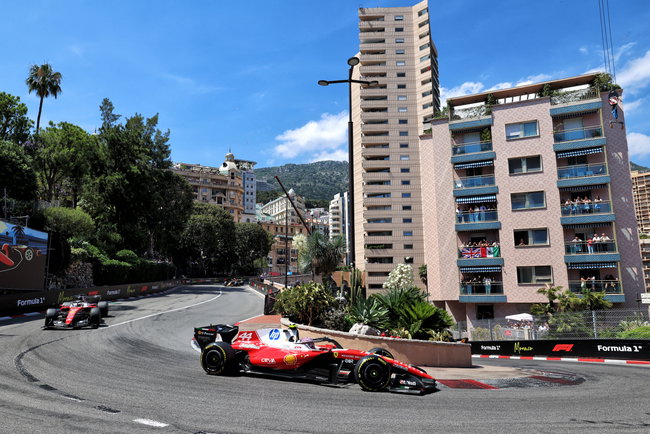
Hamilton's car and the question of the Carbone Industrie switch
What sharpens the intrigue is the contrast with Hamilton's weekend.
The seven-time F1 drivers' champion reported no such difficulties, while Leclerc had repeatedly flagged imperfect brake feel throughout the Monaco weekend and, notably, had raised similar concerns as far back as the Canadian Grand Prix regarding his overall feel with the SF-26.
The implication, which must be stated with appropriate caution, is that whatever modification has been running on Hamilton's car since Miami may have been sufficient to prevent the same issue from arising on his side of the garage.
If the Carbone Industrie discs and pads do indeed offer a broader thermal activation range, as some sources have suggested, that would go some way towards explaining the divergence in their experiences.
However, Ferrari has issued no official confirmation of any of this. There has been no acknowledgement that Carbone Industrie components have been evaluated in comparative testing, nor any confirmation that Hamilton's car has been running a different brake specification since Miami. The specifics remain firmly in the realm of informed speculation.
Brembo, for its part, responded swiftly to Leclerc's public comments.
The Bergamo-based manufacturer issued a press statement reaffirming its long-standing partnership with Scuderia Ferrari, one that stretches back more than fifty years, and expressed surprise at the public nature of the criticism.
The statement also highlighted the breadth of collaboration between Brembo and other brands within the wider group, including AP Racing clutches and Öhlins dampers.
The Barcelona-Catalunya Grand Prix this weekend should, hopefully, provide some answers as to both the findings of the investigation and the nature of the solution Ferrari intends to introduce.
Also interesting:
Join RacingNews365's Nick Golding and Samuel Coop as they look back on the Monaco GP and look ahead to this weekend's Barcelona-Catalunya GP! The duo discuss Kimi Antonelli's insane form, Lewis Hamilton leaking some major news and George Russell's serious struggles.
Rather watch this podcast? Then click here!


Most read

In this article
Never miss a thing from the Formula 1 season! Add the 2026 F1 schedule to your calendar at the touch of a button. Subscribe below and put the dates and times of every race directly on your PC or smartphone, so you don't miss a second from the new season.
Download the F1 calendar Download the F1 calendar
A variant with just the race and qualifying is also available.
Click here to download it..





Join the conversation!