


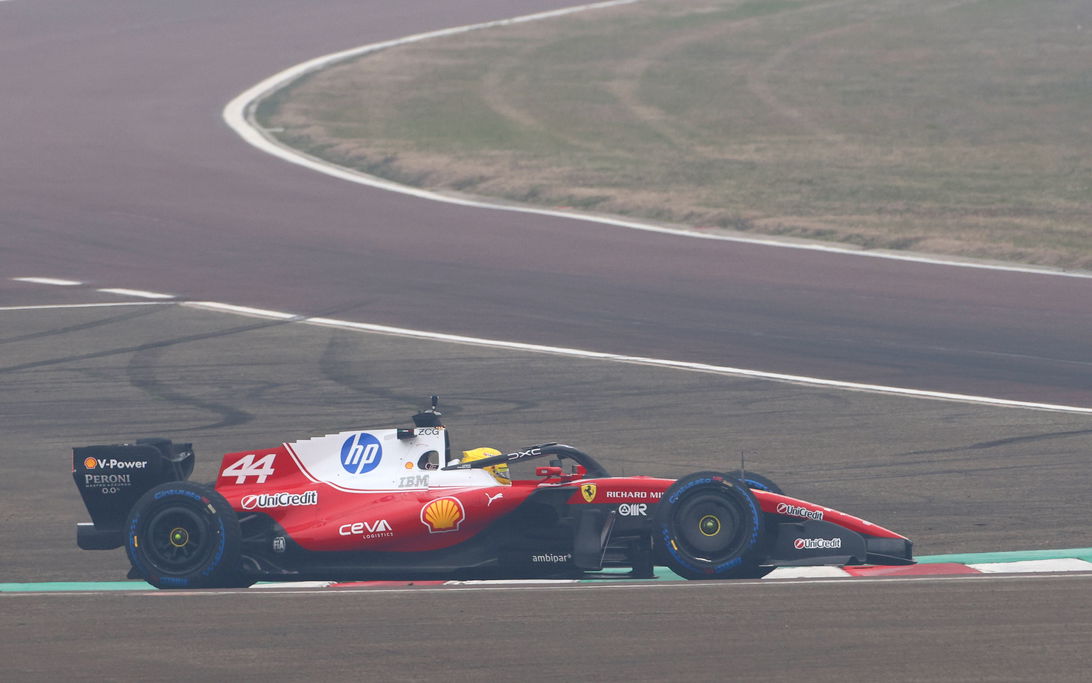
Ferrari pulled back the curtain on their SF-26 challenger at precisely 11am local time on Friday morning, offering the first glimpse of how the Scuderia intends to tackle the sweeping regulatory changes coming in 2026.
The images reveal a machine shaped by the extensive aerodynamic and power unit revolution that will define the new era, though what has been shown represents merely the starting point for a project that will evolve considerably before the season opener in Melbourne.
Several core design philosophies are already apparent in this early iteration. Most notably, Ferrari have committed to push-rod suspension at both ends of the car, finally abandoning the troublesome pull-rod setup at the front that plagued the SF-25 and left drivers struggling with steering feel through corner entry phases.
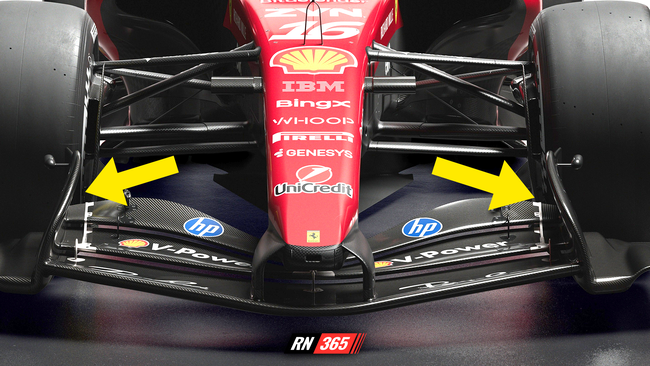
Ferrari alone in nose approach
The front wing assembly demonstrates Ferrari's approach to the mandated active aerodynamics systems.
Rather than the profiles themselves, it is the actuators controlling flap incidence that catch the eye, cleverly integrated within the endplates. Short, curved pylons connect the nose to the wing assembly, creating a cleaner overall package.
However, it is the sidepod architecture that reveals the most sophisticated thinking. The high-mounted air intakes, carried over from previous designs, now conceal a deeper channel beneath that feeds into a bypass duct.
This innovative solution exits at the base of the engine cover, positioned immediately behind the IBM branding.
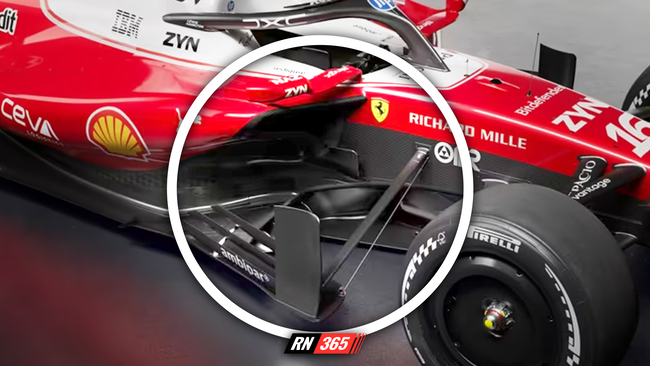
Ferrari's air intake design
When viewed alongside the power unit air intake, an almost triangular cross-section with rounded edges that appears remarkably compact compared to rival solutions, these elements suggest Ferrari have pursued a fundamentally different internal airflow strategy.
This approach indicates significant attention to power unit packaging, extending to the radiators and heat exchangers that must operate within tighter confines.
The rear of the SF-26 appears notably narrow, particularly around the hot-air exit zones, reflecting a focused approach to airflow management that should enhance the diffuser's ability to extract air from beneath the floor.
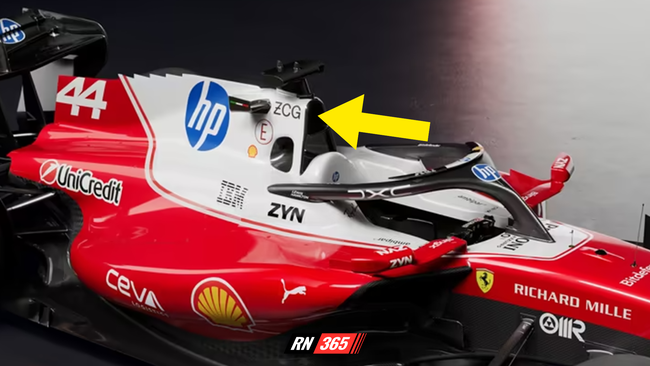
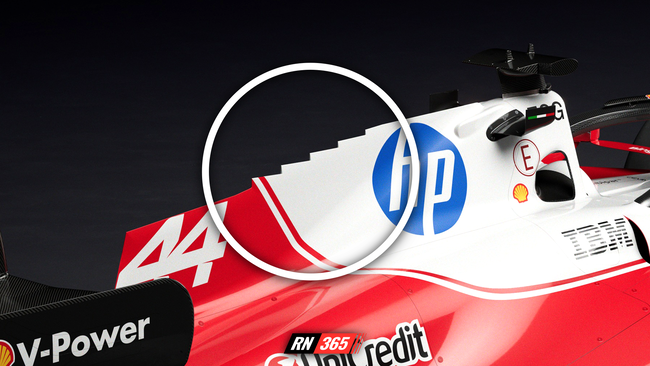
Ferrari's bold engine cover
The substantial shark fin adorning the engine cover partially echoes last year's design language whilst incorporating a distinctive saw-tooth profile that breaks new ground for the Italian squad.
Regulatory requirements have forced the wheelbase down to 3,400mm, resulting in a noticeable rearward shift of the cockpit position. The change is significant without being excessive, maintaining the car's proportional balance whilst meeting the new technical requirements.
Beneath its provisional appearance lies a machine concealing numerous refined characteristics, one that will undergo substantial development before Lewis Hamilton and Charles Leclerc take it to the grid in Australia.
The SF-26 represents Ferrari's bold interpretation of how to extract performance from F1's most significant regulatory shake-up in decades.
Also interesting:
The 2026 F1 Cars Revealed: Everything You Need to Know!
Discover how the 2026 F1 regulations will revolutionise the sport, with a shift to movable wings instead of traditional DRS, to the increased electrical power in the hybrid systems, and the introduction of 100% sustainable fuel.
Most read








In this article
Never miss a thing from the Formula 1 season! Add the 2026 F1 schedule to your calendar at the touch of a button. Subscribe below and put the dates and times of every race directly on your PC or smartphone, so you don't miss a second from the new season.
Download the F1 calendar Download the F1 calendar
A variant with just the race and qualifying is also available.
Click here to download it..





Join the conversation!