


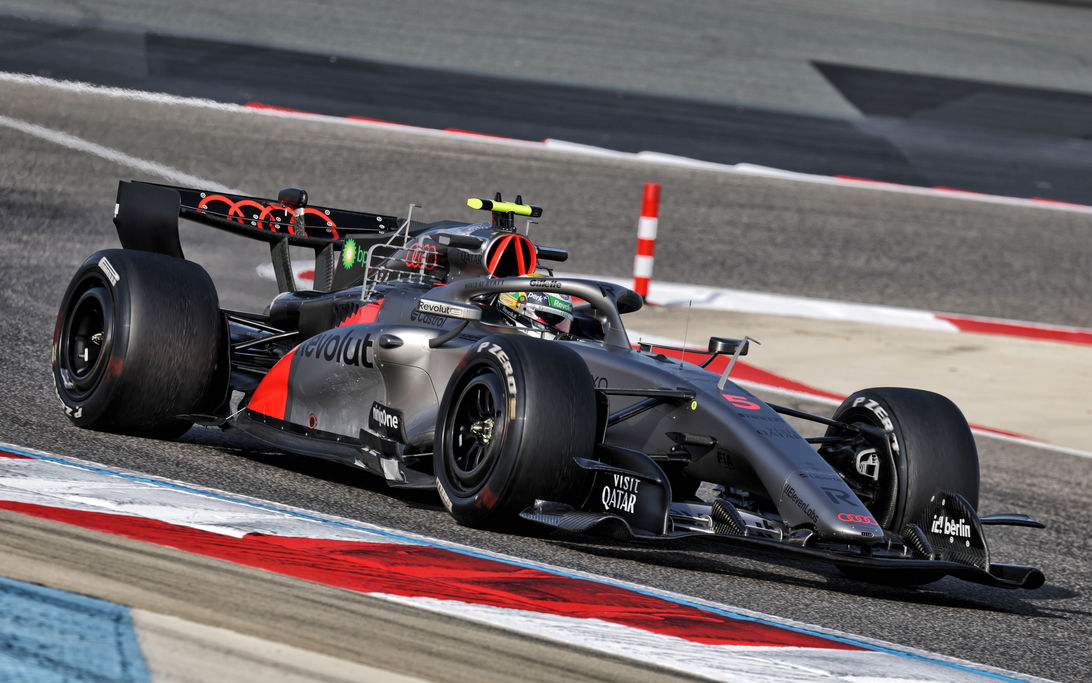
Gabriel Bortoleto has said that starting the new F1 cars is "quite a mess" as fears that race starts could provoke chaos in 2026 begin to gain traction in the paddock.
The Audi driver labelled the process "complicated", given that drivers may have to spool the turbo of the new power units for up to 10 seconds before launch.
Previously, the MGU-H was used to get the turbo spinning at the correct speed, but that process has now become much more involved for the drivers without the MGU-H there to keep the turbo primed.
It makes turbo lag a much bigger factor off the line, and it will take time for drivers to get their turbo into the correct operating window once they have positioned their car on the grid.
Without that instant electrical assistance, they must either use valuable battery energy to help spool the turbo or hold higher revs on the grid to ensure sufficient boost.
That creates a delicate balancing act, as too much RPM risks excessive wheelspin when the clutch is released, while too little can leave the engine bogging down or triggering anti-stall.
And with electrical deployment only arriving once the car reaches 50km/h (31mph), nailing the perfect throttle and clutch timing when the lights go out is expected to be one of the biggest challenges of the new era.
Valtteri Bottas also highlighted the issue, questioning whether he will have enough time once the start lights come on at the Australian Grand Prix to get his turbo spinning properly, given it takes up to 10 seconds, and his five-place grid penalty almost certainly consigns him to starting towards the rear of the field.
Bortoleto's team-mate, Nico Hulkenberg, agreed that much of the problem will depend on where drivers are positioned on the grid, but did share his expectation that teams and engineers will get on top of the issue before long.
The timing of the entire start procedure is nonetheless expected to be an early challenge. Bortoleto explained the complex process, underlining how difficult it will be for drivers to manage.
When asked by media, including RacingNews365, how hard it will be to time the start sequence when the lights are getting ready to go out, the Brazilian replied: "Oh, man, it's complicated!
"The 10-second thing... and then after five seconds, I've already lost the count.
"And then the engines revving up, gears in and out, and you need to release the clutch. It's quite a mess.
"It was much easier last year. Let's see how we end up in Melbourne."
Also interesting:
In this video, we explore a fascinating Mercedes engine theory that is engulfing the F1 paddock. We break down how it works, why it matters, and why this advantage — if real — may be brilliant, legal… but only temporary.
Most read


In this article
Never miss a thing from the Formula 1 season! Add the 2026 F1 schedule to your calendar at the touch of a button. Subscribe below and put the dates and times of every race directly on your PC or smartphone, so you don't miss a second from the new season.
Download the F1 calendar Download the F1 calendar
A variant with just the race and qualifying is also available.
Click here to download it..





Join the conversation!