


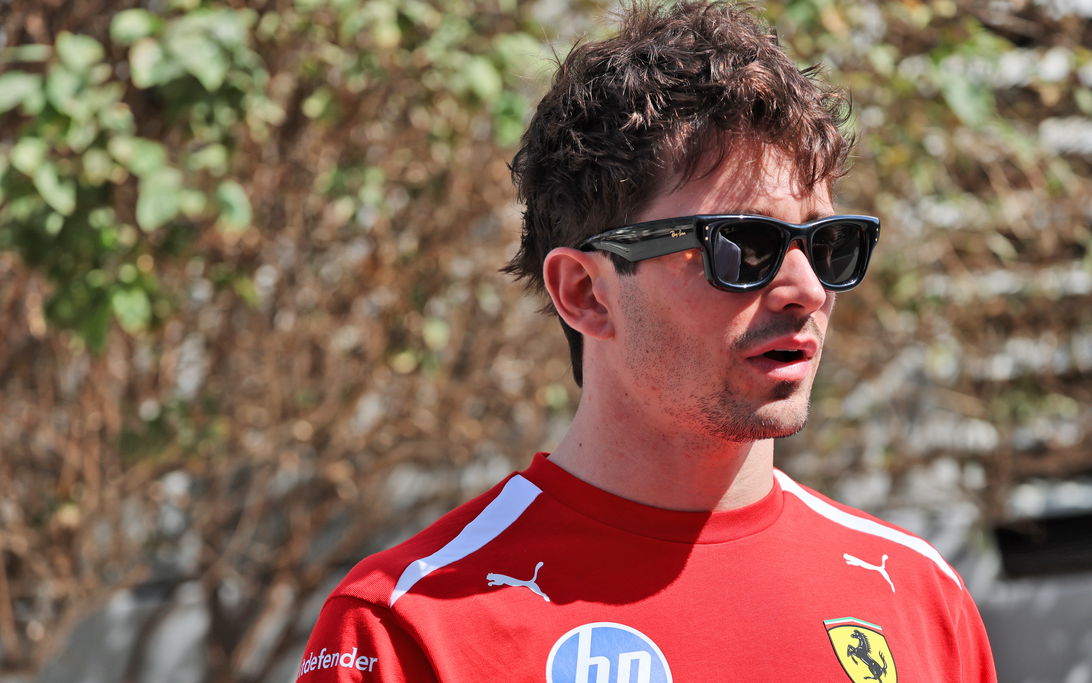
Charles Leclerc has admitted he is struggling to pull off overtakes with the new-for-2026 F1 cars.
The challengers have been built under a fresh set of technical regulations this year, with changes made to both the aerodynamic and power unit rules.
The drivers are now having to place extra focus on energy harvesting and deployment as the electrical output now matches that of the internal combustion engine.
Overtaking now relies heavily on where the competitors use their energy and after testing the systems in Bahrain, Leclerc admitted he is struggling to make his moves stick.
“I find it at the moment extremely difficult to get any overtakes,” Leclerc told media including RacingNews365.
“But it might improve with time in how we manage these kind of situations. But it always comes with a price whenever you've got to overtake.
“The price is a lot more costly than it was in the past. So that's why I think it's very, very difficult to make an overtake and then pull away like it was the case last year.”
The cars have received a mixed verdict from the drivers this week - some have enjoyed the enhanced ability to play with the car through corners, while four-time champion Max Verstappen was critical of the new driving methods.
Weighing in on the situation, Leclerc said: “It's not the most fun I've had driving a car, but it's the way it is.
“I find the fun in a different way. I think the challenge of really developing this whole new system is, in itself, something that I've enjoyed and something that I found that I find very interesting.
“So in that, I find some fun into just experiencing different things and things that might have not worked in the past.
“Now that it's all different, it's cool to be able to think a bit outside the box and to try and find other ways in trying to maximise the performance of the car.
“But the actual pleasure of driving the car is different.”
Also interesting:
In this video, we explore a fascinating Mercedes engine theory that is engulfing the F1 paddock. We break down how it works, why it matters, and why this advantage — if real — may be brilliant, legal… but only temporary.
Most read



In this article
Never miss a thing from the Formula 1 season! Add the 2026 F1 schedule to your calendar at the touch of a button. Subscribe below and put the dates and times of every race directly on your PC or smartphone, so you don't miss a second from the new season.
Download the F1 calendar Download the F1 calendar
A variant with just the race and qualifying is also available.
Click here to download it..





Join the conversation!