


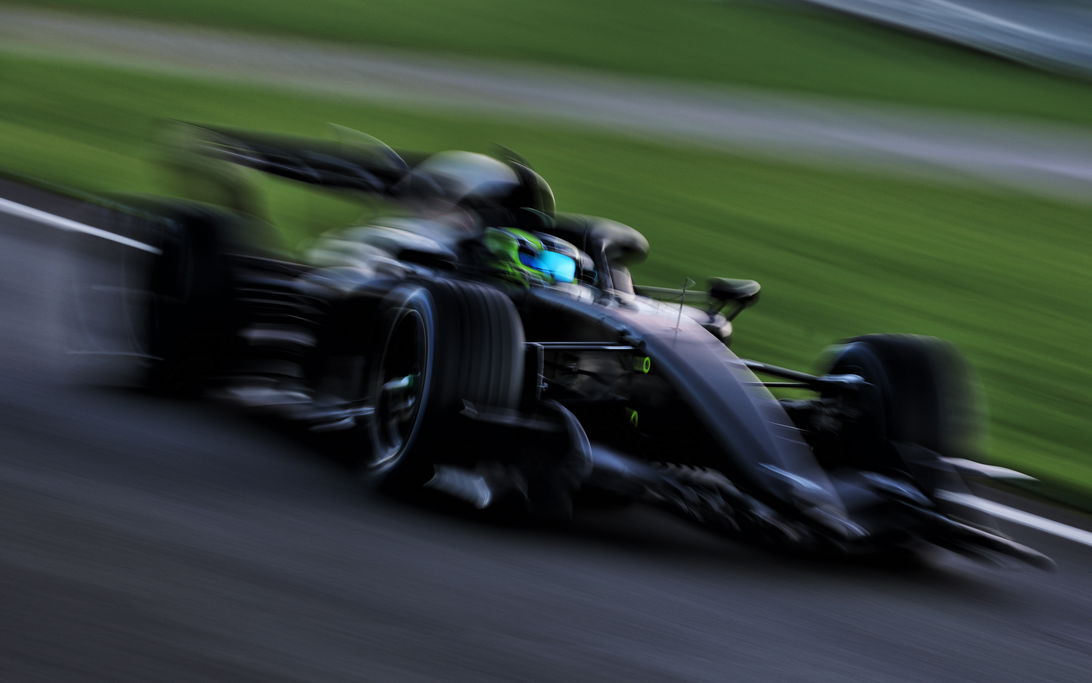
The shakedown of the new Cadillac by Sergio Perez at Silverstone on Friday gave us our second glimpse of a 2026 F1 car on track.
But unlike the Audi shakedown in Barcelona, this time, images were available to reveal the main features of the new breed of car.
The machine appeared to be conventional in some respects, with the aerodynamic concept not overly extreme, but rather that of a car designed to cover as many miles as possible during pre-season without a focus on outright performance.
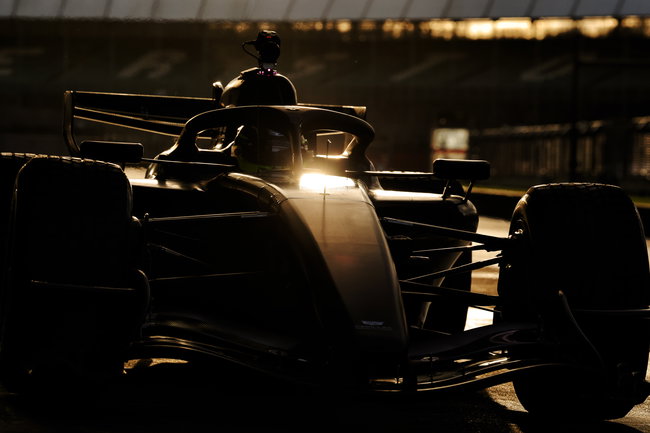
The front-end, with its sloping nose cone, overlooks two pillars to which the front wing is connected, itself characterised by a deep central spoon section, reminiscent of the cars of the early 2000s, with the front suspension, from the images available, being of a pull-rod design and not a push-rod, which has been adopted at the rear.
Compared to the renderings of the Red Bull RB22 machine, the sidepods appear much more voluminous with a less pronounced undercut, and appear longer towards the rear.
Although the bodywork narrows considerably in front of the rear wheels, it is interesting to note that the volume of the sidepods and the engine cover seem to prioritise the reliability of the power unit.
The internal packaging is obviously not visible, but it is clear that particular attention has been paid to the precise layout of the radiators and heat exchangers, with the cooling vents on the side of the engine hood are similar to those adopted by McLaren and Ferrari in 2025.
The dynamic intake of the Ferrari engine is ovoid in shape, and divided into three parts, a solution already seen on the Red Bull, and which could represent a common feature among most 2026 cars for the rationalisation of internal ducting.
The wings, starting with the front wing, do not seem to be a departure from the concepts expressed in the FIA renderings, with fenders equipped with large horizontal winglets acting as flow seperators above and to the side of the wheels to generate outwash.
Cadillac's first effort in designing an F1 car appears a very rational, sensible job, as one might expect from the team's debut car.
Development of the new machine will not proceed at an excessively intense pace, but will gradually increase as experience is gained on track, both in terms of data collection and progressive performance evaluation.
It seems fair to conclude that the Ferrari PU can be considered the strong point of the package, or at least the critical part of the entire project as extra data is gathered from the Scuderia's works cars during the season.
Also interesting:
The 2026 F1 Cars Revealed: Everything You Need to Know!
Discover how the 2026 F1 regulations will revolutionise the sport, with a shift to movable wings instead of traditional DRS, to the increased electrical power in the hybrid systems, and the introduction of 100% sustainable fuel.
Most read






In this article
Never miss a thing from the Formula 1 season! Add the 2026 F1 schedule to your calendar at the touch of a button. Subscribe below and put the dates and times of every race directly on your PC or smartphone, so you don't miss a second from the new season.
Download the F1 calendar Download the F1 calendar
A variant with just the race and qualifying is also available.
Click here to download it..





Join the conversation!