


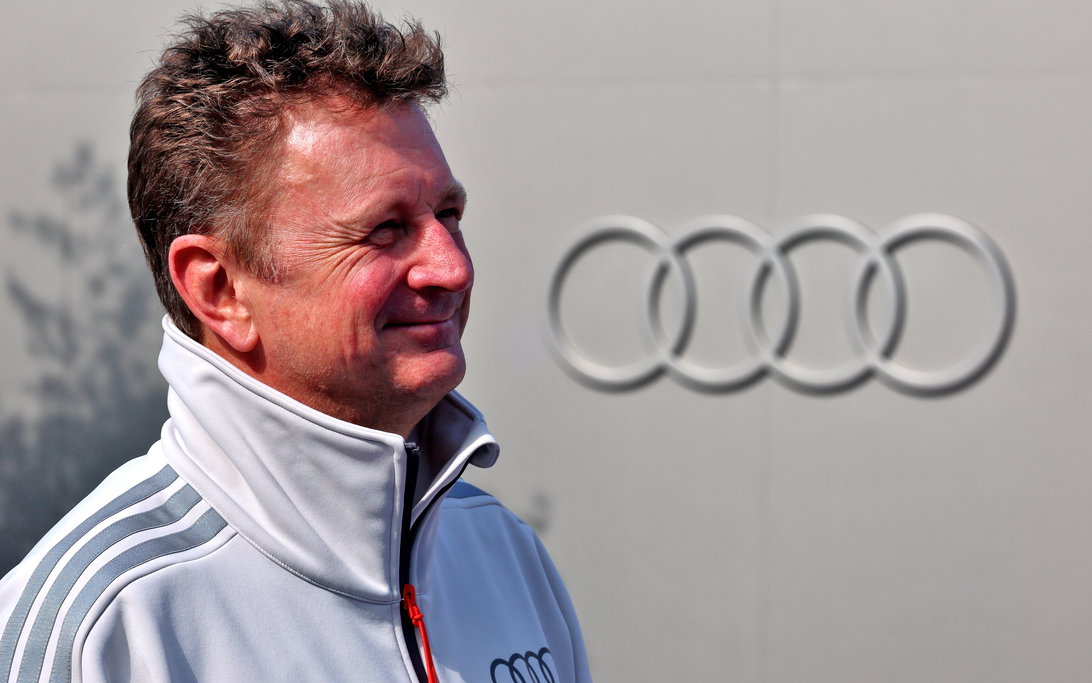
Allan McNish knows the 24 Hours of Le Mans as well as almost anyone alive.
The Scot won the great race three times, in 1998 with Porsche alongside Laurent Aïello and Stephane Ortelli, and then twice more with Audi in 2008 and 2013, sharing cockpits with Tom Kristensen and Rinaldo Capello, and then Kristensen and Loic Duval respectively.
He added the 2013 World Endurance Championship title to his collection before retiring from racing that same December.
Now serving as racing director of Audi's new-for-2026 F1 team, a role he took on in April, McNish's professional life revolves around the world of grand prix racing, but his heart, this weekend at least, will be firmly at Circuit de la Sarthe, where the 94th running of the 24 Hours of Le Mans is taking place.
Speaking exclusively to RacingNews365 ahead of the race, McNish reflected on just what makes Le Mans the event it is, and why the people behind the scenes deserve as much credit as those turning the steering wheel.
"When you talk about Le Mans, and you talk about specific sports, there were very few sports that had Hollywood films made about them, and there have been very few that have had two made about them, and Le Mans has that," McNish says on the eve of the race.
He is right, of course. Steve McQueen's iconic 1971 film Le Mans and the 2019 blockbuster Ford v Ferrari have cemented the race's place in popular culture.
"So, what I'm saying is that it's got worldwide recognition. It is an iconic sporting event that happens once a year. It's basically the biggest sporting event in the world, in terms of spectators, usually that middle weekend in June, and from a driver's point of view, it puts your career on the map," he says.
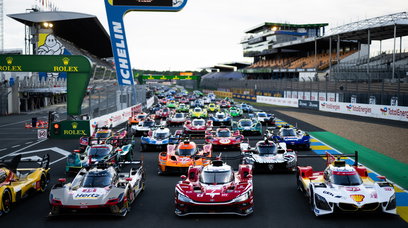
That claim is not without foundation. The race regularly attracts more than 300,000 spectators across the event week, with a record 329,000 attending in 2024. When accounting for accredited staff and free admissions, the total number of people on site has exceeded 430,000.
McNish drew a parallel with this year's Indianapolis 500, where Felix Rosenqvist's victory in the closest finish in Indy 500 history helped transform the Swede's profile overnight.
"In the same way, winning the Indy 500 has just put Felix Rosenquist's name on a map, winning Le Mans does the same thing, and I think for that reason alone, it has got the test of time."
Viewed by others:
'Like doing 17 grands prix back to back'
For all its glamour and prestige, the human toll of competing at Le Mans is enormous.
McNish, who spent the 2002 season racing in F1 with Toyota and therefore has a direct frame of reference for comparing the demands of a grand prix weekend with an endurance race, was vivid in his description.
"From the other side, it is like doing 17 grands prix back to back," he explains, which is fittingly the length of the campaign he raced in Formula 1, even if he did miss the final round in Japan after a huge practice crash.
"It's like driving across the United States in 24 hours. From a team point of view, doing however many pit stops they do now, making sure everyone's spot on, trying not to make mistakes, trying to overtake probably four or five cars every lap, whether it be in the middle of the night or in the middle of the day."
The physical demands are one thing. It is the emotional weight, McNish argued, that truly sets Le Mans apart.
"Mentally, not physically, but mentally, but more importantly, emotionally, it's the most draining thing I've ever done in my life."

The unsung hero no one sees on television
When the chequered flag falls on Sunday afternoon, the spotlight will inevitably fall on the winning drivers, the engineers poring over data, and the strategists who called the right moments. McNish, though, wanted to highlight someone else entirely.
"I do think it is a case of you have the machine, but it takes the human to be able to make it win," he states. "One of the most important people that we had was actually our lady who made sure all of our team kit was ready, washed and prepared."
The detail matters. In a race where the margins between winning and losing can be measured in seconds across 24 hours, the cumulative effect of hundreds of small contributions, many of them invisible, can be decisive.
A driver whose kit is clean and ready, whose environment is organised and calm, is a driver better equipped to perform at three o'clock in the morning, when fatigue starts to take hold.
"So that preparation that no one ever sees, it's never on television, and it's never talked about, that is some of the most important preparation," McNish adds. "And so she was as key a member as a race engineer or strategist."
'Everybody's a winner'
This year's Hypercar field features 18 cars from eight manufacturers, including Ferrari, Toyota, Cadillac, BMW, Alpine, Aston Martin, Peugeot and debutants Genesis, the first Korean manufacturer to contest the race at the top level.
The competition is fierce, and the entry list reflects a golden era for endurance racing. But for McNish, Le Mans transcends the result sheet.
"Whoever wins outright will be cheered on by 200,000, 300,000 fans, and some of those fans go to see a specific driver, some go to see a specific car or team, some go to see the race, some don't even make it to see the race, and but all in all, the atmosphere, the energy about the place, the iconic venue, the fact that you get flashbacks to the film Le Mans from the early 70s, just by going to the Maison Blanche, the fact that you can just feel that whole sense of spirit there is something that I think everybody takes away," he explains.
"It's not about the winners, because the winner on the track is one thing: every single fan is a winner, whether they're watching live, or whether they're there at the circuit, or whether they're actually a fan that's driving the winning car, but everybody is a fan, and everybody's a winner."
For a three-time champion of the race, a man whose name is etched into Le Mans history alongside the greats of endurance racing, to say it is not about the winners is a striking thing.
But then, McNish has always understood that Le Mans is bigger than any one result, any one car, any one driver.
Also interesting:
Join RacingNews365's Nick Golding and Samuel Coop as they look back on the Monaco GP and look ahead to this weekend's Barcelona-Catalunya GP! The duo discuss Kimi Antonelli's insane form, Lewis Hamilton leaking some major news and George Russell's serious struggles.
Rather watch this podcast? Then click here!


Most read

In this article
Interviews RN365 News dossier
Never miss a thing from the Formula 1 season! Add the 2026 F1 schedule to your calendar at the touch of a button. Subscribe below and put the dates and times of every race directly on your PC or smartphone, so you don't miss a second from the new season.
Download the F1 calendar Download the F1 calendar
A variant with just the race and qualifying is also available.
Click here to download it..





Join the conversation!