


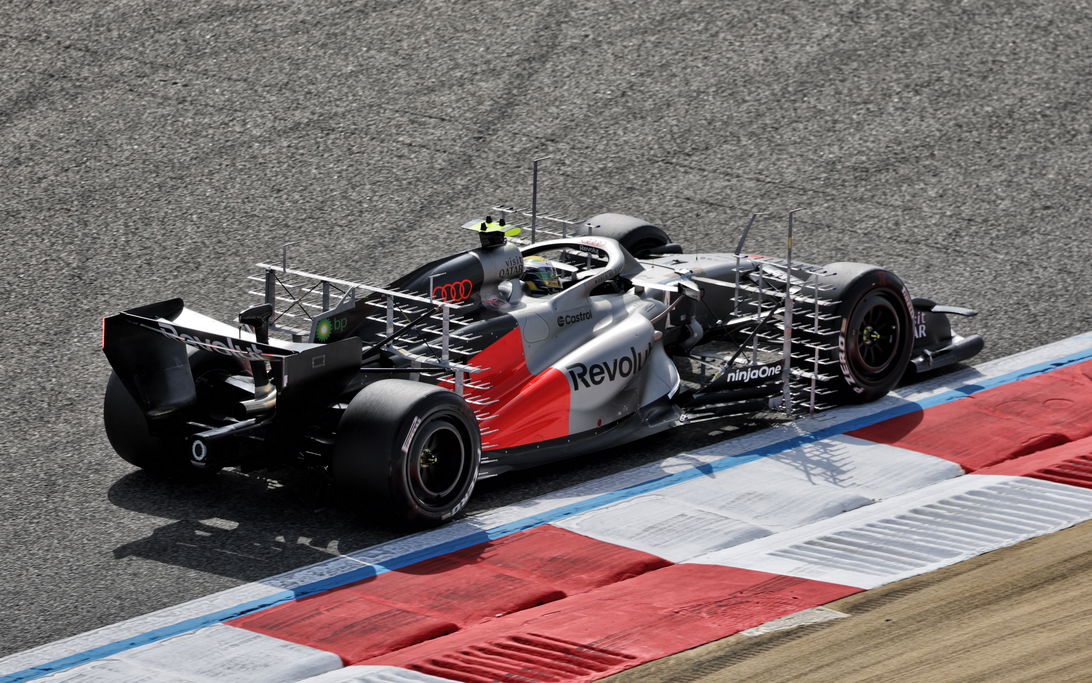
As Formula 1's opening test session unfolds in Bahrain following the closed-door Barcelona shakedown, the sport's technical landscape is beginning to reveal itself, with fascinating developments already emerging across various machines.
The most eyebrow-raising development belongs to Audi, which has unveiled an extraordinarily radical sidepod configuration featuring vertical inlets that hark back to the Ferrari 640 from 37 years ago. This approach fundamentally challenges the established undercut philosophy and completely transforms how airflow is managed toward the car's rear sections.
Contrary to initial impressions, this solution does not actually reduce the sidepods' frontal area but rather increases it, though with the specific intention of directing turbulent air outward.
It represents a conceptual shift that demands an entirely different methodology for rear aerodynamic management, bringing with it considerable complexity when attempting to maximise the effectiveness of areas forward of the front wheels and aft of the engine cover.
Audi's approach to aerodynamic measurement also differs markedly from the field. While most teams deployed substantial aerodynamic rakes during the session, Audi positioned theirs ahead of the rear wheels, contrasting sharply with rivals who mounted them behind the front wheels.
This distinction underscores the airflow management complexities inherent to their chosen solution.
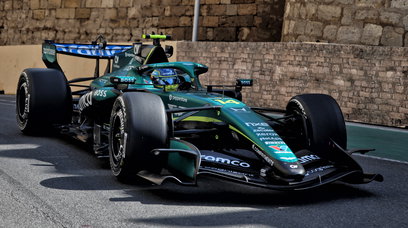
Meanwhile, the Aston Martin AMR26 has drawn attention for its prominent air vent positioned on the engine cover, highlighting both the remarkably tight packaging of the car's rear end and its distinctly sinuous profile, designed for precise airflow management over this critical area.
Another intriguing development, previously observed in Barcelona, centres on the varied approaches teams have adopted for rear-flap operation when engaging aerodynamic active overtake mode.
Alpine's mechanism stands out particularly, as the pivot point around which the two movable elements rotate is not anchored at the trailing edge but positioned at the centre of both elements. This configuration effectively lowers the trailing edge of the final flap rather than raising the leading edge of the first flap.
This design choice stems from a specific philosophy regarding air extraction from the diffuser on straights, particularly during diffuser stall conditions.
Also interesting:
In this video, we explore a fascinating Mercedes engine theory that is engulfing the F1 paddock. We break down how it works, why it matters, and why this advantage — if real — may be brilliant, legal… but only temporary.
Most read


In this article
Never miss a thing from the Formula 1 season! Add the 2026 F1 schedule to your calendar at the touch of a button. Subscribe below and put the dates and times of every race directly on your PC or smartphone, so you don't miss a second from the new season.
Download the F1 calendar Download the F1 calendar
A variant with just the race and qualifying is also available.
Click here to download it..





Join the conversation!