


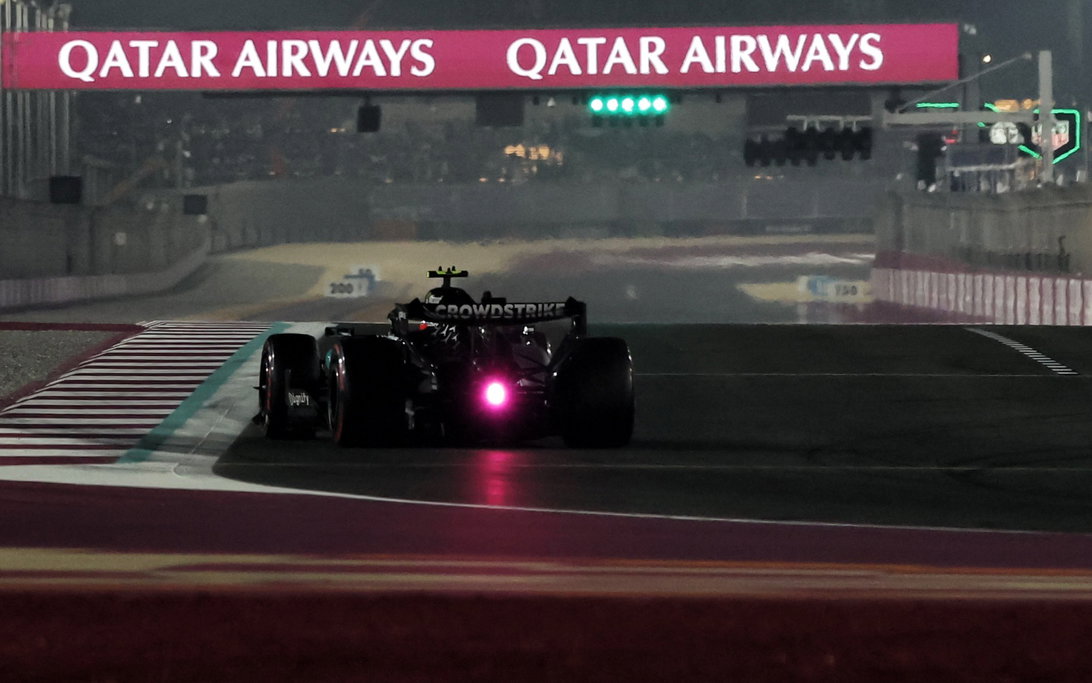
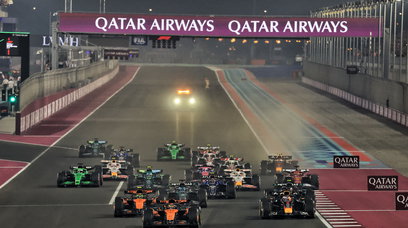
Mercedes has established a commanding advantage at the Qatar Grand Prix, with the dominance of the three-pointed star's power units laid bare from the free practice sessions and qualifying at the Lusail International Circuit.
It was striking that the top ten positions in FP2 were occupied by pairs of team-mates, effectively ranking the field by the pure performance of each manufacturer's car. That was a trend that broadly continued, with a few exceptions to the rule.
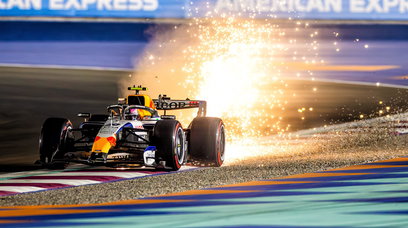
Lusail's track surface has offered minimal grip, with heavy dust off the racing line causing a string of off-track excursions throughout free practice.
Most teams responded by loading up the front end to combat chronic understeer, the issue affecting the majority of the field.
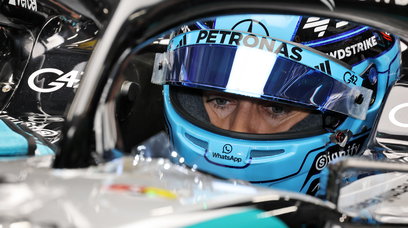
Only the Mercedes pair of Kimi Antonelli and George Russell appeared unaffected, with the W17 able to run slightly more front load thanks to better-distributed electrical deployment.
Rivals, by contrast, made repeated set-up changes across the sessions in search of a car that would turn into corners effectively while also managing tyre degradation, which was particularly severe given the frequent and pronounced lateral slides.
[Article continues below]


Power delivery the decider
The handling story of the weekend, then, was one of teams fighting the understeer forced on them by the track's low grip level.
That levelled the playing field in terms of chassis and suspension performance, since no team could lean on a car's dynamic characteristics to find lap time.
Instead, the deciding factor became power delivery and energy management, specific to each manufacturer's power unit.
The outcome was total Mercedes supremacy in terms of pure energy deployment, a pattern that built through free practice and was then confirmed in qualifying.
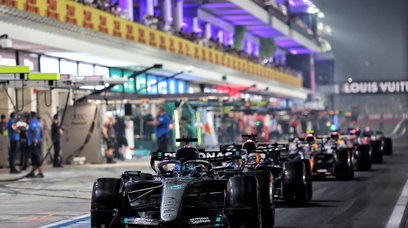
Mercedes showed an advantage of around half a second over its closest rivals, whose relative order shifted only due to the differing set-up choices made after digesting data from the first two free practice sessions.
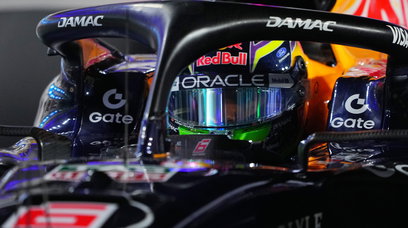
Red Bull, for instance, found roughly three tenths of a second in FP3 compared with its best time from the previous day, while McLaren emerged as the second-strongest force after finding a workable balance with the MCL40 in qualifying.
Mercedes, in short, proved impossible for its direct rivals to match around the Qatari circuit. That superiority had nothing to do with the dynamic handling of the W17, nor with any aerodynamic edge, a factor that carries little weight on this track.
The decisive element, the one that created an unbridgeable gap, was purely the precision of Mercedes' electrical charge management, a trait seen earlier in the season before rival teams had fully unlocked the tricks needed to extract maximum power unit performance at different circuits.
Lusail, with its layout better suited to motorbikes than Formula 1 cars, and above all with its patchy, unpredictable grip, has stripped away every other performance variable and left energy management as the only currency that matters.
Most read
In this article
Never miss a thing from the Formula 1 season! Add the 2026 F1 schedule to your calendar at the touch of a button. Subscribe below and put the dates and times of every race directly on your PC or smartphone, so you don't miss a second from the new season.
Download the F1 calendar Download the F1 calendar
A variant with just the race and qualifying is also available.
Click here to download it..



Join the conversation!