


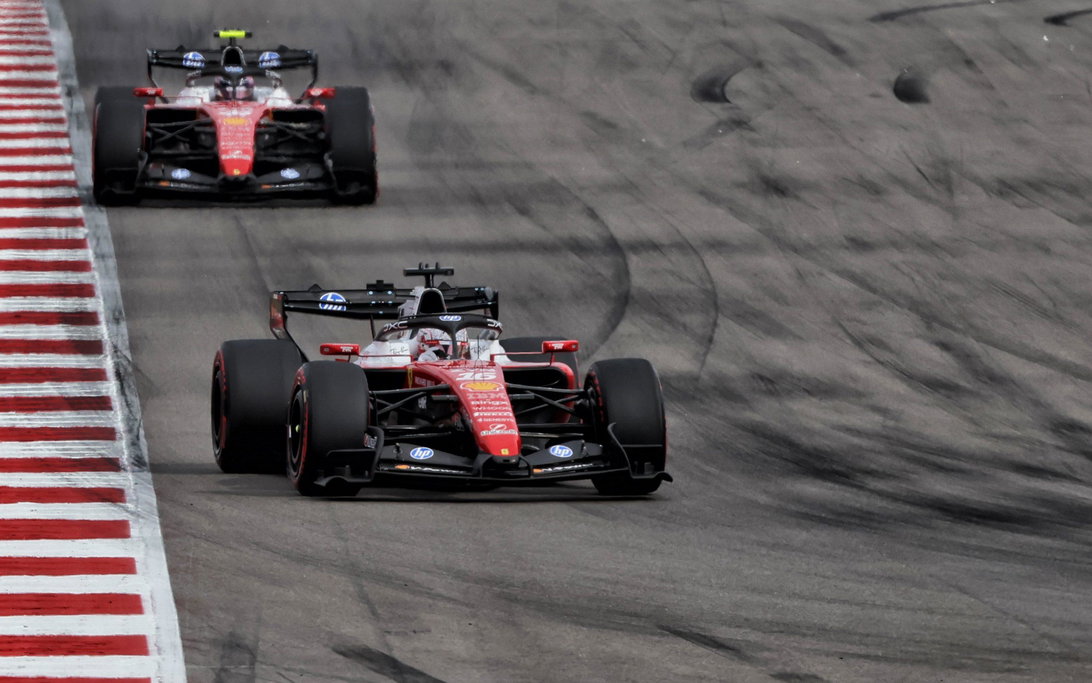
Ferrari introduced its final major aerodynamic upgrade package of the season at the United States Grand Prix in Austin. However, the SF-26's performance in Texas should not be attributed solely to these latest developments.
Instead, the result reflected the cumulative effect of successive upgrades, each building on the improvements delivered by previous packages.
Indeed, it had become apparent early in the season that the SF-26 was a particularly receptive platform for technical development.
Every upgrade package introduced by Ferrari has delivered the expected gains, not simply because the aerodynamic solutions were effective, but also because the underlying car concept provided a sound foundation on which to build.
Throughout the season, the SF-26 has progressively addressed several of its initial weaknesses, including its tendency to generate excessive drag.
At the same time, Ferrari has broadened the car's operating window, allowing it to perform competitively across an increasingly diverse range of circuits.
[Article continues below]



Ferrari's development success puts power unit deficit in spotlight
The engineering team led by Loic Serra has successfully balanced aerodynamic requirements with the car's mechanical characteristics throughout this development process.
Crucially, the upgrades have also helped compensate for some of the limitations imposed by the Ferrari power unit, whose performance has remained a relative weakness.
As the chassis has improved, however, those engine limitations have become increasingly difficult to overlook.
Even rival engineers regard the SF-26 as a particularly successful design in terms of its chassis and suspension architecture. Consequently, the need to bring the power unit up to a comparable competitive level has become ever more apparent.
Importantly, Ferrari's power unit shortcomings are not the consequence of packaging compromises made to prioritise aerodynamic performance.
Instead, they stem from fundamental design decisions within the power unit itself.
One example is the adoption of a smaller-diameter turbine, a conceptual choice that has influenced engine performance independently of how the unit is installed in the chassis.
This distinction is significant because it indicates that the performance deficit cannot simply be resolved through changes to the car's aerodynamic packaging.
[Article continues below]
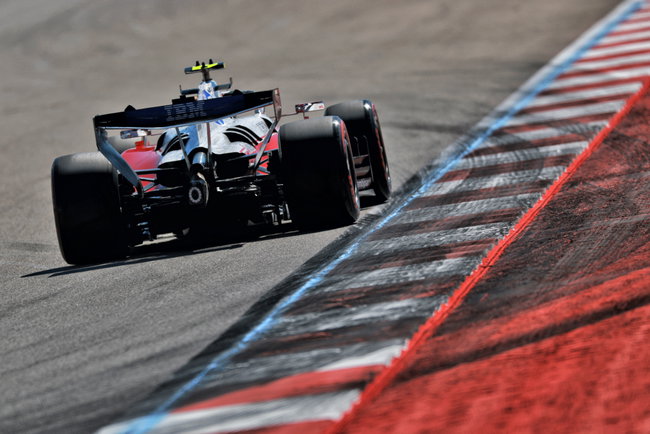
Ferrari targeting fundamentally new power unit for 2027
Looking ahead to 2027, the power unit department led by Enrico Gualtieri has a clearly defined objective: to provide Ferrari's next challenger with an engine that does not suffer from the performance limitations of the current design.
Achieving that target will be far from straightforward, particularly given the extent of the changes required.
However, Ferrari now has a substantial body of performance data on which to base its development decisions, allowing its engineers to identify the areas requiring fundamental revision.
The resulting changes are expected to be sufficiently extensive that Ferrari's 2027 power unit will effectively represent an entirely new design.
With the SF-26 demonstrating the strength of Ferrari's chassis concept and its ability to respond consistently to aerodynamic development, the emphasis is increasingly shifting towards the engine department.
The challenge for 2027 will be to ensure that the power unit can finally match the potential of the rest of the car.
Also interesting:
Join RacingNews365's Ian Parkes, Sam Coop and Nick Golding as they look back on the United States GP and look ahead to Mexico City! Red Bull's return of gearbox gremlins is a lead discussion, as is Kimi Antonelli being just days away from becoming world champion.
Rather watch this episode? Then click here!


Most read


Never miss a thing from the Formula 1 season! Add the 2026 F1 schedule to your calendar at the touch of a button. Subscribe below and put the dates and times of every race directly on your PC or smartphone, so you don't miss a second from the new season.
Download the F1 calendar Download the F1 calendar
A variant with just the race and qualifying is also available.
Click here to download it..


Join the conversation!