


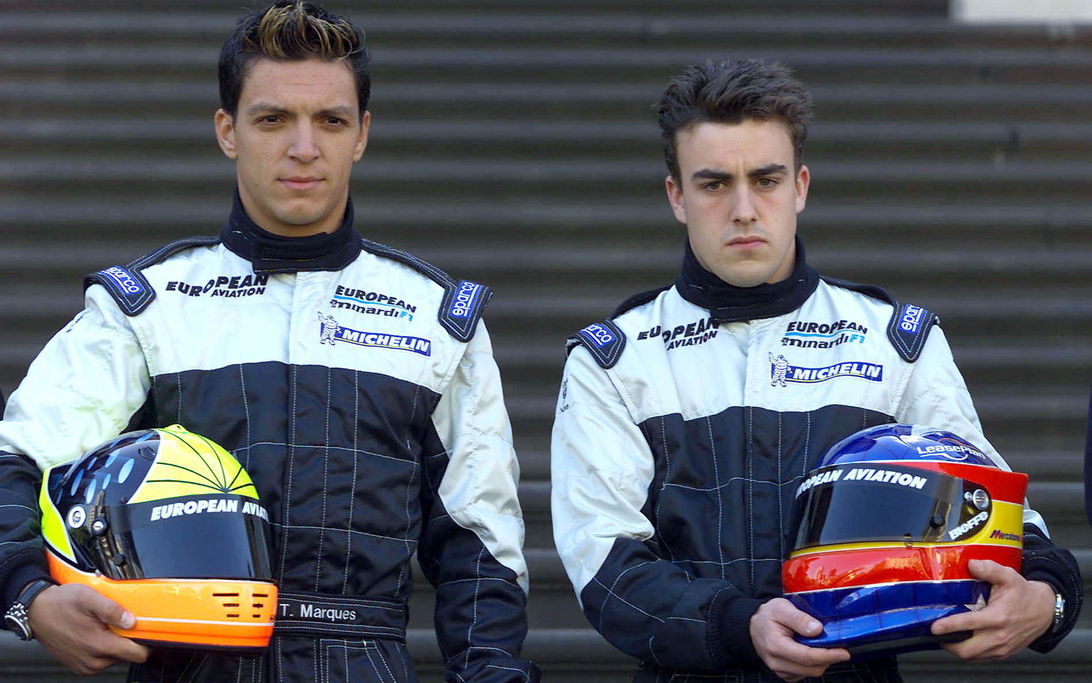
A quarter of a century ago, Spain was something of an oddity in Formula 1. Sure, it had hosted a grands prix in the 1950s, and then almost continually since 1968, but a driver had not yet broken through.
Ahead of the 2001 season, the only podium achieved by a Spanish driver was the shared second place Alfonso de Portago enjoyed with Peter Collins at the 1956 British Grand Prix.
That was 663 grands prix, and just one podium from 1,989 opportunities. But around the turn of the century, a youngster from Ovideo in Northern Spain was starting to catch the eye.
The article continues below.
The first steps
Fernando Alonso had actually been given his first taste of F1 machinery in December 1999 at Jerez as a prize for winning the Nissan EuroOpen title before he signed onto an F3000 campaign for 2000.
Before the days of GP2, and F2, F3000 was the final rung on the junior single-seater ladder, with previous champions before Alonso including Jean Alesi, Juan Pablo Montoya, and Nick Heidfeld.
Alonso himself did not actually win the 2000 F3000 title, finishing fourth behind Bruno Junqueira, Nicolas Minassian, and Mark Webber, but a strong victory in the season finale at Spa on the undercard of the Belgian GP caught the eye of one Flavio Briatore.
Looking for his next big project after the success of Michael Schumacher at Benetton half a decade earlier, Briatore found it in Alonso, whom he managed to place at Minardi after convincing boss Paul Stoddart.
That move was announced 25 years ago today, on February 5th, 2001.
At the time, Alonso was the third youngest driver to ever start a grand prix when his debut in Melbourne came around on March 4th, 2001, 31 days before Oscar Piastri was born in the same Australian city.
To this day, Alonso, at 19 years, seven months, and four days remains the ninth youngest driver to start a grand prix, although he will be shuffled down to 10th once Arvid Lindblad debuts in 2026.
In a backmarker car, Alonso scored no points and was actually beaten by his team-mate Tarso Marques, but to the trained eye, it was clear that Alonso was something special.
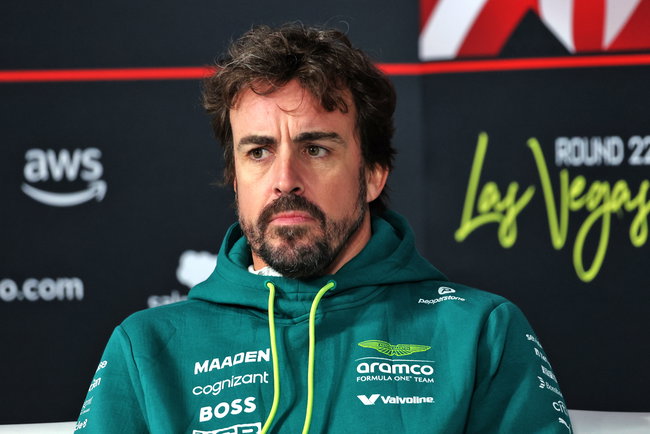
A debut season breakthrough
In his first season, Alonso finished 23rd in the standings whilst Marques was 22nd, with a best finish of ninth in Brazil and Canada.
Alonso managed to drag his to 10th in Germany, but in qualifying, it was clear that Alonso was far better than his team-mate, beating him 12-2 overall before Alex Yoong came in.
In the finale at Suzuka, Alonso put in one of those breakthrough drives, dragging the recalcitrant Minardi to a staggering 11th place, but for 2002, he was off to become Renault test driver under Briatore.
By 2003, he became a pole-sitter and the youngest ever race winner in Hungary, a record since beaten by Charles Leclerc (Belgium 2019), Sebastian Vettel (Italy 2008), and Max Verstappen (Spain 2016).
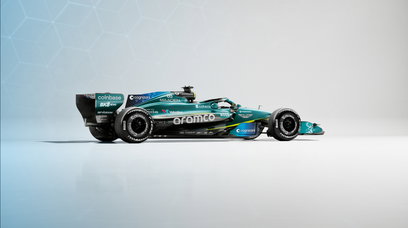
Two titles would follow, and remarkably, 25 years on, Alonso is still going strong. He currently holds the record for most grand prix starts at 425, and is set to hit 449 by the end of the 2026 season, when he will finally get his hands on an Adrian Newey-designed car.
The record for the longest gap between drivers' titles is seven years between Niki Lauda's 1977 and 1984 successes. Alonso, if he were to ever win an F1 world championship again would shatter that at 20 years. He couldn't, could he?
Also interesting:
Join RacingNews365's Ian Parkes and Nick Golding, as they look back on last week's five-day F1 test in Barcelona. McLaren's upgrade strategy is discussed, as is Aston Martin grabbing much attention with its striking AMR26.
Rather watch the podcast? Then click here!


Most read

In this article
Never miss a thing from the Formula 1 season! Add the 2026 F1 schedule to your calendar at the touch of a button. Subscribe below and put the dates and times of every race directly on your PC or smartphone, so you don't miss a second from the new season.
Download the F1 calendar Download the F1 calendar
A variant with just the race and qualifying is also available.
Click here to download it..





Join the conversation!