


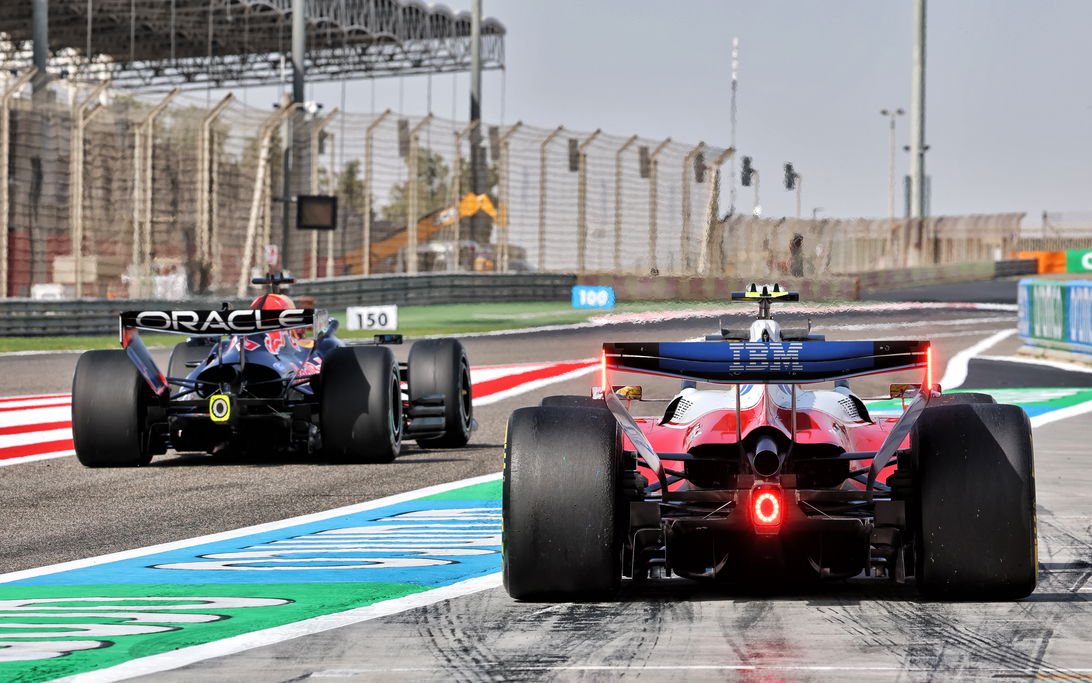
The first official F1 pre-season test in Bahrain is in the books, with 3,726 laps completed across the 22 drivers.
But what are the major story lines to come from the test?
Below, RacingNews365 breaks down the key storylines from Sakhir's first week.
Mercedes is on manoeuvres with Red Bull 'reality check'
It wouldn't be F1 pre-season testing without a good technical row (DAS, anyone?), as the compression ratio saga drags on.
The design of the 2026 engines must be homologated by Sunday, March 1st, meaning time is running out for a solution to be found over the measuring of the trick Mercedes HPP has developed.
A crunch vote of the Power Unit Advisory Committee (PUAC) is on the horizon, with all five PUMs and the FIA and Formula One Management all getting one vote apiece, with a supermajority of four of the five, plus the FIA and FOM needed to force through the change to measure the compression ratio when the engine is hot, and not at ambient temperatures, as the wording currenty is.
Ferrari, Honda, and Audi are to vote in favour, no doubt, whilst also trying to figure out how long it would take to develop an 18:1 compression ratio themselves, with Red Bull Powertrains crossing the floor, having originally been believed to be in a similar camp to Mercedes. The stance of the FIA and FOM is unknown.
Is it, therefore, any surprise that with RBPT being a swing vote, Mercedes has turned on the charm?
George Russell called the performance of the RBPT engine "quite scary" and a "reality check" whilst his boss Toto Wolff labelled it as the "benchmark" on the first day, when Max Verstappen merrily ran rings around the opposition in the morning.
Speaking of which...
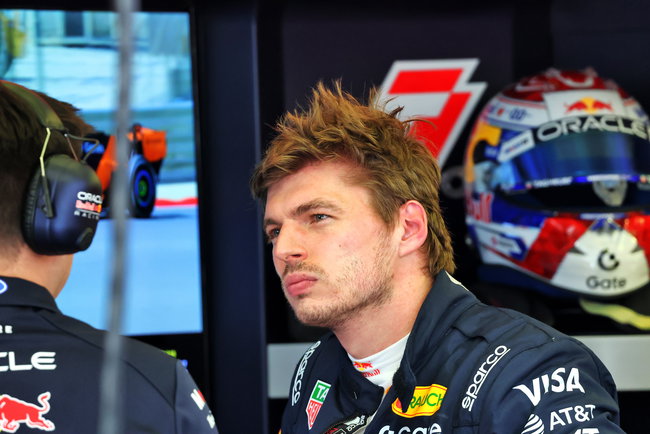
Max Verstappen, is well, Max Verstappen
Perhaps only Jacques Villeneuve's attack on the narrow track and grooved tyre cars of 1998 can compare, but Verstappen's stunning broadside attack on the new regulations was eye-catching.
For one of the biggest names in the history of grand prix racing to completely rip apart the new rules package after so little time in the car was astonishing. He branded the new energy recovery rules as "anti-racing", as "Formula E on steroids" and hinted that if he was unhappy, he wouldn't stick around for too long.
But it's no surprise. Even as far back as 2023, Verstappen was issuing concerns about the regulations, and in his broadside, he hinted that "political" factors were in place when designing these rules, hinting at Audi's arrival and the removal of the MGU-H being a key factor in that.
Verstappen says he just wants to win and drive fast, nice cars, but he's got some competition...
Pass the parcel
Day 1 of running was topped by Lando Norris McLaren, Day 2 by Ferrari's Charles Leclerc and with the fastest lap of the test on Day 3, Kimi Antonelli of Mercedes.
Much like a hot potato, the terms 'favourite' and 'fastest in testing' are being passed around the leading teams, who don't want to find out what happens when the music stops and they are left holding the mantle.
Both Ferrari and Verstappen hinted that they believed Mercedes was running its engine turned down (to avoid too much attention over compression ratios, perhaps?), but on the flip side, Charles Leclerc's race run on Thursday was nearly 28 seconds faster than George Russell's, although Leclerc's was completed in the afternoon/evening compared to Russell's on Friday morning.
Red Bull's Pierre Waché straight-batted Mercedes' claim of it being the "benchmark", insisting it was lagging behind, and what of McLaren?
Yep, you guessed it, the noises from HMS Woking are that its three main rivals are ahead.
There's another three weeks of passing the parcel, and eventually the music will run out at the end of Q3 in Melbourne...
Serious discussions are needed
Every action has a reaction.
With the removal of the MGU-H, drivers are now having to manually spool up the turbo for 10 seconds to eliminate lag during practice starts, but also tread a fine line as to not over-rev the engine and overcharge the battery.
It is a fine balancing act, and there are major concerns that cars could be stranded on the grid in the early races if drivers get the procedure wrong.
This is a severe danger as if a car at the rear is unsighted, as one at the front has stalled off the line, there could be a severe collision.
McLaren boss Andrea Stella called for "responsible" talks between teams and the FIA to solve the issue, which could only get worse during real-life competition if the repeated failures in a dusty testing pit-lane are nothing to go by.
The surprise package
Whilst most of the attention in Bahrain was on compression ratios, safety concerns and Verstappen letting rip, one team in particular went decidedly under the radar.
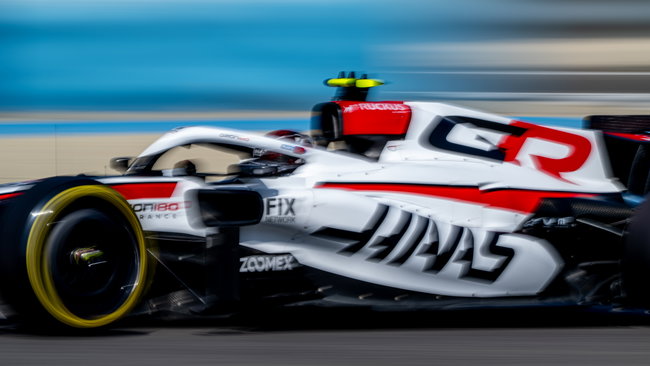
Haas completed 383 laps to place fourth, and ahead of the likes of Red Bull and Mercedes, with the VF-26 proving a tidy, sensible package from F1's smallest team.
It was a solid test for Haas with no major difficulties as it pounded around with both drivers inside the top 10, and firmly not draining the fuel out to go for glory runs late in the day, as it once did for the headlines.
Heading into the new season, Haas is firmly fifth-best.
Audi and Cadillac
Audi and Cadillac both took a giant leap forward in Bahrain in terms of respectability. Neither set the world alight with their pace, but neither looked a disaster either.
Audi logged 344 laps to Cadillac's 315 and it was all rather sensible and providing solid foundations for adding a layer of performance in the second test next week. For them, it was as good as test as possible.
Aston Martin the big loser
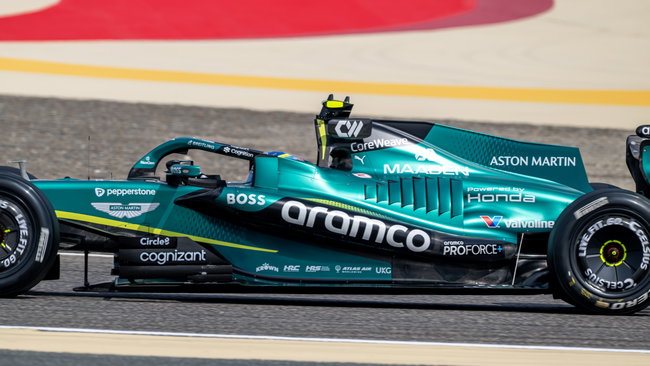
Lance Stroll's comments that Aston Martin was nearly four-and-a-half seconds off the pace were stinging.
The team is by no means in a crisis, but any pecking order attempts right now would have it as the 11th fastest as the positive 'aggressive' headlines from Barcelona turned into more negative ones (see Stroll's comments) in Bahrain.
It only completed 203 laps across the three days, but an Adrian Newey-led team won't be in the doldrums for long, with Fernando Alonso and Stroll also forming the most experienced line-up in F1 history. Throw in Honda's engineering strength, and it is a recipe for success, but it is going to take some time.
Also interesting:
In this video, we explore a fascinating Mercedes engine theory that is engulfing the F1 paddock. We break down how it works, why it matters, and why this advantage — if real — may be brilliant, legal… but only temporary.
Most read

In this article
Never miss a thing from the Formula 1 season! Add the 2026 F1 schedule to your calendar at the touch of a button. Subscribe below and put the dates and times of every race directly on your PC or smartphone, so you don't miss a second from the new season.
Download the F1 calendar Download the F1 calendar
A variant with just the race and qualifying is also available.
Click here to download it..





Join the conversation!