


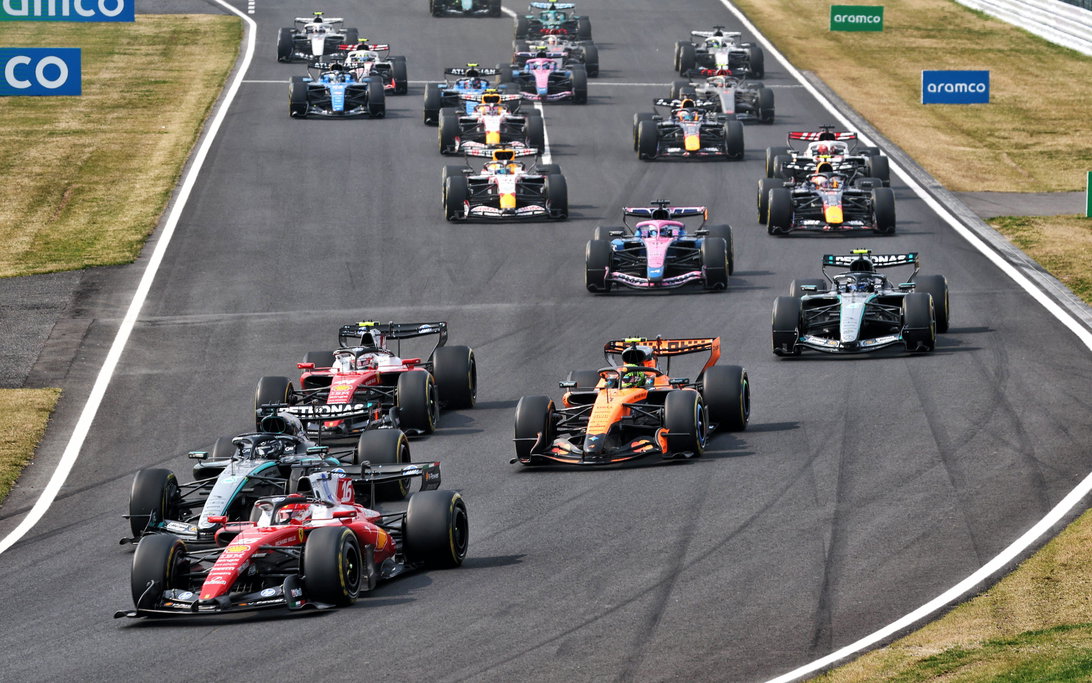
In the weeks leading up to the Miami Grand Prix, Formula 1, or rather the F1 Commission, along with the manufacturers and the FIA, has scheduled a series of meetings to discuss the current state of affairs regarding the issues that have emerged in the first three races concerning power unit recharging requirements.
In practice, the actual impact that the critical issues surrounding power unit energy management have had on on-track competition will be assessed. In particular, it has emerged that, in the opinion of many drivers and external observers, qualifying is the most distorted part of the weekend, due to ‘super clipping.
That is the electronic system managed by the software algorithms of each power unit, which effectively reduces the power output in favour of recharging. But the race itself is also heavily influenced, as was tangibly demonstrated by the incident between Oliver Bearman and Franco Colapinto, leading to a situation with high closing speeds, which pose a clear danger.
There are numerous countermeasures that can be taken to make the spectacle on the track less artificial and to reduce the obvious risks caused by the significant speed differences that cars can have between one in the charging phase and one in the energy deployment phase.
In the immediate term, some corrective measures could include a further reduction in the amount of MJ recoverable per lap.
For example, as indeed stated in the current regulations, reducing the maximum recoverable energy to 5MJ would achieve two things.
On the one hand, on straights, there would be no clipping if very low power delivery strategies were adopted, so as not to have a tangible impact on top speed. A partial increase in the power output from the ICE could be possible without fundamentally altering the current PU design by adopting fuels with a higher calorific value, or by increasing the timing window within which the ignition in the combustion chamber can occur.
A slight increase in turbo pressure could also yield results in terms of maximum power at high revs. It is clear that not all these measures could be implemented simultaneously, and certainly not in the short term.
In practice, for the immediate future, the choice will have to be made between one of the possible strategies listed, considering it the most effective and least invasive. Let’s say that perhaps a review of the fuel’s calorific value, combined with a reduction in the recharging MJ, could be an acceptable mix for this season.
A more complex task would be the adjustment of ignition timing and the increase in turbo pressure, given the undeniable implications this may have for reliability.
Looking ahead, a different power split between electric and internal combustion engines, 60:40 in favour of the ICE over batteries as opposed to the current 50:50, could represent a sound compromise and a stable situation, in which battery power would still play a very important role, thus upholding the principles of sustainability that inspired the current regulations.
At the same time, it would also preserve the nature of the on-track challenge in terms of car and driver performance, something that now appears much more nuanced and less tangible compared to the recent past of 2025.
Also interesting:
Join RacingNews365's Ian Parkes, Sam Coop and Nick Golding as they look back on last weekend's Japanese Grand Prix! The trio discuss what F1 and the FIA must change across the five-week break and if Max Verstappen could actually retire.
Rather watch the podcast? Then click here!


Most read



In this article
Never miss a thing from the Formula 1 season! Add the 2026 F1 schedule to your calendar at the touch of a button. Subscribe below and put the dates and times of every race directly on your PC or smartphone, so you don't miss a second from the new season.
Download the F1 calendar Download the F1 calendar
A variant with just the race and qualifying is also available.
Click here to download it..





Join the conversation!