


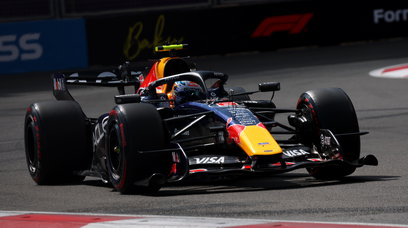
Red Bull continued developing the RB21 further into the 2025 F1 season than initially anticipated, striving to get to the bottom of a project that had fallen short of expectations.
Despite dominating the contemporary ground effects era until McLaren came on strong midway through the previous season, as the six-time constructors' champion itself started to struggle with a developmental misstep it had taken months before, its current car was increasingly unable to help keep Max Verstappen in contention for the F1 drivers' championship.
And with the 2026 regulations reset looming large over the campaign, as rival teams switched full focus to the new chassis and power unit rules, Red Bull defied expectation and continued to upgrade the underwhelming and troublesome RB21.
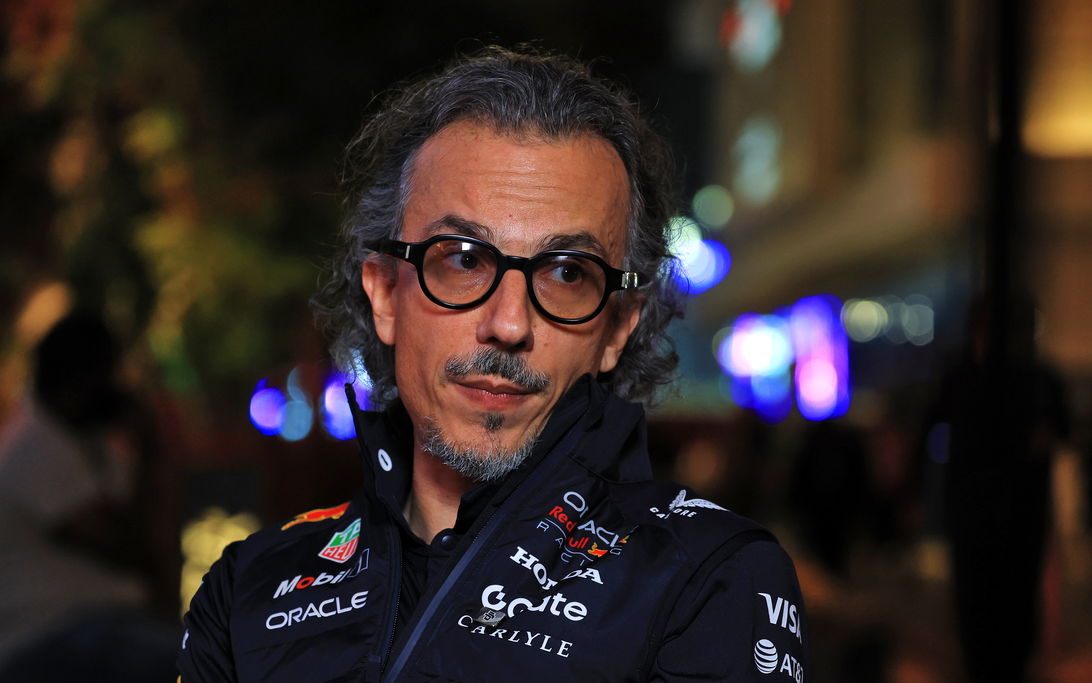
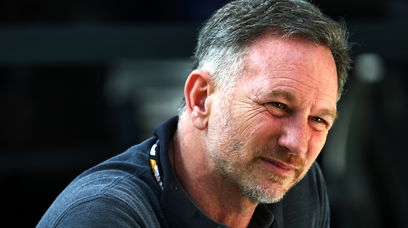
Laurent Mekies had replaced Christian Horner as team principal in the days following the British Grand Prix, and it was not long before new ways of working under the Frenchman, and the commitment to understanding its existing package once and for all began to bear fruit.
The updated floor delivered to the bottom of Verstappen's car for the Italian Grand Prix transformed his fortunes and the rest of the season.
It instigated a run of six victories in the final nine grands prix, propelling him back into the title fight at a stage when he was 104 points behind then-leader Oscar Piastri.
But vaulting the Dutchman back into the battle was not the primary mission; it was a mere side effect, or byproduct, of getting to the bottom of the root cause of the team's shortcomings.
Reflecting on the approach whilst interviewed by a small group of media, including RacingNews365, towards the end of the season, Mekies explains the rationale: "It became quite obvious to us that we didn't want to simply turn the page and have wishful thinking that, whilst the '25 car had not been at the required level to fight for the title, we would then be okay doing so in '26.
"So we didn't want to go down that route. We wanted to go on the route of: we need to get to the bottom of this project.
"We need to understand why it's not performing, because fundamentally, we'll be using the same tools, the same process, the same methodologies next year.
"And yes, we may lose some time in doing so, but we didn't want to go for the wishful thinking route.
"So... was it difficult? No. It's something we have been very, very convinced of since very early on in the summer."
Viewed by others:
Establishing a base to cross over from
Verstappen ultimately fell tantalisingly short of clinching a fifth-consecutive drivers' championship, missing out to Lando Norris by just two points, having outperformed the McLaren driver by 68 points — and his team-mate by 106 points — over the final nine rounds of the year.
More pertinently, however, Red Bull's commitment to maximising 2025 leaves the team in a significantly better position heading into the unknown of 2026 than it might have been.
It already faces a formidable challenge, which has been described throughout the paddock as tantamount to scaling Mount Everest, from the likes of Toto Wolff and Mekies himself.
With Honda departing for a works arrangement with Aston Martin, Red Bull is going it alone — albeit in technical partnership with Ford, the company it purchased the Jaguar Formula 1 team from two decades ago — as a power unit manufacturer for the first time.
It makes nailing the development of the chassis and its aerodynamics potentially — but not definitely — vital to success for the Mekies-led outfit in the new era.
Over the course of the year, Verstappen has insisted that development in 2025 also has value moving forward.
It is a stance Mekies agrees with, having established what went wrong and righted its course, and proven that its methodologies and approaches are correct.
"Of course, there was a huge amount of learning," he explains. "First, on methodologies... what do you need to make the car faster, what do you do to go around the given limitations? Tyres, of course, the correlation of your tools, where you think it's right to add performance, etc., etc.?
"So the common areas are huge, even with completely different regulations."
Mekies maintains that it has instilled renewed confidence within the team, something that also translates to the new regulations.
"For once, to stay on the human aspect, certainly, it's a group that, ultimately, whatever happens next, has achieved an unbelievable season," he adds.
"And I think it's certainly made the group even more compact, even more tight together, and that gives us the right approach and vibe and energy for next year.
"Does it make us feel that the car is going to be faster or slower than the opposition's? No, honestly, no.
"But I think as a group, in the way we operate, in the way we accept challenges, in the way we want to move forward, this is helpful, because it's certainly given us a lot of confirmation about the quality of our people and of our approaches."
Most read
In this article
Interviews RN365 News dossier
Never miss a thing from the Formula 1 season! Add the 2026 F1 schedule to your calendar at the touch of a button. Subscribe below and put the dates and times of every race directly on your PC or smartphone, so you don't miss a second from the new season.
Download the F1 calendar Download the F1 calendar
A variant with just the race and qualifying is also available.
Click here to download it..





Join the conversation!