


5 April 2020 was meant to mark a landmark moment for Formula 1. A brand-new destination, a spectacular street circuit in Hanoi, and the sport's continued push into emerging markets were all set to converge at the inaugural Vietnamese Grand Prix.
Instead, the 5.613-kilometre Hanoi Street Circuit stood silent — what should have been a historic debut became one of the most unusual and ill-fated chapters in modern F1 history.
Announced in 2018 as part of a multi-year agreement, the Vietnamese Grand Prix was a centrepiece of Formula 1's expansion under Liberty Media.
It was, in fact, the first entirely new destination secured in that era — symbolic of a broader ambition to take the sport beyond its traditional heartlands.
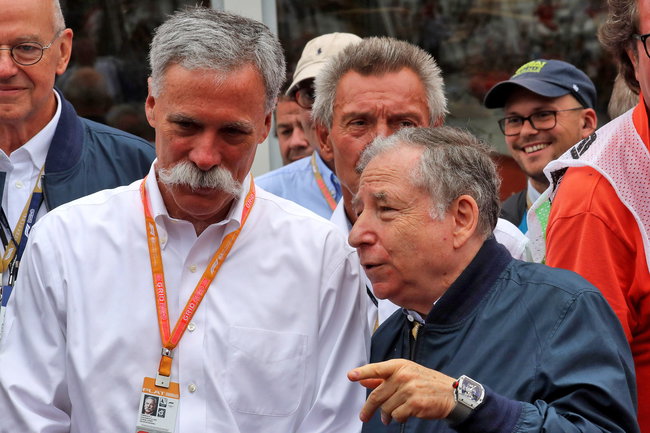
F1 chairman Chase Carey captured that vision at the launch: "We are delighted to announce that Hanoi will host a Formula 1 Grand Prix.
"Since we became involved in this sport in 2017, we have talked about developing new destination cities… and the Vietnamese Grand Prix is a realisation of that ambition."
By early 2020, that ambition had become reality. The circuit, designed by Hermann Tilke at a reported cost of $600 million, was complete.
A hybrid layout combining public roads and permanent infrastructure, it featured 23 corners and a 1.5km straight where cars were expected to reach over 330 km/h. Its design even paid homage to iconic tracks — echoing the Nurburgring's opening sequence, Monaco's flowing middle sector, Suzuka's Esses, and Sepang's fast final turns.
Viewed by others:
COVID-19 postponement
Everything was in place. Then the world changed.
As the COVID-19 pandemic escalated in March 2020, Formula 1's calendar began to collapse.
The season-opening Australian Grand Prix was cancelled, and a domino effect followed. The Vietnamese Grand Prix, scheduled for 5 April, was initially postponed as the sport scrambled to respond.
FIA President Jean Todt was unequivocal at the time: "Protecting people first… was the only possible decision given all of the information currently available to us."
For a while, there was still hope. Vietnam had managed early outbreaks relatively well, and organisers explored the possibility of rescheduling later in the year.
But the logistical complexity of Formula 1 — global travel, freight, and personnel — made such plans increasingly unrealistic.
By October 2020, the race was officially cancelled. Promoter CEO Le Ngoc Chi confirmed: "We are unable to welcome the most exciting and prestigious motorsport series on the planet to Vietnam in 2020 due to the COVID-19 pandemic."
At that stage, Vietnam appeared to be another casualty of a disrupted season — one that would eventually be reduced from 22 planned races to just 17. But the deeper story was only just beginning.
Political corruption
Behind the scenes, a more serious issue was unfolding — one that would ultimately seal the fate of the Vietnamese Grand Prix altogether.
In August 2020, Hanoi People’s Committee Chairman Nguyễn Đức Chung, one of the key figures behind bringing Formula 1 to the city, was arrested on corruption-related charges unrelated to the race.
Chung had been instrumental in securing the event, negotiating its foundations, and championing its economic potential.
His arrest created immediate uncertainty. Without his backing, the project lost its political anchor, and momentum quickly stalled.
The consequences were swift. The Vietnamese Grand Prix was dropped from the provisional 2021 Formula 1 calendar, and it soon became clear the event would not return. While other races postponed in 2020 found their way back, Hanoi did not.
Chung's legal troubles deepened in the years that followed, culminating in a ten-year prison sentence in 2022. By then, any realistic hope of reviving the race had vanished.
What remains today is a striking symbol of what might have been. The Hanoi circuit — once poised to host Formula 1's newest spectacle — has seen only limited use.
Large sections lie dormant, its grandstands and sweeping corners a reminder of a project years in the making that never hosted a single competitive lap.
A combination of global disruption and local instability created a perfect storm. The pandemic may have delayed the race, but it was political fallout that ultimately ensured it would never happen.
Also interesting:
Join RacingNews365's Ian Parkes, Sam Coop and Nick Golding as they look back on last weekend's Japanese Grand Prix! The trio discuss what F1 and the FIA must change across the five-week break and if Max Verstappen could actually retire.
Rather watch the podcast? Then click here!


Most read


In this article
Never miss a thing from the Formula 1 season! Add the 2026 F1 schedule to your calendar at the touch of a button. Subscribe below and put the dates and times of every race directly on your PC or smartphone, so you don't miss a second from the new season.
Download the F1 calendar Download the F1 calendar
A variant with just the race and qualifying is also available.
Click here to download it..


Join the conversation!