


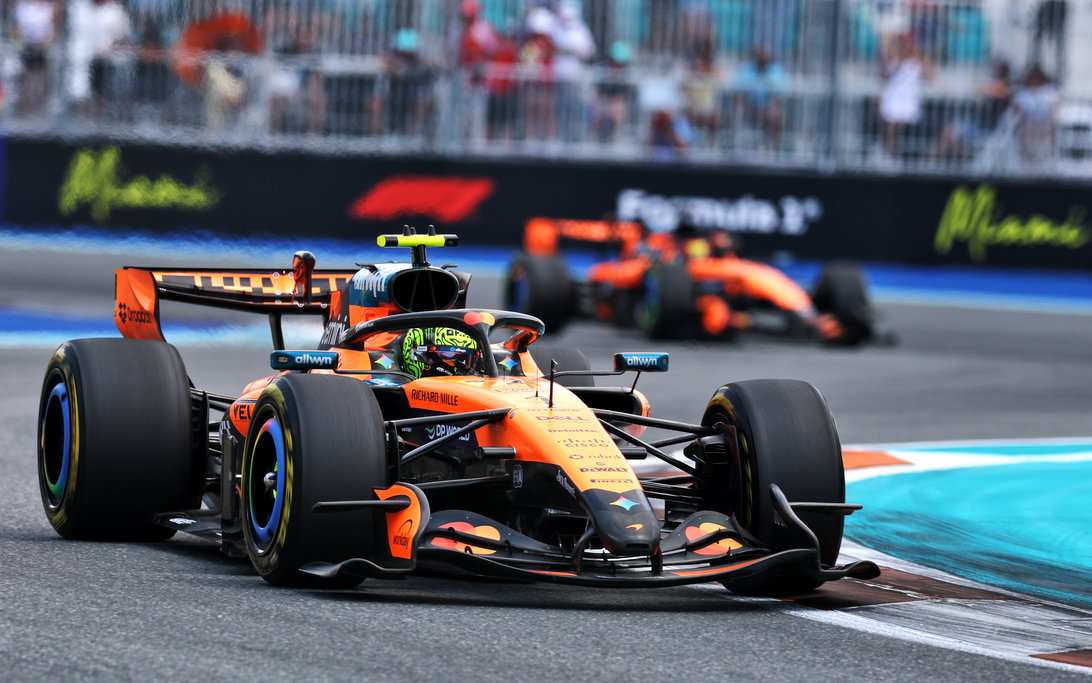
McLaren team principal Andrea Stella has urged F1 bosses to consider delaying engine changes until 2028 - to potentially solve a bigger problem with the rules.
Last week, it was confirmed that for the 2027 season, the FIA had agreed to move away from the 50-50 split in terms of power output from the internal combustion engine and 350kw batteries.
In 2025, in the final season of the old power units, the split was around 80-20 in favour of the ICE, with the 50-50 split designed to entice new manufacturers into F1 as power unit suppliers, with Audi entering for the first time as Honda rejoined grand prix racing whilst Ford is a technical partner to the new Red Bull Powertrains operation.
General Motors is also developing a works unit for Cadillac from 2029, until which time, the team will remain a Ferrari customer.
When the 350kw of electrical energy has been depleted, cars revert solely to the ICE power, leading to the drastic loss in power and the commencement of super-clipping, which the pre-Miami rule tweaks have been designed to limit.
Now, cars can super-clip to charge the batteries to the 350kw capacity of the battery, whereas before there was a 250kw limit imposed.
However, McLaren boss Stella believes that F1's PUMs could go even further to create charging levels up to 450kw to create a harvesting/deployment offset of energy, and also increase the fuel flow from the ICE to increase power, and thus, performance.
But for this to happen, the Italian feels that a delay to 2028 for such changes is required, given the short lead times now in place for PUMs to achieve such drastic changes to the architecture of their engines.
"Hardware adjustments to the power units in order to improve F1 in general, I think, personally, are required," Stella told media, including RacingNews365.
"They realistically have to do with the fuel flow to increase the power from the internal combustion engine and harvesting more power than you deploy, because you are spending so much more time deploying electrical power rather than harvesting it.
"This can be rebalanced by harvesting to a larger power than we do today, like can we go from 350 kW to 400 kW or 450 kW, then I think we just need bigger batteries.
"If I think about these requirements from a hardware point of view, and see things from the perspective of our power unit manufacturers, it is difficult for 2027 because the implication for the battery size and coping with higher fuel flow requires longer lead times than the time available to go into 2027.
"I would urge that this conversation needs to be finalised before the summer break to be in time to do it for 2028, and definitely I would hope that is is the case, because whilst we have done a good job as an F1 community of looking at constantly improving the exploitation of the engine with what is available, I think we can extract more out of these regulations, but this will need some hardware tweaks."

Also interesting:
Join RacingNews365's Nick Golding and Samuel Coop as they look back on last weekend's Miami Grand Prix! The duo offer their thoughts on F1's rule changes in action and Max Verstappen remaining unhappy despite an exciting race.
Rather watch the podcast? Then click here!


Most read





In this article
Never miss a thing from the Formula 1 season! Add the 2026 F1 schedule to your calendar at the touch of a button. Subscribe below and put the dates and times of every race directly on your PC or smartphone, so you don't miss a second from the new season.
Download the F1 calendar Download the F1 calendar
A variant with just the race and qualifying is also available.
Click here to download it..






Join the conversation!