


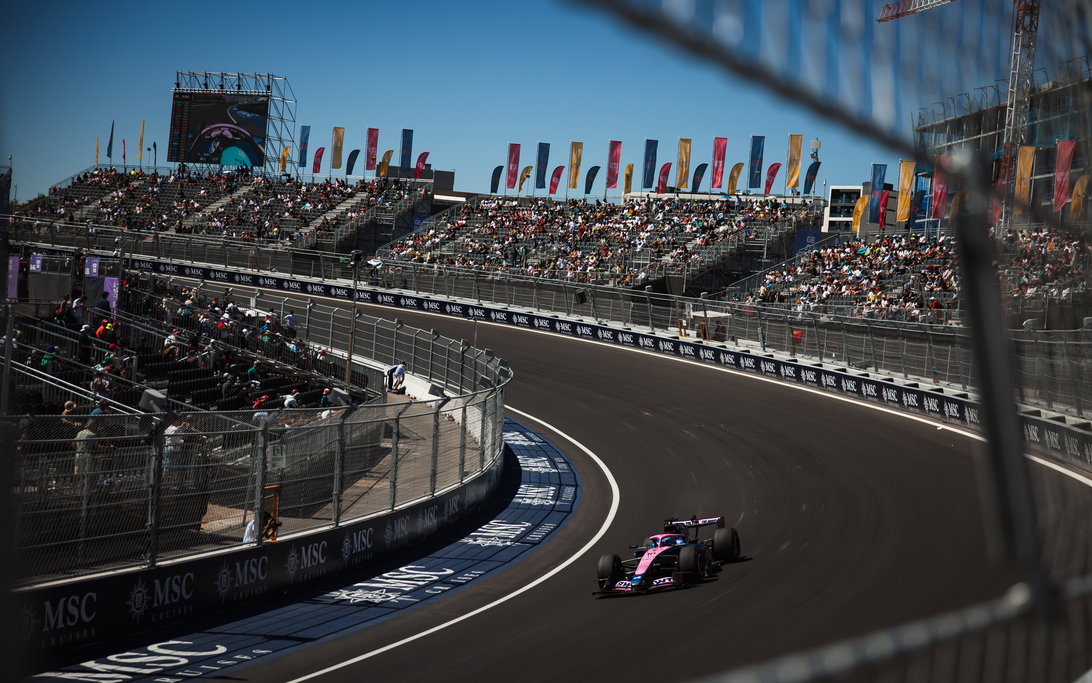
Jarno Zaffelli, CEO of the company behind the design of the Madring F1 track, has admitted that only “minimal” changes are possible to the layout going forward.
The circuit made its F1 debut last weekend as it took over as the host of the Spanish Grand Prix.
However, it produced a largely uninteresting race, with the support categories also seeing a lack of overtaking action throughout the weekend.
The track has received criticism from fans in the aftermath, with some calling for change to improve the show next time around.
But as Zaffelli explained, environmental constraints make such proposals difficult.
"Some changes are possible, but they are minimal,” Zaffelli told motorsport.com.
“From what has been publicly stated, some of the options discussed seem to be closer to intentions that were already present in our original project, which included an overtaking opportunity at Turn 5.”
[Article continues below]
 Spanish GP
Zaffelli denies 'blank sheet' starting point
Explaining what was supposed to be different about Turn 5, which is one of the tightest points on the track, Zaffelli said: “Turn 5 was supposed to be tighter and have less cornering.
“And in our design, inside Turn 6 there wasn't an asphalt run-off area, but a gravel solution, to force the drivers to take a slower route and avoid going straight because it would have penalised their lap time.
“The logic of the sequence wasn't to gain time through banking, but to create two trajectories with opposing advantages.”
Madrid has signed up with F1 for the long-term, with a 10-year deal in place.
Amid the criticism, Zaffelli has denied that the process of starting the layout of the track began from a blank sheet of paper, insisting it could only work around the restrictions of the land available.
"What was described as a blank sheet of paper is actually a highly urbanised area with precise constraints for designing a circuit suitable for Formula 1,” he said.
“A detailed map reveals that the layout faced very stringent constraints in many places, as new exhibition halls had already been designed and approved by urban planning authorities, just as the road network had already been planned along predefined lines.
“This is precisely why a great deal of creativity was required: the constraints limited the scope of the design, but they didn't determine a single solution.
“We had to invent geometries, sequences, and trajectories capable of generating a circuit with its own identity within those structural limitations and the constraints dictated by FIA safety regulations.”
Also interesting:
Join RacingNews365's Ian Parkes, Sam Coop and Nick Golding as they look back on the Spanish GP! The Madring layout and lack of overtaking is a major talking point, as is Lando Norris' cruel victory loss.
Rather watch this podcast? Then click here!


Most read



In this article
Never miss a thing from the Formula 1 season! Add the 2026 F1 schedule to your calendar at the touch of a button. Subscribe below and put the dates and times of every race directly on your PC or smartphone, so you don't miss a second from the new season.
Download the F1 calendar Download the F1 calendar
A variant with just the race and qualifying is also available.
Click here to download it..





Join the conversation!